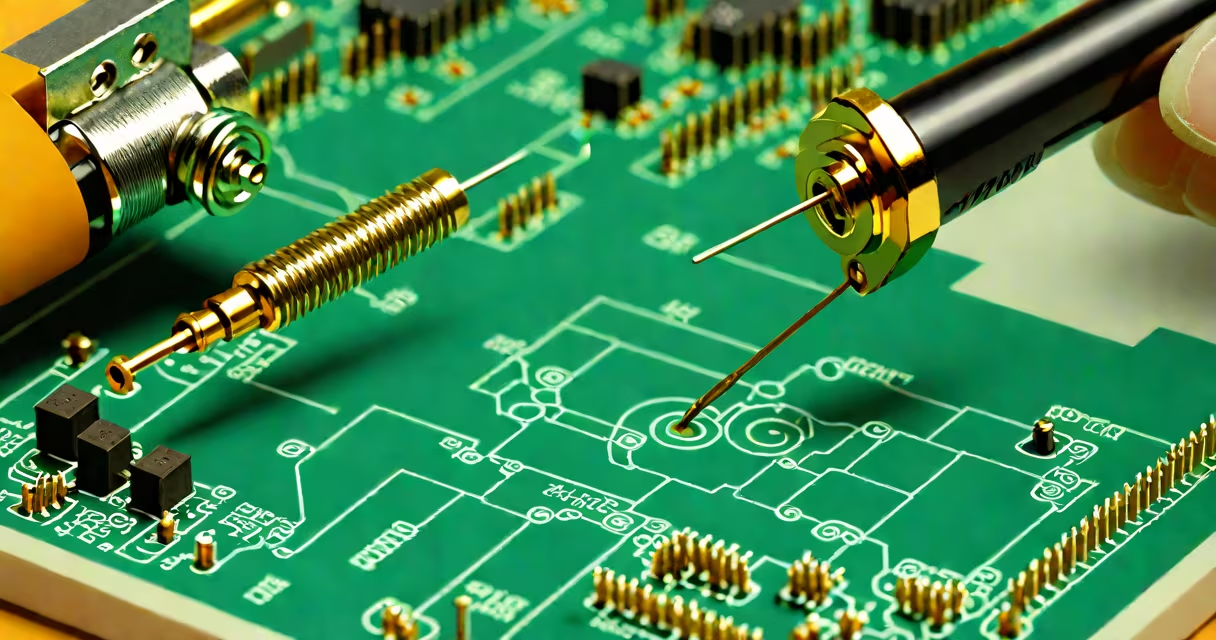
A soldering iron and flux are essential tools for creating durable electrical and mechanical connections between metal surfaces. The iron heats solder to a liquid state, while flux cleans and protects the joint area from oxidation during the process.
Soldering irons generate heat through a resistive element, typically reaching temperatures between 300°C and 400°C (570°F to 750°F). This heat melts solder-a metal alloy-into a liquid that flows into gaps between metal parts. Once cooled, the solder forms a solid, conductive bond. Without flux, oxides form rapidly on clean metal surfaces when heated, preventing proper wetting and adhesion.
Flux is a chemical agent applied before or during soldering. It removes surface oxides, lowers the melting point of solder, and prevents further oxidation during heating. Common flux types include rosin-based, water-soluble, and no-clean formulations. Each serves different purposes based on application environment and cleanup requirements.
The soldering iron provides localized heat to melt solder precisely where needed. Most modern irons have temperature control, allowing users to adjust settings based on the solder type and material being joined. For example, lead-free solder requires higher temperatures than tin-lead alloys.
Flux is applied before heating. It can be pre-applied in solder wire (commonly called "flux-core" solder), or applied separately using a brush, syringe, or pen. When the iron touches the joint, the flux activates-typically between 150°C and 200°C-and begins cleaning the metal surface. As the solder melts, it flows into the joint under capillary action, aided by the flux's reduced surface tension.
After cooling, the flux residue remains. Water-soluble fluxes require rinsing with isopropyl alcohol to avoid corrosion or interference with electrical circuits. Rosin-based fluxes leave a sticky residue but are less corrosive and often left on for minimal maintenance. No-clean fluxes are designed to stay without causing damage, though they may still attract dust.
Flux types differ in chemistry, residue behavior, and suitability for specific tasks. The choice affects joint quality, reliability, and post-soldering steps.
| Type | Chemical Base | Residue | Best For |
|---|---|---|---|
| Rosin-based | Abietic acid (from pine resin) | Non-corrosive, sticky | Electronics, low-vibration environments |
| Water-soluble | Organic acids (e.g., citric, glycolic) | Highly corrosive if uncleaned | Prototyping, high-reliability industrial use |
| No-clean | Modified rosin or synthetic agents | Minimal residue, non-conductive | Consumer electronics, mass production |
For printed circuit boards (PCBs), rosin-based flux is standard due to its balance of performance and safety. Water-soluble flux offers superior cleaning power but demands thorough washing afterward. No-clean flux reduces assembly time and eliminates cleaning steps-but may fail in high-humidity conditions if residue absorbs moisture.
Using the wrong flux type can cause joint failure. A 2021 study by the National Institute of Standards and Technology (NIST) found that 37% of solder joint defects in consumer electronics stemmed from improper flux selection or inadequate activation temperature.
Many beginners assume flux is optional or that excess flux improves results. Neither is true. Over-application leads to excessive residue, which can short-circuit sensitive components or degrade insulation over time. Under-application causes poor wetting, resulting in cold joints-weak, unreliable connections that appear dull and grainy.
Another misconception is that all solder wire contains flux. While most do, some specialty wires (like those used in aerospace or medical devices) are flux-free and require external flux application. Always check the product label or datasheet.
Flux does not replace proper cleaning. Even with flux, dirt, grease, or oxidation on the joint surface prevent good adhesion. Clean metal surfaces with a lint-free cloth and isopropyl alcohol before soldering. A 2019 report from the IPC (Institute for Printed Circuits) emphasized that 60% of solder failures occur due to contamination, not flux deficiency.
I repaired a microcontroller board where a capacitor had detached due to thermal stress. The solder pads were oxidized, and the original solder had cracked. I cleaned the area with a cotton swab and 90% isopropyl alcohol. Then, I applied a small amount of rosin-based flux using a flux pen.
Set my soldering iron to 350°C (660°F), touched the tip to the pad and component lead simultaneously, and fed in 0.8mm diameter lead-free solder. The flux activated instantly-bubbling slightly-and the solder flowed smoothly into the joint. After removing the iron, I let the joint cool undisturbed for 10 seconds.
Upon inspection, the joint was shiny and concave-indicating proper wetting. I wiped away excess flux with a damp cloth. The board powered on immediately, and the system ran without errors. This repair took under five minutes and required no additional tools beyond the iron, flux, solder, and a cloth.
Flux is not a substitute for skill. A well-executed solder joint relies on consistent heat, correct timing, and clean materials. But even experienced technicians rely on flux to ensure repeatability and reliability.
Flux is often confused with solder paste, especially in surface-mount technology (SMT). Solder paste combines fine solder powder with flux in a thick, creamy consistency. It's used with stencils to apply precise amounts of solder to PCB pads. Unlike flux, which is applied before or during soldering, solder paste is pre-deposited and then reflowed in ovens.
Flux alone cannot create a joint-it lacks the metal content. Solder paste contains both. Using flux with solder wire is common in hand-soldering. Using solder paste is standard in automated manufacturing.
For hobbyists and small-scale repairs, solder wire with embedded flux is ideal. It simplifies the process and reduces setup time. But understanding flux chemistry helps when troubleshooting-especially when joints fail despite correct technique.
Understanding the role of flux in soldering iron use improves outcomes across electronics, jewelry making, plumbing, and DIY projects. The combination enables precision bonding without damaging delicate components.