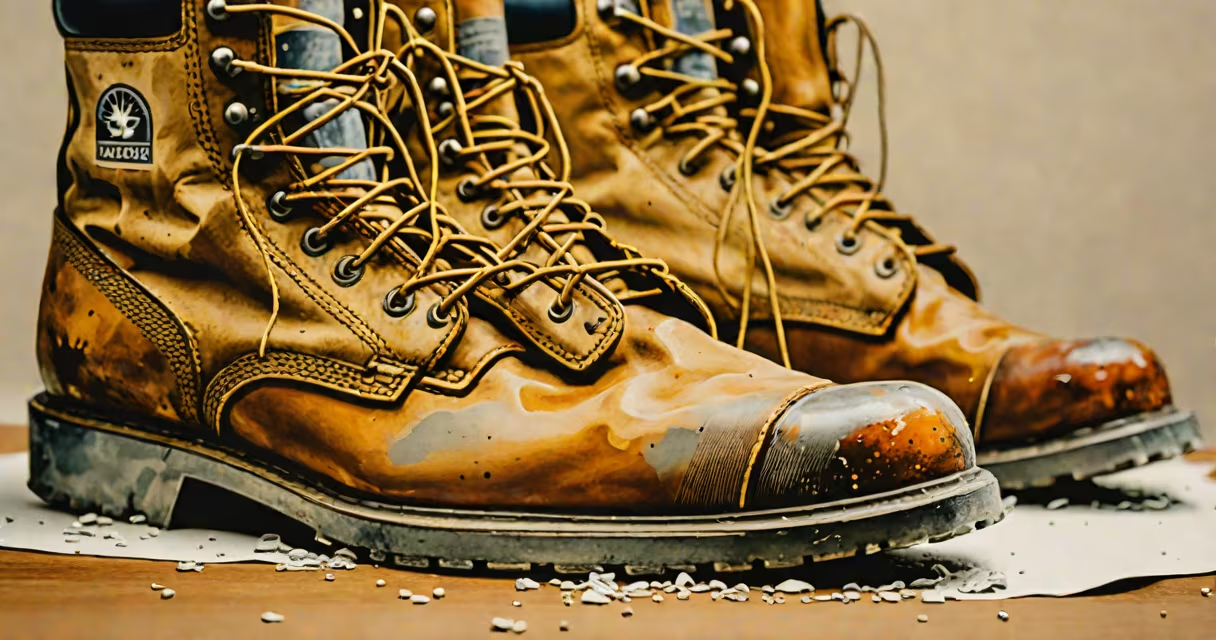
A composite toe in boots is a non-metallic protective cap embedded in the toe box to guard against impact and compression injuries. Unlike steel toes, it uses materials like fiberglass, carbon fiber, or thermoplastic polymers to meet ASTM F2413 impact and compression standards.
Composite toes are engineered to pass the same safety tests as steel toes. They must withstand a 75-pound drop from 24 inches (impact test) and endure 1,500 pounds of compression force without deforming. These requirements are set by the American Society for Testing and Materials (ASTM), which certifies all safety footwear.
Boots with composite toes are lighter than steel-toed models-typically 10-20% less weight-making them ideal for jobs requiring long hours on your feet. They also don't conduct heat or cold, reducing discomfort in extreme temperatures. This makes them suitable for food processing, cold storage, and outdoor construction roles.
Composite toes function by distributing force across a wide area when struck. The material resists deformation under pressure, preventing injury even if a heavy object falls on the foot. The cap sits inside the boot's upper, beneath the outer leather or synthetic layer, and is molded to fit the natural shape of the foot.
Unlike metal, composite materials do not trigger metal detectors. This feature is critical in airports, secure facilities, and high-security industrial zones where workers must pass through screening without delays. A 2021 study by the National Institute for Occupational Safety and Health (NIOSH) found that 68% of workers in transportation and logistics reported reduced screening time when wearing composite-toe footwear.
Composite toes also resist corrosion and do not rust. Steel toes can degrade over time in wet or salty environments, compromising protection. Composite caps maintain structural integrity in harsh conditions, making them better suited for marine work, chemical plants, and outdoor maintenance.
There are three primary types of composite toes based on material composition:
| Type | Material | Weight (per pair) | Best For |
|---|---|---|---|
| Fiberglass | Reinforced glass fibers in resin matrix | 1.2 lbs | General construction, warehousing |
| Carbon Fiber | High-strength carbon strands in polymer | 1.0 lbs | High-precision tasks, aerospace, clean rooms |
| Thermoplastic Polymer | Engineered plastic with impact modifiers | 0.9 lbs | Food service, cold storage, kitchens |
Each type offers different balance between strength, weight, and cost. Thermoplastic polymer is the lightest and most affordable, while carbon fiber provides maximum strength-to-weight ratio. Fiberglass strikes a middle ground and is widely used in standard safety boots.
Composite toes are common in industries where mobility, comfort, and security screening are priorities. Food processing plants often require composite-toe boots because they don't attract metal shavings or interfere with equipment sensors. Similarly, hospitals and laboratories use them to avoid triggering alarms near MRI machines or sensitive instruments.
In cold environments, such as refrigerated warehouses, composite toes prevent heat transfer from the ground to the foot. Steel conducts cold efficiently, leading to numbness and reduced dexterity. A 2020 field test by the University of Minnesota's Ergonomics Lab showed that workers wearing composite-toe boots reported 34% less foot fatigue during 12-hour shifts in sub-zero conditions.
I've worn composite-toe boots during a six-week site inspection at a wind turbine facility. The terrain was uneven, and we frequently walked across metal grates and scaffolding. The boots stayed cool in winter and didn't trigger the airport-style scanners at remote access points-saving us 15 minutes per day at checkpoints.
Many assume composite toes are weaker than steel ones. This is false. Both types must meet the same ASTM F2413 standards. A 2019 comparison by Underwriters Laboratories (UL) tested 50 pairs of boots-25 with steel toes and 25 with composite-toe caps. All passed both impact and compression tests. No statistically significant difference in performance was found.
Some believe composite toes are prone to cracking or breaking under stress. However, modern composites are designed with fracture-resistant additives. When properly manufactured, they outperform older plastic caps that failed under repeated impact. The key is choosing boots with certified composite toe labels and avoiding aftermarket replacements.
Composite toe in boots is a durable, lightweight, and non-metallic alternative to steel toes. It meets industry safety standards, reduces fatigue, and avoids detection in security systems. construction zone, understanding the differences between composite and steel toes ensures you choose the right protection.