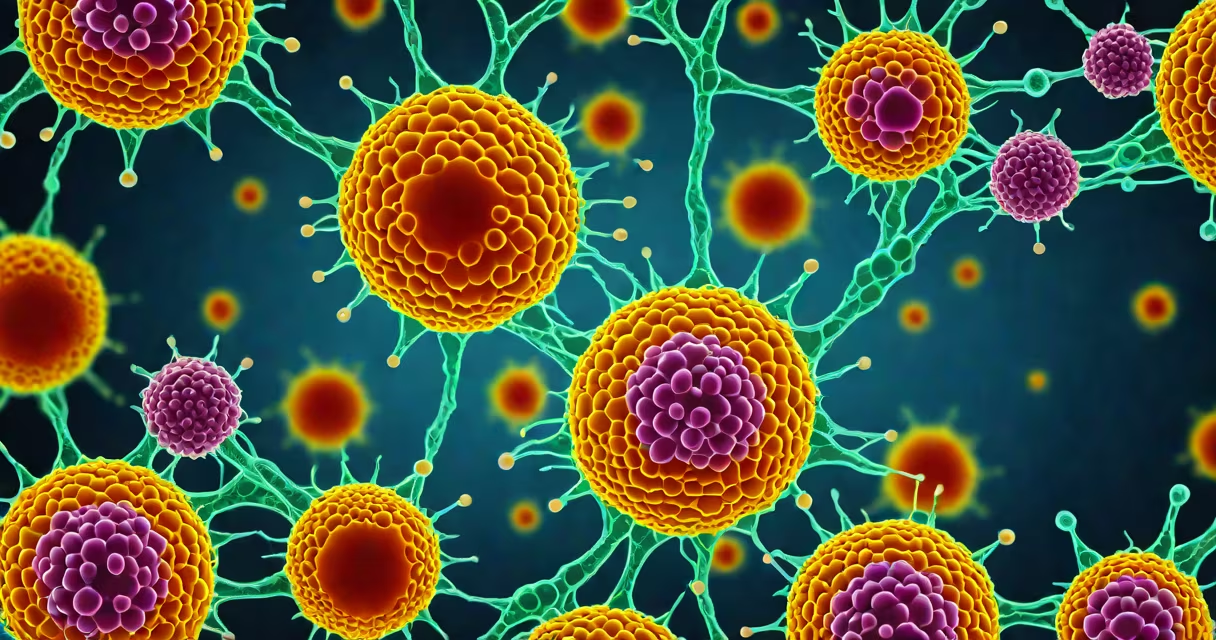
In biology, stem cell meaning refers to undifferentiated cells capable of developing into multiple specialized cell types. They serve as the body's internal repair system, dividing without limit to replenish other cells.
Stem cells are defined by two key traits: self-renewal and potency. Self-renewal means they can divide and produce more stem cells. Potency refers to their capacity to differentiate into specific cell types-muscle, nerve, blood, or skin cells, depending on the type.
The term "stem cell" originates from the idea that these cells are the "source" or "stem" from which all other specialized cells grow. This concept was first described in the 19th century, but modern understanding began with the isolation of mouse embryonic stem cells in 1981. Since then, research has confirmed their role in development, disease modeling, and therapeutic applications.
Stem cells maintain tissue homeostasis by replacing damaged or dead cells. When a tissue is injured, signals trigger nearby stem cells to activate, divide, and mature into the needed cell type. For example, hematopoietic stem cells in bone marrow continuously generate red blood cells, white blood cells, and platelets.
Differentiation occurs through gene regulation. Internal signals-like transcription factors-and external cues-such as growth factors in the surrounding environment-turn on specific genes. This process locks in a cell's identity. A stem cell becomes a neuron by activating neural genes and silencing others.
Not all stem cells are equally potent. Some can only become one cell type (unipotent), while others can become many (pluripotent or totipotent). The level of potential determines their biological and medical utility.
Stem cells are categorized by origin and potency. The main types are:
| Type | Potency | Source | Example Use |
|---|---|---|---|
| Embryonic stem cells (ESCs) | Totipotent (can form all tissues, including placenta) | Inner cell mass of blastocyst-stage embryos (5-7 days post-fertilization) | Research on early development; potential for organ regeneration |
| Induced pluripotent stem cells (iPSCs) | Pluripotent (can form any cell type except extraembryonic tissues) | Reprogrammed adult cells (e.g., skin fibroblasts) using Yamanaka factors (Oct4, Sox2, Klf4, c-Myc) | Disease modeling; personalized medicine; avoiding immune rejection |
| Adult stem cells (somatic stem cells) | Multipotent or unipotent (limited to cell types of their tissue) | Bone marrow, brain, gut lining, skin | Repair of blood, nervous system, intestinal epithelium |
Embryonic stem cells were first isolated in 1981 by Martin Evans and Matthew Kaufman. Their discovery opened new avenues for developmental biology and regenerative medicine. However, ethical concerns arose due to embryo destruction during extraction, leading to strict regulations in many countries.
iPSCs emerged in 2006 when Shinya Yamanaka demonstrated that four transcription factors could revert adult cells to a pluripotent state. This breakthrough earned him the 2012 Nobel Prize in Physiology or Medicine. iPSCs allow researchers to create patient-specific cell lines without using embryos.
Adult stem cells exist in most tissues but are rare and difficult to isolate. Hematopoietic stem cells in bone marrow have been used clinically since the 1950s for treating leukemia and lymphoma via bone marrow transplants.
Stem cells are used in clinical settings, research labs, and biotech development. Their primary application is in regenerative medicine-the goal of repairing or replacing damaged tissues.
For example, in spinal cord injury trials, researchers inject neural stem cells into the injury site. In early-phase human trials, some patients regained partial motor function. A 2021 study published in Nature Medicine reported that 12 out of 15 patients showed improved mobility after transplantation.
Stem cells also model diseases. Scientists grow neurons from iPSCs derived from patients with Alzheimer's or Parkinson's. These lab-grown neurons exhibit disease-specific changes, allowing testing of drugs before human trials.
A common misconception is that stem cell therapy is widely available for conditions like autism or anti-aging. The U.S. Food and Drug Administration (FDA) has approved only a few stem cell treatments, such as hematopoietic stem cell transplants for blood disorders. Clinics offering unproven therapies often lack evidence and may pose serious risks.
Another misunderstanding is equating all stem cells with embryonic ones. While embryonic stem cells have high plasticity, adult stem cells are already committed to certain lineages. Using the wrong type can lead to failed treatments or tumor formation.
Stem cell meaning in biology is frequently misinterpreted as synonymous with "miracle cure." This is false. Stem cells do not automatically heal diseases. Success depends on precise delivery, timing, and integration into host tissue.
For instance, injecting stem cells into a heart after a myocardial infarction does not guarantee functional recovery. A 2019 meta-analysis in JAMA Cardiology found that stem cell therapy improved ejection fraction by only 3.5 percentage points on average-clinically modest and inconsistent across studies.
Some people believe stem cells can reverse aging. While they contribute to tissue maintenance, they do not stop cellular senescence. Telomere shortening, DNA damage, and mitochondrial decline continue even with stem cell activity.
There is also confusion between stem cells and progenitor cells. Progenitors are partially differentiated cells that can only become a limited number of cell types. They are not self-renewing like true stem cells. Distinguishing them is critical in research and therapy design.
I once observed a lab session where researchers cultured iPSCs from a skin biopsy taken from a patient with type 1 diabetes. Over six weeks, the cells formed insulin-producing beta cells. The team validated function by measuring insulin release in response to glucose-mimicking natural pancreatic behavior. This experiment demonstrated how stem cell meaning in biology translates into tangible medical tools.
However, the process required constant monitoring. Contamination occurred twice in the first month. Even minor deviations in temperature or nutrient levels caused cell death. This highlighted that stem cell work demands precision-not just biological insight, but technical rigor.
Stem cell meaning in biology centers on undifferentiated cells with the capacity to renew themselves and generate specialized cell types. They are foundational to development, repair, and emerging therapies. Understanding their types, limitations, and real-world applications prevents misinformation and supports responsible innovation.