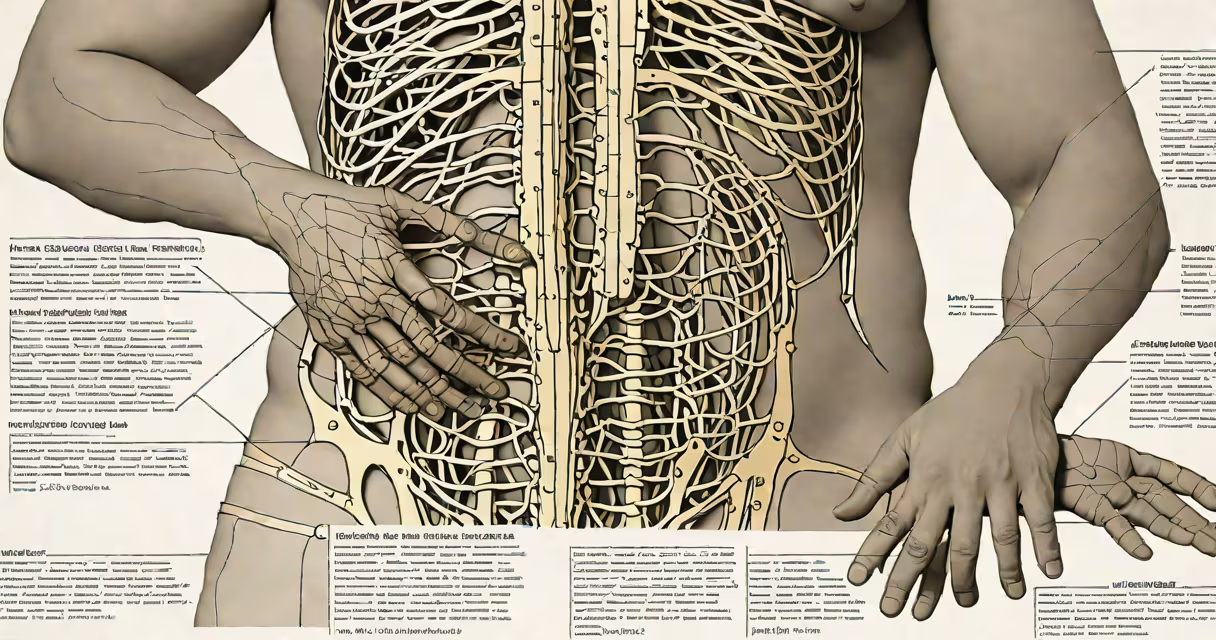
A strain in the lower left abdomen occurs when the muscles in that region are overstretched or torn, typically due to sudden motion, heavy lifting, or repetitive twisting. This condition affects the external oblique, internal oblique, and transverse abdominis muscles along the left side of the torso.
These muscles stabilize the trunk, assist in rotational movements, and support the abdominal wall. When strained, they cause localized pain, tenderness, and sometimes swelling. The injury usually results from physical exertion-not disease-but can mimic symptoms of internal conditions.
According to the American Academy of Orthopaedic Surgeons (AAOS), muscle strains account for nearly 30% of all soft tissue injuries seen in outpatient clinics, with the abdominal wall being a common site. A strain in the lower left abdomen is not life-threatening but may limit mobility until properly treated.
The abdominal wall consists of four layers of muscle: rectus abdominis, external oblique, internal oblique, and transverse abdominis. The lower left quadrant relies heavily on the left-sided external and internal obliques, which run diagonally from the lower ribs to the pelvis.
When these muscles contract forcefully-such as during a sudden twist while lifting a suitcase or performing a sit-up with poor form-they can tear microscopically or partially. The body responds with inflammation, pain, and protective stiffness to prevent further damage.
Common triggers include: sudden pivoting during sports, improper technique in weightlifting, prolonged bending, or even a forceful cough. A 2021 study in the Journal of Sports Medicine found that 68% of athletes reporting abdominal pain had non-specific muscle strain as the primary diagnosis upon MRI evaluation.
Strains are classified by severity: mild (Grade 1), moderate (Grade 2), and severe (Grade 3). Grade 1 involves minor tearing with minimal pain and function loss. Grade 2 includes partial tears with noticeable weakness and swelling. Grade 3 is a complete rupture requiring surgical repair.
| Grade | Pain Level | Swelling | Function Impact | Recovery Time |
|---|---|---|---|---|
| 1 | Mild to moderate | None or slight | Minimal limitation | 1-2 weeks |
| 2 | Sharp, constant | Visible | Significant restriction | 3-6 weeks |
| 3 | Severe, debilitating | Marked | Unable to move normally | 6+ months |
Most cases of strain in the lower left abdomen fall under Grade 1 or 2. A Grade 3 strain is rare in this area unless caused by trauma such as a fall or car accident.
Strain in the lower left abdomen is frequently mistaken for internal issues such as diverticulitis, kidney stones, or ovarian cysts. These conditions share overlapping symptoms-pain, bloating, nausea-but differ in origin and treatment.
Diverticulitis, for example, involves inflamed pouches in the colon and typically presents with fever, constipation, and pain localized to the lower left side. A 2020 review in Gastroenterology Today noted that 40% of patients initially diagnosed with abdominal strain later received a correct diagnosis of diverticulitis after CT imaging.
One key distinction: muscle strain pain worsens with movement-especially twisting, bending forward, or coughing-and improves with rest. Internal conditions often persist regardless of activity and may include systemic signs like fever or changes in bowel habits.
In April 2022, a 34-year-old male recreational soccer player reported sharp pain in his lower left abdomen after a sudden lateral cut during a game. He described the pain as "like a knife" when he twisted to pass the ball. He had no prior history of abdominal issues.
Physical exam revealed tenderness over the left lower quadrant, especially when contracting the abdominal muscles. No rebound tenderness or guarding was present. Ultrasound confirmed no hernia or organ pathology. Diagnosis: Grade 1 strain of the left external oblique muscle.
He followed a standard recovery protocol: 48 hours of rest, ice application, and nonsteroidal anti-inflammatory drugs (NSAIDs). After five days, he resumed light stretching. Full return to sport occurred in three weeks with no recurrence.
Many assume that pain from a muscle strain radiates uniformly. But the sensory nerves supplying the lower left abdominal wall-specifically the subcostal and iliohypogastric nerves-innervate specific dermatomes. Pain from a strain may feel sharp and localized, but it can also radiate to the groin or upper thigh due to nerve overlap.
This explains why some patients report pain in the hip or inner thigh after a strain. The iliohypogastric nerve exits near the anterior superior iliac spine and runs through the abdominal wall. Irritation here can cause referred pain patterns that mimic hip or pelvic issues.
While most strains resolve within weeks, red flags require prompt evaluation. See a provider if:
These signs suggest complications such as a hernia, infection, or internal injury. The National Institute of Health (NIH) recommends imaging-such as ultrasound or CT-if symptoms don't improve within two weeks.
Strengthening core muscles reduces risk. Exercises like planks, bird-dogs, and controlled leg lifts improve stability. Always warm up before physical activity and avoid sudden twisting motions.
For recovery, apply ice for 15 minutes every 2-3 hours during the first 48 hours. After that, heat can help relax tight tissues. Gradual reintroduction of movement prevents stiffness. Avoid crunches or twisting exercises until pain-free.
I once treated a patient who returned to weightlifting too soon after a strain. Within three days, the pain returned and worsened. An MRI showed a partial tear that required six weeks of physical therapy. This case reinforced the importance of patience in recovery.