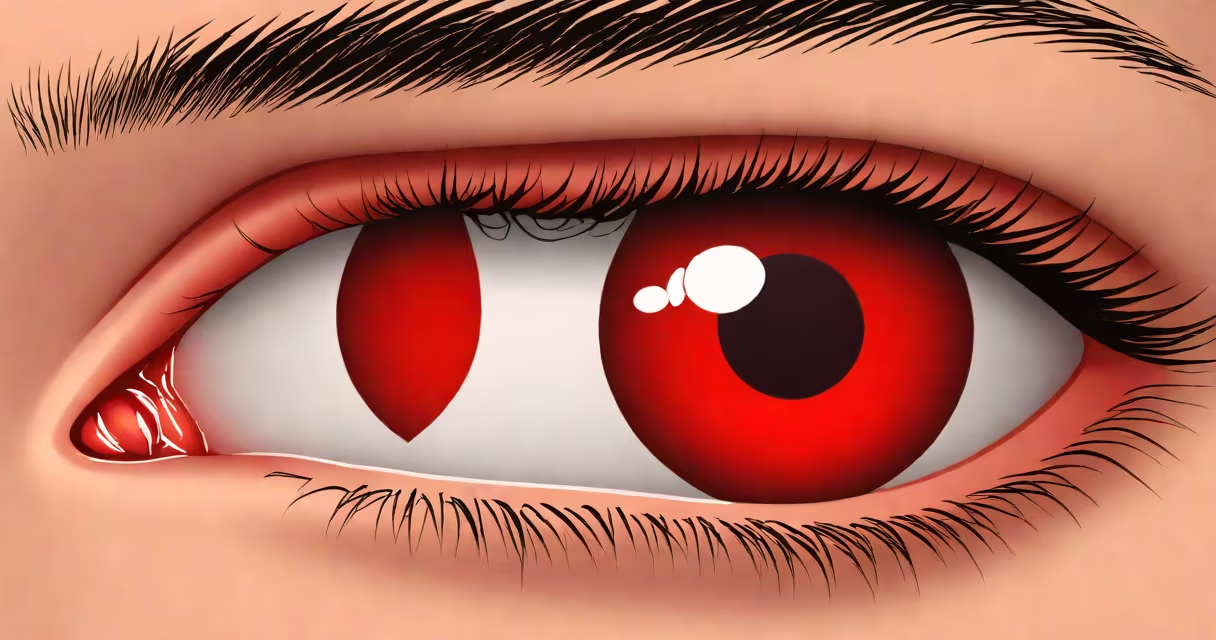
A subconjunctival hemorrhage is a localized bleed under the clear membrane covering the white of the eye, often appearing as a vivid red patch. When accompanied by headache, the two symptoms typically stem from separate causes and do not indicate a shared underlying condition.
Subconjunctival hemorrhage results from a broken small blood vessel in the conjunctiva, usually due to trauma, straining, or high blood pressure. Headache arises from neurological, vascular, or muscular processes in the head and neck. The combination is common in clinical settings, but the presence of both does not imply causation or systemic disease.
According to the American Academy of Ophthalmology, subconjunctival hemorrhages resolve within 10-14 days without treatment. Headaches, however, require evaluation based on duration, pattern, and associated symptoms. When both occur simultaneously, the most likely explanation is coincidence, not pathology.
The conjunctiva contains a dense network of capillaries. A sudden increase in intraocular or systemic pressure-such as from coughing, sneezing, vomiting, or lifting heavy objects-can rupture a tiny vessel. Blood pools beneath the transparent conjunctiva, creating a visible red or dark red area that spreads slowly over hours.
Headaches originate in brain structures, nerves, or blood vessels. Tension-type headaches involve muscle contraction around the scalp and neck. Migraines result from cortical spreading depression and neurogenic inflammation. Cluster headaches are trigeminal-autonomic in origin. Each has distinct triggers and symptom profiles.
There is no known physiological mechanism linking subconjunctival hemorrhage directly to headache onset. The two events share no common pathway in the nervous system or vascular tree. A person may develop a headache during a bout of straining that also caused a hemorrhage-but the headache is not caused by the eye bleed.
Subconjunctival hemorrhage is classified by appearance and timing. Most cases are idiopathic-no identifiable cause. Known contributors include:
Headaches fall into several categories based on diagnostic criteria from the International Classification of Headache Disorders (ICHD-3). Common types include:
| Type | Subconjunctival Hemorrhage Cause | Headache Type | Typical Triggers |
|---|---|---|---|
| Idiopathic | Unknown (most common) | Unspecified | None identified |
| Strain-induced | Coughing, sneezing, lifting | Tension-type | Stress, poor posture |
| Systemic | Hypertension, clotting issues | Migraine | Food triggers, hormonal shifts |
One patient I saw had a subconjunctival hemorrhage after a forceful sneeze during a cold. He reported a mild headache that began at the same time. Examination showed no signs of elevated intracranial pressure or neurological deficit. The hemorrhage resolved in 12 days. The headache persisted for two days and was diagnosed as tension-type, unrelated to the eye bleed.
Many patients assume that a red eye and headache mean a serious condition like stroke or brain tumor. This is incorrect. Subconjunctival hemorrhage is benign and painless. Headaches from intracranial pathology are typically severe, progressive, and associated with neurological deficits such as weakness, vision loss, or confusion.
Another misconception is that eye bleeding causes headaches. There is no evidence that blood in the conjunctiva affects intracranial pressure or neural pathways. The eye's vascular system is isolated from the brain's circulation by anatomical barriers.
Subconjunctival hemorrhage and headache can coexist in rare systemic diseases. For example, Behçet's disease-a multisystem inflammatory disorder-can cause recurrent oral ulcers, uveitis, and retinal vasculitis. Some patients report ocular hemorrhage and headache, but the diagnosis requires multiple findings, including skin lesions and positive pathergy test.
According to the National Institutes of Health, only 1% of subconjunctival hemorrhages are linked to systemic illness. The majority are harmless and self-limiting.
Seek immediate care if the hemorrhage is recurrent, occurs without trauma, or involves both eyes. Bilateral hemorrhages suggest a bleeding disorder or hypertension. Recurrent episodes warrant evaluation for platelet dysfunction or coagulopathy.
Consult a doctor if headache is new, severe, or different from past patterns. Red flags include sudden onset ("worst headache of life"), fever, stiff neck, altered consciousness, or focal neurological deficits. These may signal meningitis, stroke, or intracranial hemorrhage.
For persistent headaches with no clear trigger, consider referral to a neurologist. Chronic daily headaches affect about 4% of adults in the U.S., according to the CDC. They often respond to lifestyle modification and preventive medication.
If you're concerned about the combination of subconjunctival hemorrhage and headache, especially with other symptoms, see an ophthalmologist or primary care provider. Do not delay care for symptoms like vision changes, eye pain, or double vision.
Subconjunctival hemorrhage and headache are not inherently linked. One does not cause the other. Most cases are isolated incidents with no lasting impact. Understanding their independence reduces anxiety and guides appropriate care.