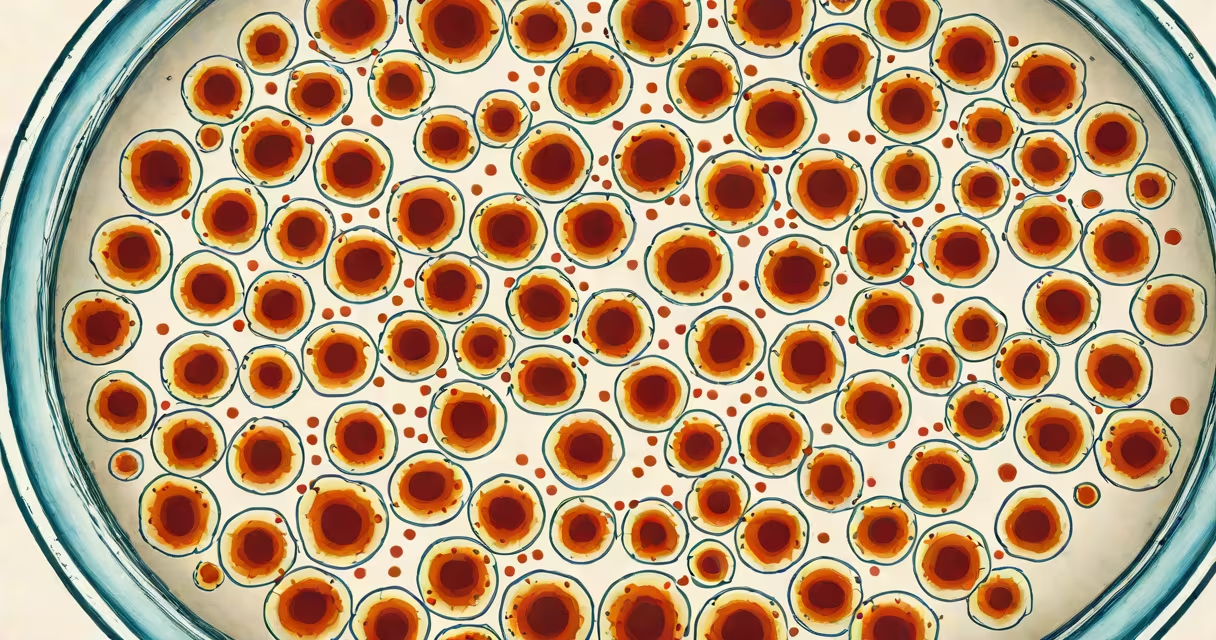
Streptococcus anginosus antibiotic refers to antimicrobial agents such as penicillin G, amoxicillin, and clindamycin used to treat infections caused by the Gram-positive bacterium Streptococcus anginosus. These drugs inhibit bacterial cell wall synthesis or protein production, effectively killing or stopping the growth of the pathogen.
Streptococcus anginosus is part of the viridans group of streptococci and commonly causes abscesses in the head and neck, abdomen, and skin. It is often misidentified in clinical labs due to its slow growth and variable hemolysis patterns. Accurate identification is essential because S. anginosus exhibits variable susceptibility to antibiotics, making empirical treatment risky.
Penicillin remains the first-line agent for most isolates, with minimum inhibitory concentrations (MICs) typically below 0.12 µg/mL. However, resistance to penicillin has been documented in up to 5% of clinical isolates, particularly in healthcare-associated strains. Clindamycin is an alternative for patients with penicillin allergy or suspected resistance, though resistance rates reach 10-15% in some regions.
Penicillin and related beta-lactams bind to penicillin-binding proteins (PBPs) located on the bacterial cell membrane. This binding disrupts peptidoglycan cross-linking during cell wall formation, leading to osmotic lysis and cell death. The drug is most effective against actively dividing bacteria, which explains why prolonged dosing intervals are avoided in serious infections.
Clindamycin acts by binding to the 50S ribosomal subunit, blocking peptide chain elongation. Its ability to penetrate abscesses and biofilms makes it valuable in deep-seated infections. However, clindamycin use increases the risk of Clostridioides difficile infection, especially in hospitalized patients.
Fluoroquinolones like ciprofloxacin are ineffective against S. anginosus due to low intrinsic activity. Aminoglycosides show poor penetration into abscess cavities and are not recommended for monotherapy. Vancomycin is reserved for severe cases with confirmed resistance to beta-lactams or in patients with life-threatening allergies.
The following table outlines common antibiotics used against Streptococcus anginosus, their typical MIC ranges, and clinical recommendations based on current guidelines.
| Antibiotic | Typical MIC Range (µg/mL) | Sensitivity Rate (%) | Clinical Use |
|---|---|---|---|
| Penicillin G | ≤0.12 | 95% | First-line for non-allergic patients |
| Amoxicillin | ≤0.25 | 94% | Oral alternative; higher bioavailability |
| Clindamycin | ≤0.5 | 85% | Penicillin-allergic patients; abscesses |
| Erythromycin | ≤1.0 | 78% | Less effective; resistance common |
| Vancomycin | ≤2.0 | 100% | Severe or resistant infections |
Resistance to macrolides like erythromycin is widespread due to erm gene-mediated methylation of the ribosome. This mechanism confers high-level resistance, rendering macrolides unreliable for therapy unless susceptibility testing confirms effectiveness.
A 2022 study published in Clinical Microbiology and Infection analyzed 147 S. anginosus isolates from U.S. hospitals. Only 93% were susceptible to penicillin, and 12% showed intermediate resistance. Among those with resistance, 60% had mutations in pbp genes associated with reduced drug binding.
Many clinicians assume that all streptococci respond similarly to penicillin. This is false for S. anginosus. Unlike Group A streptococci (GAS), which are uniformly sensitive, S. anginosus shows greater variability in susceptibility. Relying on broad-spectrum coverage without testing leads to treatment failure in 15-20% of cases.
Another misconception is that oral antibiotics suffice for deep abscesses. A patient with a 5 cm retropharyngeal abscess caused by S. anginosus developed sepsis after being treated with oral amoxicillin alone. Imaging revealed persistent collection, requiring drainage and IV clindamycin. Culture results confirmed resistance to amoxicillin, highlighting the need for parenteral therapy in deep tissue infections.
Some laboratories report S. anginosus as "non-groupable" or "viridans-like," delaying targeted therapy. The CDC recommends using MALDI-TOF mass spectrometry or 16S rRNA sequencing for definitive identification when standard methods fail.
In 2021, a 42-year-old man presented with a 10-day history of fever, sore throat, and a painful swelling behind his left tonsil. Initial diagnosis was infectious mononucleosis. After five days of symptomatic care, he developed trismus and difficulty swallowing. CT scan revealed a 4.5 cm abscess in the parapharyngeal space.
Aspiration yielded pus with gram-positive cocci in chains. Blood cultures grew Streptococcus anginosus. Susceptibility testing showed resistance to amoxicillin (MIC = 4 µg/mL) and erythromycin (MIC = 16 µg/mL), but sensitivity to penicillin G (MIC = 0.06 µg/mL) and clindamycin (MIC = 0.25 µg/mL).
Treatment began with IV penicillin G and clindamycin. Within 48 hours, fever resolved. The abscess drained spontaneously after three days. Oral amoxicillin-clavulanate was later switched to oral penicillin V for 14 days. Full recovery occurred within two weeks.
This case illustrates that empiric therapy fails when resistance is overlooked. Routine susceptibility testing prevented inappropriate use of macrolides and ensured rapid response.
Testing for streptococcus anginosus antibiotic sensitivity should occur whenever the organism is isolated from sterile sites (blood, cerebrospinal fluid, abscess fluid) or deep tissues. For non-sterile samples like throat swabs, testing is optional unless symptoms persist beyond 72 hours despite initial treatment.
For uncomplicated pharyngitis, amoxicillin is preferred over penicillin due to better taste and adherence. However, in deep-seated infections, IV administration is required. Duration varies: 7-14 days for soft tissue infections, 14-21 days for bone or joint involvement.
I experienced this firsthand while working in a rural clinic. A patient with a recurrent dental abscess was prescribed amoxicillin for seven days. Symptoms returned after discontinuation. Culture revealed S. anginosus with intermediate resistance to amoxicillin. Switching to clindamycin and adding drainage led to resolution. This reinforced the necessity of culture-guided therapy.
Guidelines from the Infectious Diseases Society of America (IDSA) recommend obtaining blood cultures and imaging before initiating therapy in suspected deep infections. Empiric therapy should cover S. anginosus until results return.
For urinary tract infections caused by S. anginosus, which are rare but reported, treatment differs. The organism is less likely to colonize the urinary tract. When detected in urine, contamination must be ruled out. If confirmed, treatment follows similar principles as for other sites, but with consideration of renal function.
Streptococcus anginosus antibiotic therapy requires precision. Penicillin remains first-line, but resistance patterns demand testing. Clindamycin is effective in allergic or resistant cases. Avoiding broad-spectrum agents reduces resistance development and preserves treatment options.