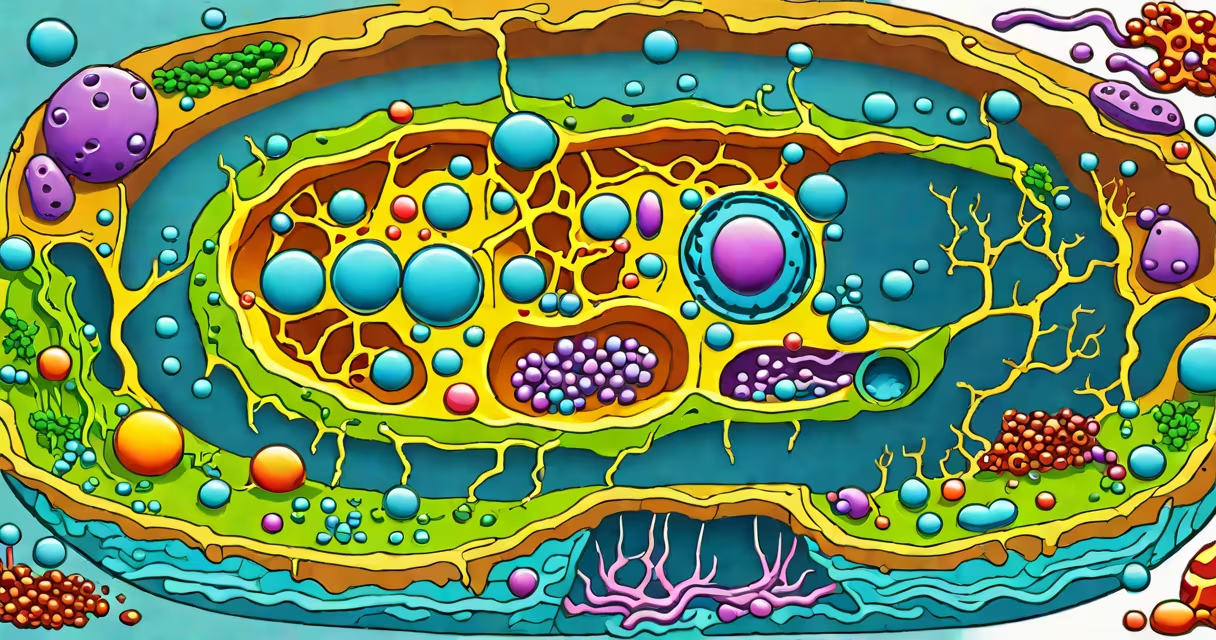
Structures found in both prokaryotic and eukaryotic cells include the plasma membrane, cytoplasm, ribosomes, and DNA. These components form the foundation of cellular function across all domains of life, from bacteria to human cells.
All living cells, regardless of complexity, require a boundary to separate internal processes from the environment. The plasma membrane fulfills this role. Composed of a phospholipid bilayer with embedded proteins, it regulates ion flow, nutrient uptake, and waste export. In *Escherichia coli*, a prokaryote, the membrane maintains osmotic balance and supports electron transport chains. In human liver cells, the same structure manages glucose absorption and hormone signaling. This universal design underscores evolutionary conservation.
The cytoplasm is the gel-like matrix inside the cell where metabolic reactions occur. It contains dissolved ions, enzymes, metabolites, and organelles. In *Saccharomyces cerevisiae* (baker's yeast), a eukaryote, cytoplasmic streaming moves vesicles and organelles. In *Mycoplasma genitalium*, a minimal prokaryote with one of the smallest known genomes, the cytoplasm houses all essential machinery for replication and protein synthesis. Despite differences in organization, the cytoplasm serves as the operational workspace for both cell types.
Genetic material in all cells is stored as DNA. Prokaryotes compact their circular chromosome into a nucleoid region, often associated with proteins like HU and IHF. Eukaryotes package DNA into linear chromosomes within a nucleus, wrapped around histone proteins. Even though the spatial arrangement differs, the molecular basis remains consistent: DNA sequences encode proteins via transcription and translation. The *Thermus aquaticus* bacterium uses the same genetic code as humans-3'-TAC-5' codes for tyrosine in both systems.
Ribosomes are the sites of protein synthesis. They consist of rRNA and proteins, assembled in the nucleolus in eukaryotes and directly in the cytoplasm in prokaryotes. A 70S ribosome in *E. coli* has a 50S large subunit and a 30S small subunit. Human cells have 80S ribosomes with 60S and 40S subunits. Despite size and composition differences, both types use tRNA to read mRNA codons and catalyze peptide bond formation. The antibiotic streptomycin targets bacterial 30S subunits, disrupting initiation-but does not affect human ribosomes due to structural differences.
| Structure | Prokaryotic Cell | Eukaryotic Cell | Function |
|---|---|---|---|
| Plasma Membrane | Phospholipid bilayer with integral proteins | Same composition; includes cholesterol in animal cells | Regulates transport, signal transduction |
| Cytoplasm | Homogeneous matrix; no organelles | Dense network with organelles suspended | Site of glycolysis, protein folding, ion storage |
| DNA | Single circular chromosome; no nucleus | Linear chromosomes in nucleus; chromatin structure | Encodes all cellular proteins and RNAs |
| Ribosomes | 70S; free or bound to membrane | 80S; free or attached to rough ER | Translate mRNA into polypeptides |
These shared structures are not accidental. Evolutionary biology confirms that LUCA (Last Universal Common Ancestor) likely possessed all four components. Comparative genomics shows that genes encoding ribosomal proteins and membrane transporters are conserved across domains. For example, the *rpl2* gene in *Arabidopsis thaliana* (plant) shares 78% amino acid identity with its homolog in *Bacillus subtilis* (bacterium).
A common misconception is that only eukaryotes have organelles. While mitochondria and lysosomes are exclusive to eukaryotes, some prokaryotes possess membrane-bound microcompartments. Carboxysomes in cyanobacteria encapsulate RuBisCO enzyme, concentrating CO₂ for photosynthesis. These structures are not true organelles-they lack inheritance and changing fusion-but they demonstrate functional parallels. True organelles are defined by double-membrane boundaries and independent replication, traits absent in prokaryotes.
Another misunderstanding is that prokaryotes lack internal organization. In reality, many maintain complex internal architecture. *Caulobacter crescentus* forms stalks and holdfasts for surface attachment. Its cell division involves precise localization of proteins like FtsZ and MinCDE. These systems create asymmetry and regulate division timing-functions previously thought to require a nucleus. This challenges the idea that complexity requires compartmentalization.
I once observed *Synechococcus elongatus* under phase-contrast microscopy during a summer research project. The cells displayed rhythmic changes in pigmentation and internal density, indicating circadian regulation of metabolism. Despite lacking a nucleus, the organism maintained coordinated gene expression cycles across generations. This confirmed that temporal organization can exist without membrane-bound compartments.
Understanding structures found in both prokaryotic and eukaryotic cells reveals the unity of life. The plasma membrane, cytoplasm, DNA, and ribosomes are not just shared-they are foundational. Their presence across billions of years of evolution indicates that these features are optimal for sustaining life under diverse conditions. This shared blueprint enables comparative studies in medicine, biotechnology, and astrobiology.