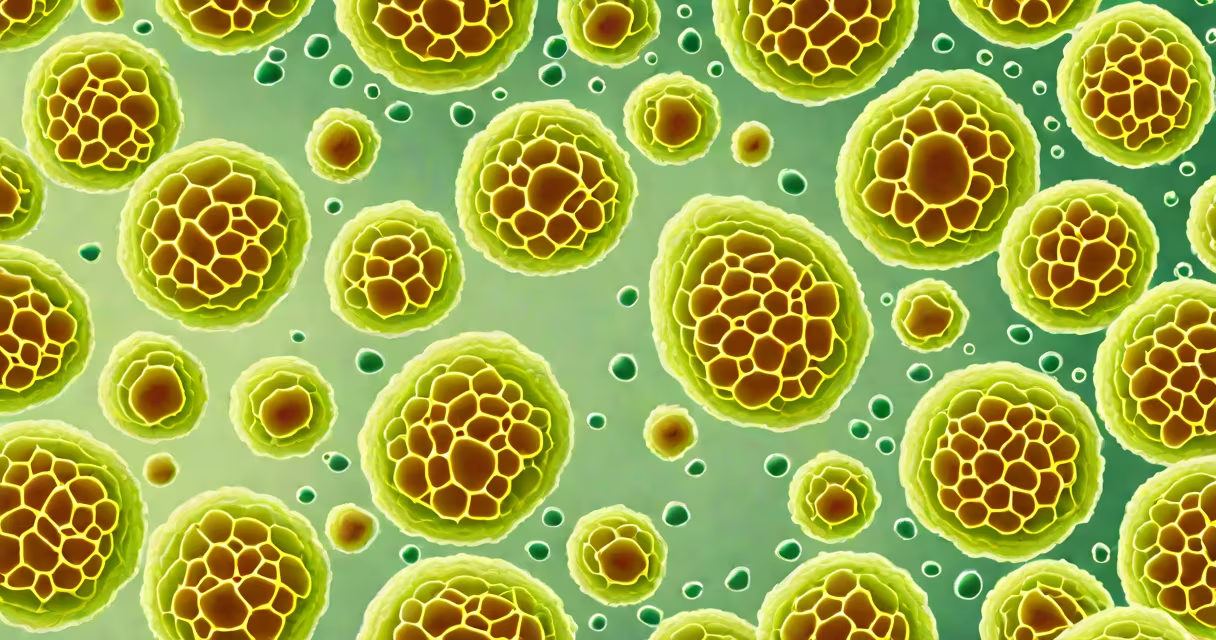
Budding yeast, scientifically known as *Saccharomyces cerevisiae*, is a single-celled eukaryotic organism used extensively in biological research, food production, and industrial fermentation. It reproduces by forming a small outgrowth-called a bud-that matures into a daughter cell before detaching.
This species is central to molecular biology because its genome was fully sequenced in 1996, making it one of the first eukaryotes to have its complete genetic blueprint mapped. Researchers use it to study fundamental processes like cell cycle regulation, DNA repair, and protein trafficking. Its short generation time-about 90 minutes under optimal conditions-allows rapid experimentation.
Unlike filamentous fungi such as molds, budding yeast grows as isolated cells and divides asymmetrically through a process called budding. The parent cell forms a protrusion that enlarges and eventually separates, carrying a copy of the nucleus and organelles. This mechanism differs from binary fission seen in bacteria and is a key reason why *S. cerevisiae* serves as a model for eukaryotic cell division.
Budding yeast functions through a tightly regulated cell cycle divided into four phases: G1 (gap 1), S (synthesis), G2 (gap 2), and M (mitosis). During G1, the cell grows and prepares for DNA replication. In S phase, the genome duplicates. G2 ensures the cell is ready for division, and M phase involves nuclear division and cytokinesis-the physical splitting of the mother and daughter cells.
Key regulatory proteins control progression through these stages. Cyclin-dependent kinases (CDKs) activate at specific checkpoints. For example, the protein Cdc28, a CDK in budding yeast, partners with different cyclins to trigger distinct phases. Mutations in genes encoding these regulators cause cell cycle arrest or uncontrolled growth-phenomena studied in cancer research.
Yeast cells also respond to environmental cues. When nutrients are low, they enter stationary phase and may undergo sporulation-a process that produces spores capable of surviving harsh conditions. This survival strategy mirrors stress responses in higher organisms and informs studies on aging and longevity.
While *Saccharomyces cerevisiae* is the most widely used form, related species exist with specialized roles:
| Type | Scientific Name | Primary Use |
|---|---|---|
| Budding yeast | *Saccharomyces cerevisiae* | Laboratory research, baking, brewing |
| Wild-type strain | various isolates from nature | Genetic diversity studies |
| Engineered strain | Modified via CRISPR or plasmid insertion | Protein expression, metabolic engineering |
| Industrial strain | *S. cerevisiae* var. *boulardii* | Probiotics, gut health support |
Engineered strains are designed for specific applications. Scientists have modified *S. cerevisiae* to produce insulin, biofuels, and even fragrances. These modifications involve inserting human genes into yeast chromosomes using plasmid vectors. For example, recombinant insulin used in diabetes treatment is synthesized in genetically altered yeast lines.
A common misconception is that all yeasts ferment sugars identically. In reality, *S. cerevisiae* ferments glucose efficiently but struggles with complex sugars like lactose. This limitation influences its use in dairy-based products, where other yeasts or bacterial systems are preferred.
Budding yeast is foundational in biotechnology. It's used to produce ethanol in beer and wine, where it converts sugar into alcohol and carbon dioxide. A single batch of beer can contain up to 10 billion yeast cells per milliliter during active fermentation. Brewers monitor yeast viability and nutrient levels to ensure consistent flavor profiles.
In scientific labs, *S. cerevisiae* enables high-throughput screening. Researchers can grow thousands of mutant strains simultaneously to identify genes involved in drug resistance or metabolic pathways. The yeast two-hybrid system, developed in the 1980s, uses yeast to detect protein-protein interactions-critical for mapping cellular networks.
One non-obvious fact: *S. cerevisiae* shares about 23% of its genes with humans. This homology allows scientists to study human disease mechanisms in yeast. For instance, mutations in the *MUTYH* gene cause colorectal cancer in humans. The yeast equivalent, *MUTYH*, performs similar DNA repair functions, enabling researchers to test potential therapies in a controlled environment.
I once observed a lab experiment where a strain of budding yeast was engineered to express a fluorescent protein tagged to a histone. Under a fluorescence microscope, nuclei glowed green during mitosis. The timing of the glow helped track cell cycle progression across hundreds of cells-data that would take weeks to collect in mammalian cells.
Budding yeast is often mistaken for *Candida albicans*, a pathogenic yeast that causes infections in humans. While both are fungi, *C. albicans* grows as filaments and can invade tissues. *S. cerevisiae* does not. It's generally safe for consumption and classified as GRAS (Generally Recognized As Safe) by the FDA.
Another confusion arises around "yeast" as a category. Not all yeasts reproduce by budding. Some, like *Schizosaccharomyces pombe*, divide by fission-splitting evenly along their long axis. This difference affects experimental design: researchers choose *S. pombe* when studying symmetric division, while *S. cerevisiae* remains the standard for asymmetric processes.
Some assume that industrial yeast strains are genetically modified. While many are, wild-type *S. cerevisiae* exists naturally in vineyards and forests. Commercial brewer's yeast is often selected from natural populations for desirable traits like high alcohol tolerance or clean flavor profiles-not necessarily altered in a lab.
Budding yeast is not just a tool-it's a living model that reveals how cells work at the molecular level. From understanding cancer to improving bread rise times, its impact spans biology, medicine, and daily life.