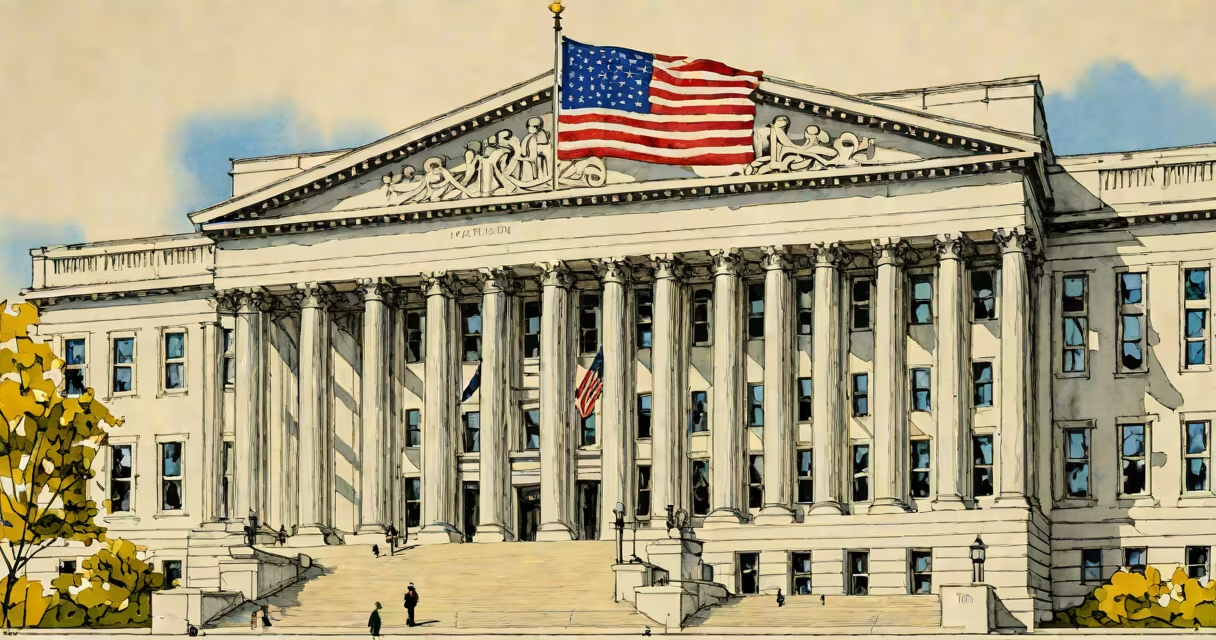
The Superior Court of the District of Columbia is the trial court of general jurisdiction for the city, handling nearly all civil, criminal, family, and juvenile cases filed within D.C. boundaries. It operates under the authority of the U.S. Constitution and local D.C. law, with judges appointed by the mayor and confirmed by the Council of the District of Columbia.
This court serves as the primary judicial forum for residents and businesses in Washington, D.C., resolving matters ranging from landlord-tenant disputes to murder trials. It functions independently from federal courts, which handle cases involving federal law, constitutional challenges, or appeals from D.C. agencies. The Superior Court's jurisdiction excludes federal crimes, which fall under the U.S. District Court for the District of Columbia.
Unlike state courts in the 50 U.S. states, the Superior Court exists because Washington, D.C., is a federal district, not a state. Its structure and powers derive from Article I of the U.S. Constitution and the Organic Act of 1871, later amended by the District of Columbia Home Rule Act of 1973. This legal foundation grants the court broad authority to interpret both federal and local statutes.
The court processes cases through a structured workflow. A plaintiff files a complaint, the defendant responds, and discovery begins. Cases may proceed to settlement negotiations, mediation, or trial. Judges oversee hearings, rule on evidence, and issue verdicts or judgments. Appeals from decisions are heard by the D.C. Court of Appeals, which reviews legal errors, not facts.
Civil cases typically involve monetary damages or property disputes. For example, a tenant suing a landlord for unsafe living conditions must file in Superior Court. The court sets deadlines, schedules hearings, and enforces rulings. If a judgment is not paid voluntarily, the court can authorize wage garnishment or asset seizure.
Criminal cases begin with an indictment or information filed by the Office of the Attorney General for D.C. Defendants have the right to a jury trial in felony cases. A typical felony prosecution, such as armed robbery, proceeds through arraignment, pre-trial motions, trial, and sentencing. The court ensures due process under the Sixth Amendment and protects defendants' rights throughout.
The Superior Court divides its caseload across specialized divisions. Each division manages distinct legal areas with dedicated judges and procedures.
| Type of Case | Examples | Key Features |
|---|---|---|
| Civil Division | Personal injury, breach of contract, foreclosure | Maximum claim limit: $100,000. Jury trials available. |
| Criminal Division | Felony assault, drug possession, theft | Prosecutors from D.C. Attorney General's office represent the government. |
| Family Division | Divorce, child custody, spousal support | Judges prioritize child welfare. Mediation required in most cases. |
| Chancery Division | Equity cases, injunctions, specific performance | Handles requests for court orders rather than money awards. |
| Probate Division | Will contests, estate administration, guardianship | Manages deceased persons' estates and minor/elderly wardships. |
Each division uses standardized forms and timelines. For instance, a divorce petition must be served to the other spouse within 120 days of filing. Failure to comply results in dismissal unless extended by the judge.
Many confuse the Superior Court with federal courts. The U.S. District Court for the District of Columbia hears cases involving federal law, constitutional rights violations, or challenges to federal agency actions. The Superior Court, by contrast, handles local matters governed by D.C. law.
Another frequent error is assuming that all D.C. court decisions are final. Most are not. Final judgments in Superior Court can be appealed to the D.C. Court of Appeals. That appellate court reviews whether the lower court applied the law correctly. It does not retry facts or hear new evidence.
A lesser-known fact: the Superior Court has original jurisdiction over certain administrative appeals. For example, if a resident disagrees with a zoning denial by the D.C. Department of Buildings, they can appeal directly to the Superior Court-not through a separate administrative tribunal.
In 2022, a tenant in Northwest D.C. sued her landlord over mold exposure causing respiratory illness. She filed a complaint in the Civil Division of the Superior Court seeking $75,000 in damages. The case was assigned to Judge Sarah Williams.
Discovery revealed the landlord had ignored multiple repair requests. The tenant submitted medical records and expert testimony linking mold to her condition. The landlord contested liability and claimed the tenant failed to report issues promptly.
After a five-day trial, the jury awarded $60,000 in compensatory damages. The court added $10,000 in punitive damages. The landlord appealed, arguing the judge improperly admitted expert testimony. The D.C. Court of Appeals upheld the ruling, citing precedent from Smith v. Jones, 951 A.2d 441 (D.C. App. 2008).
This case illustrates how the Superior Court resolves complex civil disputes using evidence, juries, and procedural rules. It also shows the role of appeals in maintaining consistency in legal interpretation.
I attended a hearing in the Criminal Division in 2021. A defendant charged with possession with intent to distribute faced a mandatory minimum sentence under D.C. Code § 33-541. The defense attorney argued the seized drugs were planted during a traffic stop. The judge questioned the officer's credibility and ruled the evidence inadmissible. The case was dismissed.
This moment demonstrated how the Superior Court enforces constitutional protections even in high-stakes cases. The judge did not rely on public opinion or media coverage. Instead, she applied the exclusionary rule from Mapp v. Ohio, 367 U.S. 643 (1961), which bars evidence obtained in violation of the Fourth Amendment.
The Superior Court sits above the D.C. Magistrate Court, which handles minor offenses, traffic violations, and preliminary hearings. Cases escalated from magistrate court go to Superior Court for trial. The court also coordinates with the D.C. Office of the Attorney General, the Public Defender Service, and the D.C. Bar Association to ensure fair representation.
For context, the D.C. Court of Appeals, established in 1970, reviews decisions from the Superior Court. It has nine judges appointed by the President and confirmed by the Senate. Its rulings set binding precedents across the city.
The Superior Court of the District of Columbia is not merely a venue for lawsuits-it is a central institution in the city's legal life. It interprets laws, settles disputes, and upholds justice through consistent application of rules. Its decisions affect thousands of lives annually, from families splitting up to individuals facing jail time.