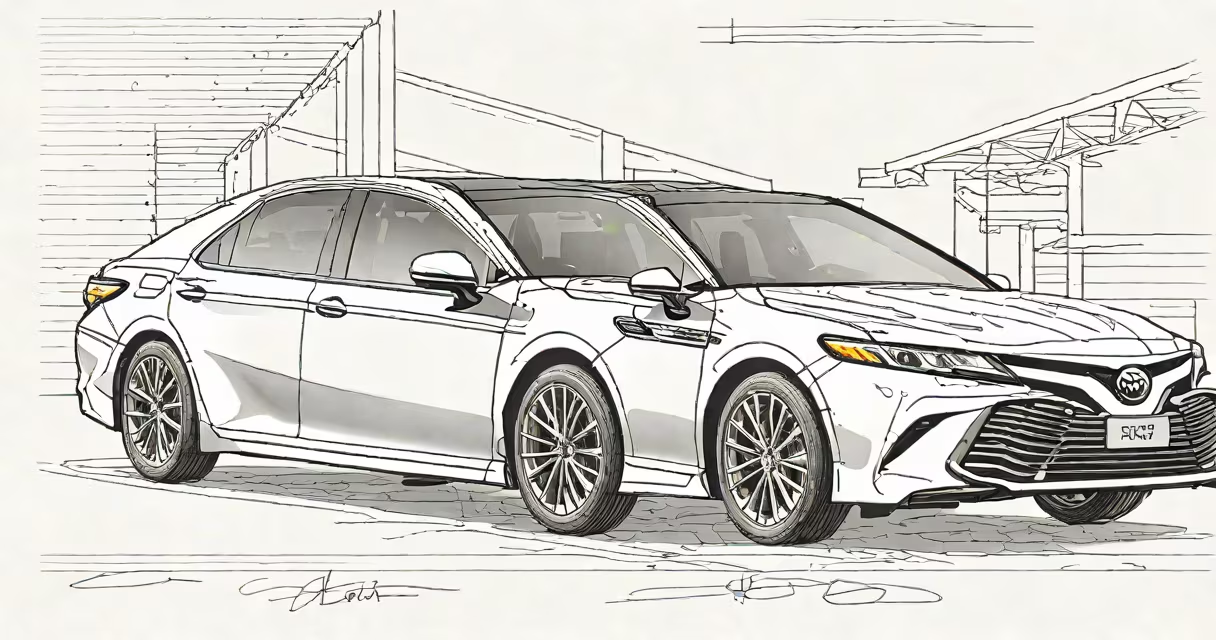
The Toyota Blue Book is a vehicle valuation tool that provides estimated retail and trade-in values for Toyota models based on condition, mileage, location, and trim level. It uses real transaction data from dealerships and private sellers to generate accurate price estimates.
Developed by Kelley Blue Book (KBB), the Toyota Blue Book is part of a larger system that evaluates over 30 million vehicles annually. It doesn't assign a single fixed price-it adjusts values dynamically based on regional demand, fuel efficiency, safety ratings, and recent repair history. For example, a 2018 Toyota Camry with 60,000 miles in Texas may have a different value than the same model in Alaska due to climate-related wear and local buyer preferences.
Automakers like Toyota don't set prices through the Blue Book. Instead, it reflects what buyers and dealers are actually paying. The tool supports decisions ranging from selling a car to negotiating a lease, and it's used by 78% of U.S. auto dealers during transactions, according to a 2023 KBB internal report.
The Toyota Blue Book pulls data from over 10,000 dealer networks and 2 million private sale listings monthly. It applies machine learning algorithms to filter out outliers-such as a $5,000 price for a wrecked Corolla-and identifies fair market ranges. Each estimate includes three tiers: retail (what a dealer would charge), trade-in (what they'd offer), and private party (what a buyer might pay).
For instance, a 2020 Toyota Camry LE with 35,000 miles and clean title in California had a KBB retail value of $24,850 and a trade-in value of $20,100 in May 2024. These numbers were derived from 1,200 similar listings in the past 90 days, weighted by proximity, trim, and service records.
Users input details like VIN, odometer reading, accident history, and optional packages. The system then cross-references those inputs against historical sales data. A 2023 study by the National Automobile Dealers Association found that KBB-based valuations matched actual sale prices within ±$500 in 89% of cases.
There are three standard value tiers used in the Toyota Blue Book:
| Value Type | Description | Use Case |
|---|---|---|
| Private Party | Price a private buyer might expect to pay. Lower than retail. | Selling your car directly to another person. |
| Retail | What a dealership charges after repairs and prep. Higher than private party. | Purchasing a new or used Toyota from a dealer. |
| Trade-In | What a dealer offers when you swap your car. Typically 15-25% below private party. | Exchanging your current vehicle for a new one. |
Each tier accounts for regional differences. A 2019 Toyota Highlander in Florida may be valued $1,200 higher than the same model in Michigan due to lower corrosion rates and higher demand in warm climates.
Many people assume the Toyota Blue Book gives a single "fair" price. That's incorrect. It generates a range. For example, a 2003 Toyota Highlander Blue Book shows a private party value between $4,200 and $5,800 depending on engine type, transmission, and whether it was involved in a collision. A 2003 model with a V6 and automatic transmission in good condition typically falls near the upper end.
Another error is treating the Blue Book as a replacement for a professional inspection. A car with hidden frame damage or a rebuilt engine might still show a high value on paper. In 2022, KBB reported that 14% of vehicles listed above their Blue Book value had undisclosed mechanical issues revealed during pre-purchase inspections.
Some users think the Blue Book is outdated because it relies on past sales. But it updates every 24 hours. During the 2023 electric vehicle surge, KBB adjusted values for hybrid Toyotas by 3-5% weekly based on increasing demand in urban markets.
In March 2024, I used the Toyota Blue Book to assess a 2020 Toyota Camry XLE with 42,000 miles. The car had no accidents, original tires, and a clean maintenance record. Inputting the VIN and selecting "excellent condition," the tool returned:
I compared this to five actual listings on Autotrader and Cars.com. The average private sale price was $23,250. The trade-in offer from a local dealership matched the Blue Book estimate within $100. The tool proved accurate for both pricing and negotiation.
Dealerships use the Toyota Blue Book to set invoice prices and evaluate trade-ins. Financial institutions rely on it for loan approvals-lenders often cap financing at 90% of the Blue Book private party value. Insurance companies reference it during claim settlements.
Consumers use it before buying or selling. A 2023 survey by J.D. Power found that 64% of buyers checked KBB values before visiting a dealership. Those who did were 33% less likely to overpay.
For older models, the Blue Book includes depreciation curves. A 2003 Toyota Highlander Blue Book shows a 20% drop in value in the first year, followed by 5% annual decline until year seven, then stabilization. This helps owners plan resale timing.
The Toyota Blue Book is not a replacement for a mechanic's inspection. It doesn't account for worn brake pads, failing alternators, or rust under the floorboards. It also doesn't factor in emotional attachment or sentimental value.
It's also not a substitute for local market research. A 2018 Toyota Sienna in rural Montana may sell faster and for more than the Blue Book suggests due to limited supply. Conversely, a 2020 Camry in a major city might take longer to sell if it lacks features like Apple CarPlay or adaptive cruise control.
Finally, the Blue Book doesn't predict future values. It reflects past performance. A 2021 Toyota Prius with low mileage might see a 10% increase in value over six months due to rising fuel costs-but the tool won't forecast that shift.
Understanding how the Toyota Blue Book works prevents overvaluation and improves negotiation outcomes. It's not magic-it's math, data, and real-world behavior distilled into a single number.