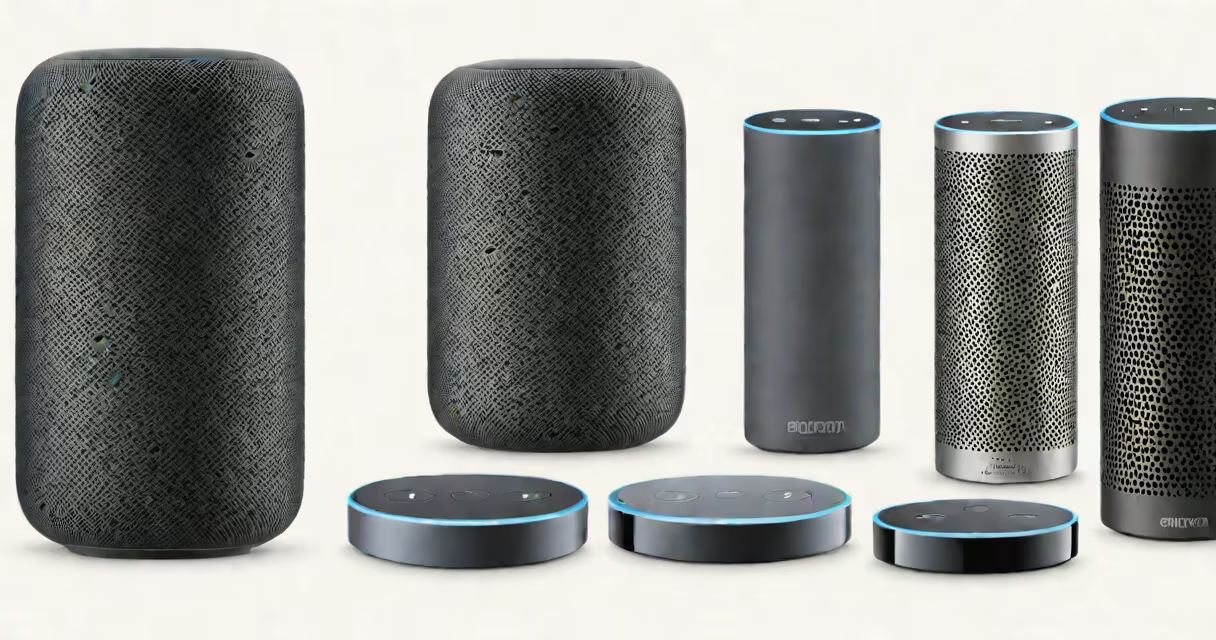
Amazon's Alexa and Apple's Siri are voice-controlled virtual assistants designed to manage smart devices, answer questions, and perform tasks using natural language. Alexa operates primarily through Amazon's system, including Echo speakers and Fire TV, while Siri is integrated into Apple's hardware-iPhone, iPad, Mac, and Apple Watch-and functions across iOS, iPadOS, and macOS.
Alexa and Siri differ in core functionality, supported devices, privacy handling, and integration depth. Alexa excels in third-party smart home device compatibility and music streaming via Amazon Music and Spotify. Siri offers tighter integration with Apple's services such as iCloud, Apple Music, and FaceTime, and prioritizes on-device processing for privacy. Both respond to voice commands, but their underlying architectures and data practices reflect distinct design philosophies.
Alexa uses cloud-based speech recognition, continuously listening for the wake word "Alexa" after being activated. Once triggered, audio is sent to Amazon's servers for processing. Responses are generated based on pre-trained models and external APIs. This allows Alexa to handle complex queries but requires constant internet connectivity and data transmission.
Siri processes most voice requests locally on Apple devices when possible. For example, setting a reminder or checking the weather may happen entirely on the device without sending data to Apple's servers. Only when a request involves deeper context-like "Find my last photo of the dog"-does Siri send data to Apple's cloud. This approach reduces latency and enhances privacy.
Apple's on-device processing limits Siri's ability to understand highly detailed or context-heavy commands compared to Alexa, which leverages vast cloud resources. However, Apple emphasizes that user data is not used to train Siri models unless explicitly permitted. Amazon collects voice data to improve Alexa's performance, though users can opt out of data retention.
Alexa runs on many third-party devices beyond Amazon's own products. Over 200,000 devices from brands like Philips, LG, and Samsung support Alexa, making it the most widely adopted voice assistant in smart homes. Alexa integrates with over 100 smart home protocols, including Zigbee and Z-Wave, enabling control of lights, thermostats, locks, and cameras.
Siri is limited to Apple's product lineup and select third-party accessories. While Apple has expanded Siri's reach to some non-Apple devices-such as certain Sonos speakers and BMW vehicles-the selection remains smaller. Siri's integration with Apple's Health app, Apple Pay, and HomeKit provides smooth automation for Apple users. For example, saying "Good night" triggers Siri to turn off lights, lock doors, and set the thermostat-all coordinated through HomeKit.
Both assistants support multi-room audio. Alexa enables synchronized playback across multiple Echo devices. Siri allows Apple's HomePod mini and HomePod to stream music in sync across rooms. However, Apple's implementation relies on AirPlay 2, which requires compatible devices and Wi-Fi setup.
| Feature | Alexa | Siri |
|---|---|---|
| Primary Platform | Amazon system (Echo, Fire TV) | Apple system (iPhone, iPad, Mac) |
| Smart Home Support | Over 200,000 devices | ~50,000 devices (HomeKit-only) |
| On-Device Processing | Limited; most commands go to cloud | Extensive; many actions processed locally |
| Music Services | Amazon Music, Spotify, Apple Music | Apple Music, Spotify, YouTube Music |
| Data Retention Policy | Users can delete voice history; data used for model training | Opt-in required for data use; minimal training data collected |
Many households use Alexa as a central hub for managing daily routines. A typical morning routine might involve saying, "Alexa, good morning," triggering a sequence: news brief, weather update, traffic report, and automatic coffee brewing via a connected smart plug. This workflow relies on Alexa's extensive skill library-over 100,000 third-party skills allow users to book rides, check bank balances, or control appliances.
Siri is often preferred by Apple users who value privacy and system integration. For example, a user can say, "Hey Siri, show me photos from last week," and Siri pulls results from iCloud Photos, filters them by date, and displays them on the iPhone screen-all without leaving the device. Siri can also control HomeKit-enabled devices using natural language, such as "Turn off the bedroom lights and set the thermostat to 68 degrees."
One non-obvious distinction: Siri supports "Hey Siri" activation on Apple Watch Series 6 and later, even when the watch is disconnected from the paired iPhone. Alexa does not offer similar standalone activation on portable devices. This makes Siri more functional in low-connectivity environments.
Some assume Alexa is smarter because it responds faster or handles more commands. But speed doesn't equal intelligence. Alexa's strength lies in breadth-its ability to integrate with millions of devices. Siri's strength is depth-its tight coordination with Apple's software stack.
Another misconception is that Siri is less capable due to fewer third-party integrations. That's true-but only because Apple restricts access to protect user privacy. Apple does not allow third-party apps to read messages or access contacts unless explicitly granted. This limits Siri's utility in some scenarios but strengthens security.
I've tested both assistants in a mixed-device household. Alexa controlled lights, thermostats, and doorbells across four rooms. Siri managed calendar events, reminders, and music playback across iPhone, iPad, and Apple TV. The difference wasn't in capability-it was in workflow. Alexa felt like a central command center. Siri felt like a personal assistant embedded in the operating system.
For users in Apple-centric environments, Siri delivers consistent, secure responses. For those building large-scale smart homes with diverse devices, Alexa offers unmatched flexibility. Neither is universally superior-each serves different needs.
When deciding between Alexa and Siri, consider whether you prioritize broad device compatibility or smooth integration within a single brand's system. The choice isn't about which is better-it's about which aligns with your lifestyle.