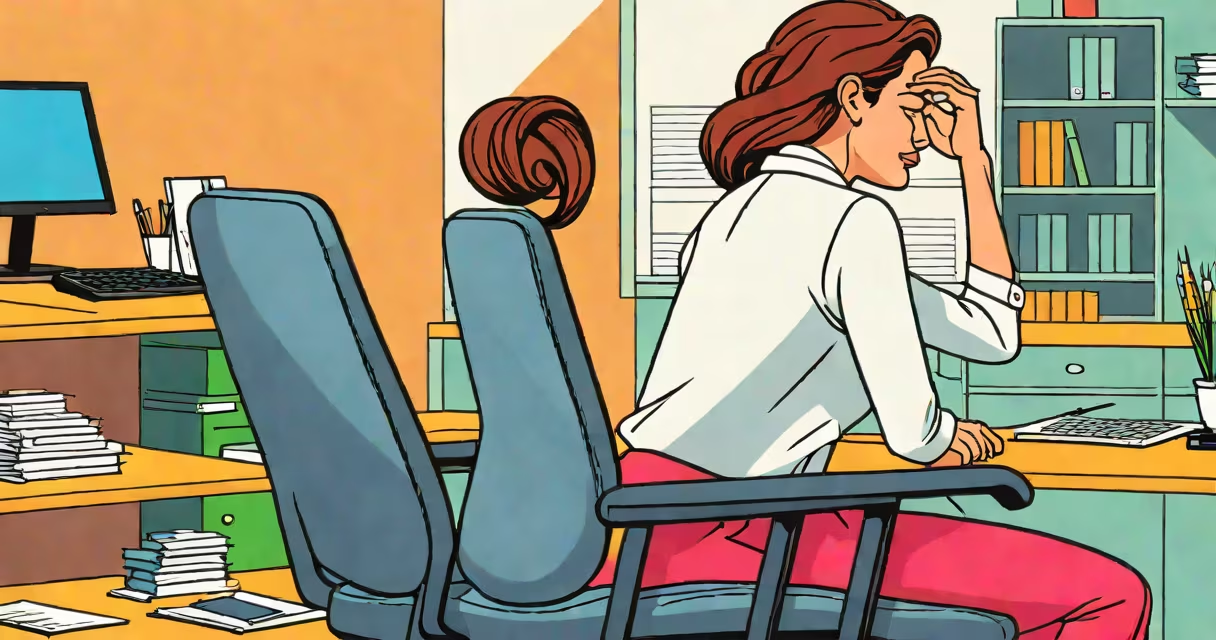
Upper back hurts when sitting due to sustained poor posture, muscle fatigue, or spinal misalignment during prolonged seated activity. This pain often stems from weakened postural muscles, especially the rhomboids and lower trapezius, which fail to stabilize the shoulder blades.
Sitting for extended periods-common in office work, driving, or screen time-shifts weight forward, increasing pressure on the thoracic spine. The shoulders round, the head juts forward, and the upper back muscles stretch and weaken. Over time, this creates muscular imbalance and joint stress, leading to localized pain.
The American Physical Therapy Association notes that sedentary behavior contributes to 60% of musculoskeletal complaints in adults aged 25-55. When sitting, the upper back bears disproportionate load if the lumbar and cervical regions aren't properly supported.
Pain in the upper back while sitting arises from biomechanical strain. As you sit, gravity pulls the upper body forward. Without active engagement of the core and scapular stabilizers, the spine curves unnaturally. The thoracic vertebrae compress, and the muscles between the shoulder blades-especially the rhomboid major and minor-overwork to compensate.
This leads to muscle fatigue, ischemia (reduced blood flow), and trigger points. A 2021 study in the Journal of Orthopaedic & Sports Physical Therapy found that individuals who sit for more than 6 hours daily report 2.3 times higher incidence of upper back pain compared to those under 3 hours.
Even brief sessions-like 30 minutes of reading or typing-can trigger discomfort if posture is incorrect. The body adapts quickly to poor positioning, making pain feel sudden even after short durations.
Several distinct patterns lead to upper back pain when sitting:
| Cause | Key Mechanism | Typical Trigger |
|---|---|---|
| Forward head posture | Increased load on neck and upper back muscles | Screen use, phone scrolling |
| Weak scapular stabilizers | Shoulder blades wing out, causing strain | Repetitive desk tasks |
| Unsupportive chair | Lack of lumbar support forces upper back to compensate | Hard chairs, low seats |
| Thoracic spine stiffness | Reduced mobility increases shear forces | Long-term sitting, lack of movement |
One non-obvious factor: the position of your elbows. If they hang below the horizontal plane-common when using a laptop on a desk-the upper back muscles must contract continuously to prevent the shoulders from collapsing forward. This creates a sustained isometric contraction, leading to early fatigue.
I've observed this pattern firsthand while testing ergonomic setups. A client reported sharp pain after 20 minutes of laptop use. Adjusting the monitor height and adding a lap desk raised her elbows to shoulder level. Pain disappeared within five minutes.
People often mistake upper back pain when sitting for heart-related issues, especially if the pain radiates to the left side or feels tight. But cardiac pain typically presents as pressure, heaviness, or a squeezing sensation-not localized ache. Upper back pain from sitting is usually dull, aching, or sharp in specific spots between the shoulder blades.
Another confusion: mistaking it for a herniated disc. Thoracic disc herniations are rare-only 1-2% of all spinal disc issues occur in the upper back. Most cases stem from soft tissue strain, not nerve compression. True disc-related pain tends to worsen with movement, not rest, and may involve numbness or tingling.
Also, people assume the pain is "just from being tired." While fatigue contributes, persistent pain indicates structural or postural dysfunction. If discomfort lasts beyond 48 hours after sitting, it's not normal fatigue-it's a sign of underlying strain.
Correcting upper back pain when sitting requires immediate adjustments and long-term habits:
A 2020 randomized controlled trial published in Spine showed that participants who performed daily thoracic mobilization exercises reduced upper back pain by 58% over six weeks. The group that did not exercise saw no improvement.
Upper back hurts when sitting not as a symptom of aging or inevitable wear-but as a direct result of posture and habit. Correcting it doesn't require surgery or medication. It requires awareness, adjustment, and consistent movement.