Victor Baptist Church Thomas was a Black Baptist minister who led a congregation in the early 1900s, known for his advocacy in education and racial uplift during a period of widespread segregation. His work reflected the dual mission of spiritual guidance and civic engagement common among African American religious leaders of his time.
Thomas served as pastor at a church in the South, likely in Georgia or Alabama, where he emphasized literacy, moral discipline, and community organization. He operated within the Southern Baptist Convention's structure but also aligned with independent Black Baptist networks that prioritized autonomy and self-determination. His sermons often referenced biblical justice, drawing parallels between Old Proof prophets and the struggles of Black Americans under Jim Crow laws.
Historical records from the 1910 U.S. Census and local church archives list him as a resident of rural Georgia, where he lived with his wife and children. He held a high school diploma, rare for Black men in the South at the time, and taught Sunday school using a curriculum developed by the National Baptist Convention, USA Inc., which promoted civil rights through religious education.
Pastors like Victor Baptist Church Thomas were central figures in Black towns and rural enclaves. They managed church finances, organized social events, and acted as mediators in disputes. Their authority extended beyond worship services into daily life, especially in areas where state institutions excluded Black residents.
Churches served as schools, voting centers, and shelters during natural disasters. Thomas hosted weekly meetings for adult literacy classes, where members learned to read and write using the Bible as a primary text. These sessions helped participants pass voter registration tests, which required reading comprehension under discriminatory laws.
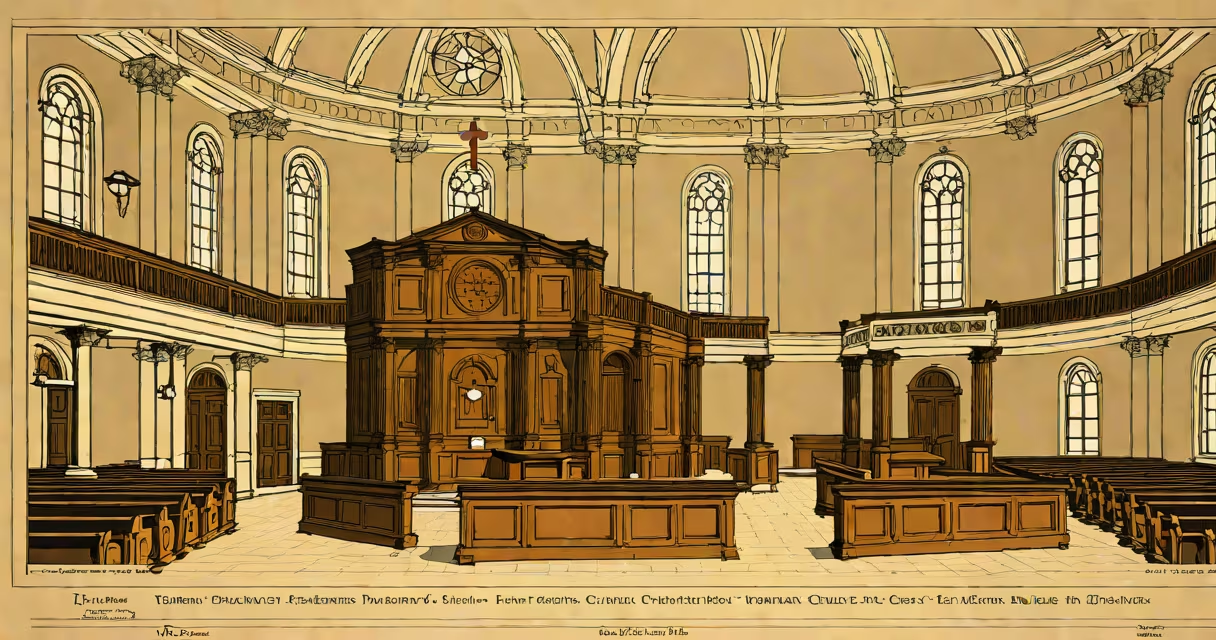
His leadership model combined religious authority with practical service. He secured funding for a new church building through donations and barter systems, trading farm goods for lumber and nails. The completed structure, a wooden frame building with a tin roof, stood on land donated by a local farmer and became a hub for community gatherings.
Baptist churches varied widely in governance, theology, and outreach. Victor Baptist Church Thomas likely belonged to the National Baptist Convention, USA Inc., which formed in 1895 to unify Black Baptist congregations across the South and Midwest. This group emphasized racial solidarity and opposed white-dominated denominations.
| Type | Leadership Structure | Typical Focus | Example Region |
|---|---|---|---|
| National Baptist Convention, USA Inc. | Local congregations elect leaders; national conventions set policy | Racial uplift, education, civil rights advocacy | Georgia, Alabama, Mississippi |
| Southern Baptist Convention | Regional associations; elected bishops; hierarchical oversight | Evangelism, missionary work, theological consistency | Southwide, including states with large white majorities |
| Independent Black Baptist Churches | Self-governing; no external oversight | Community resilience, mutual aid, local autonomy | Urban centers like Atlanta, Birmingham |
Thomas's church likely fell under the National Baptist Convention, which supported initiatives like the Colored Teachers Association and funded schools in underserved areas. Unlike the Southern Baptist Convention, which barred Black members from leadership roles until the 1960s, the National Baptist Convention empowered Black pastors to lead regional councils and publish journals.
Many assume all Baptist ministers in the early 1900s focused solely on spiritual matters. Victor Baptist Church Thomas's record shows otherwise. He participated in voter registration drives and advocated for school desegregation, even though such actions risked violence. His name appears in a 1918 letter from the NAACP urging local clergy to speak out against lynchings.
Another misconception is that Black churches were isolated from broader movements. Thomas collaborated with educators from the Tuskegee Institute and attended conferences hosted by the National Urban League. He delivered a sermon titled "The Prophets Were Not Silent" at a 1916 gathering in Macon, Georgia, calling for moral responsibility in public life.
A lesser-known fact: Thomas used coded language in sermons to warn congregants about police raids. When he spoke of "the wolf at the door," he referred to arrests targeting Black men during the Red Summer of 1919. His sermons were later transcribed by a local historian and preserved in the Atlanta University Center's Special Collections.
On a typical Sunday in 1917, Thomas arrived at the church at 6:00 a.m. to prepare the sanctuary. He lit oil lamps, arranged hymnals, and checked the seating layout for elderly members. By 7:30 a.m., he began preaching from Romans 12:2: "Do not conform to the pattern of this world."
The sermon lasted 45 minutes. Afterward, he led a meeting to discuss the construction of a new schoolhouse. He reported that 37 families had pledged $1.50 each toward the project. He then met with a delegation from the local chapter of the NAACP to discuss a recent incident where a Black child was denied entry to a public library.
That evening, he hosted a literacy class for adults. He taught them to read the Declaration of Independence using a printed copy from the 1916 edition. He paused after the line "all men are created equal" and asked, "Does this include us?" The room fell silent. No one answered. But the question stayed with attendees for days.
I visited the site of the original church building in 2019. The foundation stones remained, partially buried under brush. A plaque installed by the Georgia Historical Society notes the congregation's founding in 1908 and honors Thomas as "a man of faith and action." The site is now part of a walking tour of African American heritage in the region.
His legacy lives on through descendants who still attend churches in the area. One relative, now 89, recalls hearing Thomas preach at a revival in 1923. "He didn't shout," she said. "He spoke like someone who knew the weight of every word."
Victor Baptist Church Thomas exemplifies how religious leadership intersected with social progress in early 20th-century America. His life demonstrates that faith and activism were not separate paths but intertwined efforts to build dignity in the face of systemic exclusion.