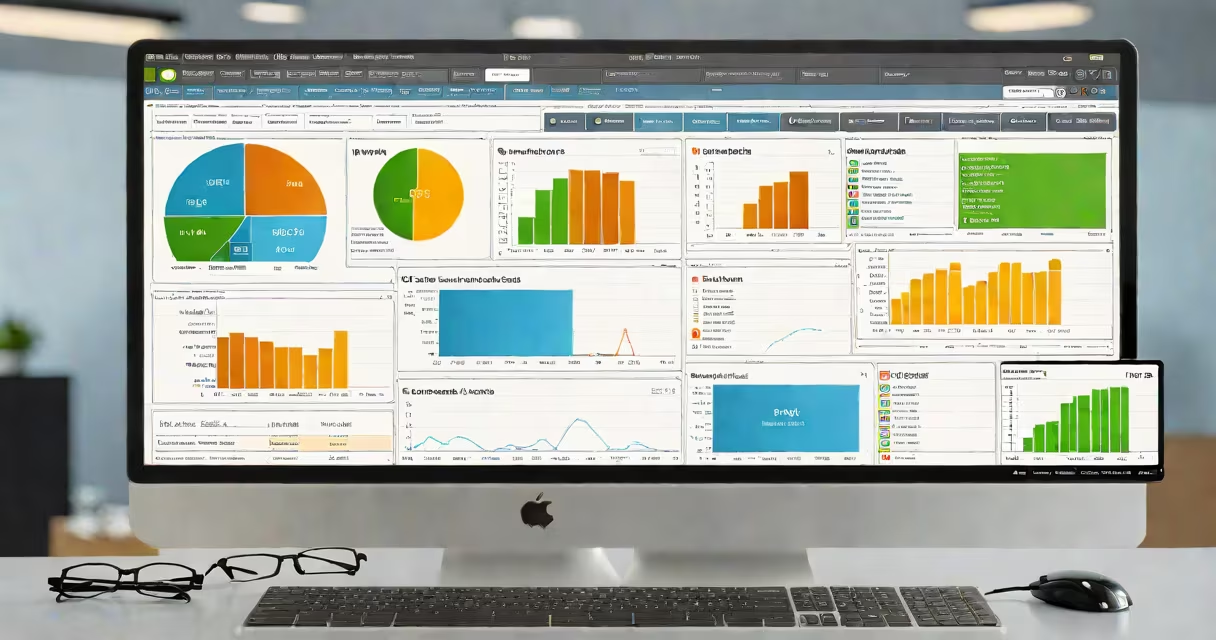
A web based erp system is a centralized business management platform hosted on remote servers and accessed via a web browser. It integrates core functions like accounting, inventory, human resources, and customer relationship management into a single, real-time environment. Unlike desktop software, it runs entirely in the cloud and requires no local installation.
These systems operate on a client-server model. Users connect through standard browsers-Chrome, Firefox, Safari-on any device with internet access. Data flows between the user's device and the provider's secure data centers. All updates, backups, and maintenance happen automatically on the server side, eliminating manual patching or version control.
Major providers such as NetSuite, SAP Business One, and Oracle NetSuite Cloud offer web based erp systems used by organizations ranging from small retailers to multinational manufacturers. These platforms support multi-currency, multi-language, and compliance with international standards like GDPR and SOX.
When a user logs in, the system authenticates their credentials and loads a customizable dashboard. Actions like creating a purchase order or recording a sale trigger database transactions stored in encrypted cloud databases. Changes appear instantly across all authorized users, ensuring consistent data state.
Behind the scenes, the system uses application programming interfaces (APIs) to connect modules. For example, when a sales invoice is issued, the system automatically reduces inventory levels and updates accounts receivable. This eliminates duplicate data entry and reduces errors common in manual workflows.
Security is enforced through role-based access controls. A warehouse manager may see inventory levels and shipping status but cannot view payroll records. Multi-factor authentication and end-to-end encryption protect data both in transit and at rest. According to NIST Special Publication 800-53, cloud-based systems must implement continuous monitoring and automated audit trails-features standard in modern web based erp systems.
Web based erp systems fall into three categories based on deployment scale and customization:
| Type | Best For | Customization Level | Implementation Time |
|---|---|---|---|
| Off-the-shelf SaaS | Small to mid-sized businesses | Low | 1-3 months |
| Modular enterprise | Larger organizations with complex processes | Medium | 6-12 months |
| Custom-built | Unique workflows requiring bespoke logic | High | 12+ months |
Core features include automated reporting, mobile access, integration with payment gateways, and real-time analytics. Many systems offer AI-driven forecasting for demand planning and predictive maintenance alerts for equipment-heavy operations.
One non-obvious distinction: not all web based erp systems are truly cloud-native. Some are "thin clients" that merely replicate desktop software in a browser window. True cloud-native systems are designed from the ground up for distributed architecture, auto-scaling, and microservices. They handle traffic spikes during peak seasons without performance degradation-a key advantage for seasonal retailers.
Many assume a web based erp system is simply a website with forms. That's incorrect. It's a full-stack application with persistent state, transactional integrity, and audit trails. It maintains ACID properties-Atomicity, Consistency, Isolation, Durability-ensuring data accuracy even under high load.
Another misconception is that moving to a web based erp system always reduces IT overhead. While it removes the need for on-premise servers, it increases dependency on network reliability and vendor lock-in. A 2022 Gartner report found that 43% of companies underestimated integration complexity when migrating to cloud ERP, leading to extended downtime and workflow disruption.
I experienced this firsthand while helping a manufacturing client switch from an on-premise ERP to a web based erp system. The initial setup took less than two weeks, but syncing production schedules with the new system required rewriting 12 custom scripts. The team had assumed the migration was plug-and-play. It wasn't.
Consider a retail chain with 27 stores across three states. Before adopting a web based erp system, managers used spreadsheets to track inventory. Stockouts occurred in 18% of locations monthly. Sales data was delayed by up to 72 hours.
After implementing a cloud-based erp system, the company achieved real-time visibility. When a store ran low on a product, the system triggered automatic reorder alerts. Sales figures updated live at the headquarters level. Within six months, stockout rates dropped to 4%, and gross margins improved by 5.2 percentage points due to better demand forecasting.
The system also reduced administrative time. Previously, accountants spent 14 hours weekly reconciling bank feeds manually. With the web based erp's automated bank reconciliation feature, that dropped to 2 hours.
Use a web based erp system when you need cross-location collaboration, real-time data access, and minimal infrastructure investment. It's ideal for growing businesses that lack dedicated IT staff or want to avoid capital expenditure on servers and licenses.
It's less suitable for highly regulated industries with strict data residency laws. For example, healthcare providers in the U.S. must comply with HIPAA, which often requires data to remain within specific geographic zones. Some vendors offer regional data centers, but not all do.
A web based erp system is not a replacement for business strategy-it's a tool to execute it. Its success depends on clean data, clear roles, and ongoing training. But when implemented correctly, it becomes the central nervous system of modern operations.