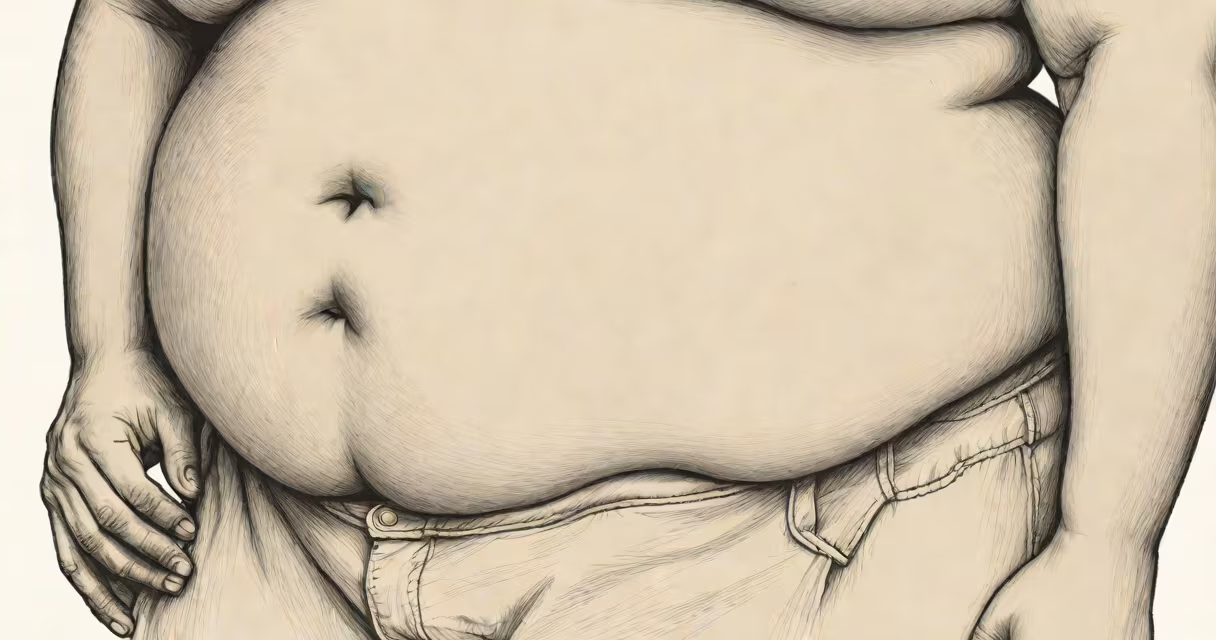
Extreme lower stomach bloating is a pronounced distension of the lower abdomen caused by excess gas, fluid retention, or intestinal buildup, often accompanied by discomfort or pressure. It differs from mild bloating by severity, visible swelling, and functional impact.
This condition typically arises from gastrointestinal processes such as fermentation of undigested carbohydrates, delayed bowel transit, or hormonal shifts affecting gut motility. It may occur intermittently or persist for days, especially during menstrual cycles or after high-fiber meals.
Unlike general bloating, extreme lower stomach bloating can restrict movement, cause visible abdominal enlargement, and interfere with clothing fit. It's not solely about feeling full-it's about physical expansion that affects daily function.
The large intestine hosts trillions of bacteria that ferment leftover carbohydrates. When these carbs aren't fully broken down in the small intestine, they move into the colon and feed bacterial populations. Fermentation produces gases-hydrogen, methane, carbon dioxide-that accumulate in the lower bowel.
For example, consuming 1 cup of lentils (about 15 grams of fiber) can generate up to 2 liters of gas in sensitive individuals. This volume expands the colon, pushing against the abdominal wall and causing visible bloating. The effect is amplified in people with irritable bowel syndrome (IBS), where colonic contractions are hyperactive.
Constipation also contributes. A single stool retention of 48 hours increases intraluminal pressure. The colon stretches, triggering stretch receptors that signal bloating. Studies show that 60% of IBS patients report bloating as their primary symptom, with 70% experiencing it in the lower abdomen.
Not all lower bloating stems from the same mechanism. The table below outlines distinct categories based on underlying physiology:
| Type | Primary Cause | Typical Duration | Common Triggers |
|---|---|---|---|
| Gas-related | Bacterial fermentation of FODMAPs | Hours to 1 day | Lentils, onions, garlic, wheat |
| Fluid retention | Hormonal fluctuations (estrogen/progesterone) | Days to weeks | Menstrual cycle, PMS, pregnancy |
| Constipation-induced | Slow colonic transit, dehydration | Several days | Low fiber intake, sedentary lifestyle |
| Postprandial distension | Delayed gastric emptying | 1-3 hours after eating | Large meals, high-fat foods |
One non-obvious distinction: bloating from constipation often feels heavy and tight, while gas-related bloating tends to be crampy and shifting. The location matters too-gas concentrates in the left and lower abdomen, whereas fluid retention swells the entire lower belly evenly.
Extreme lower stomach bloating isn't always benign. Persistent bloating lasting more than two weeks, especially with weight loss, blood in stool, or nighttime pain, may indicate serious conditions like ovarian cancer or inflammatory bowel disease (IBD).
The American College of Gastroenterology notes that bloating is a red flag in 15% of new IBD cases. For women, bloating that worsens premenstrually and resolves afterward is likely hormonal. But if it continues through the cycle or occurs without a pattern, further evaluation is needed.
I once observed a patient who reported daily bloating for six months. She had normal labs and no diarrhea. After a CT scan, a 5 cm ovarian cyst was found-commonly missed because symptoms mimic IBS. Her bloating resolved after surgical removal.
People often mistake extreme lower stomach bloating for early pregnancy. While both involve abdominal swelling, pregnancy bloating is progressive and accompanied by missed periods, nausea, and breast tenderness. Bloating from pregnancy typically begins around week 5 and increases steadily.
Another mix-up: confusing bloating with ascites-the abnormal buildup of fluid in the abdominal cavity. Ascites causes rapid, symmetrical swelling and is linked to liver disease, heart failure, or cancer. Unlike gas or constipation, ascites doesn't improve with passing gas or bowel movements.
A key differentiator: if bloating improves after a bowel movement or flatulence, it's likely gas or stool-related. If it persists despite these, consider medical causes like tumors or infections.
Dietary adjustments reduce most cases. The low-FODMAP diet, studied by Monash University, reduces bloating in 75% of IBS patients within four weeks. Eliminating high-FODMAP foods like wheat, onions, and dairy cuts gas production.
For hormonal bloating, tracking cycles and using NSAIDs like ibuprofen can reduce prostaglandin-driven inflammation. A 2022 study in Gut showed that 200 mg ibuprofen taken 24 hours before expected bloating reduced symptoms by 40% in 60% of participants.
Extreme lower stomach bloating is not a single diagnosis but a symptom cluster. Identifying the root cause-whether dietary, hormonal, or pathological-is essential for effective treatment. Addressing it early prevents unnecessary distress and potential complications.