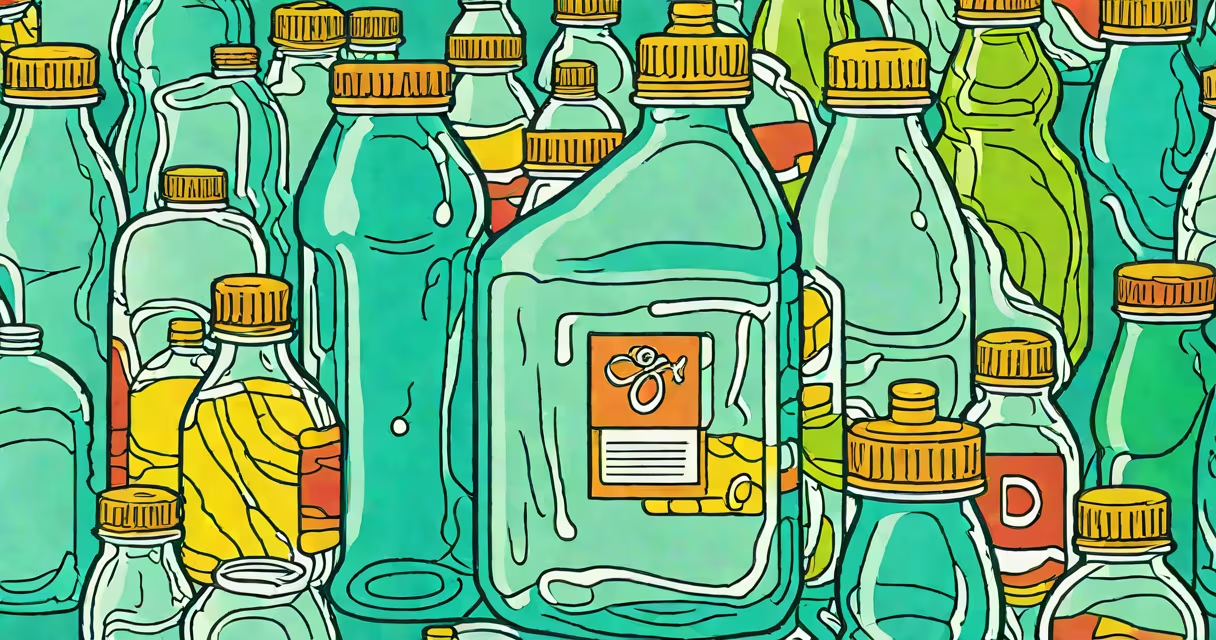
Plastic bottles are primarily made from polyethylene terephthalate (PET), a thermoplastic polymer derived from petroleum and natural gas. This material forms rigid, lightweight containers ideal for beverages and household products.
PET accounts for over 90% of single-use plastic bottles globally, according to the Plastics Industry Association. Its clarity, strength, and ability to resist permeation make it superior to alternatives for liquid storage. The raw materials-terephthalic acid and ethylene glycol-are synthesized through chemical reactions involving crude oil and natural gas, processes that require high heat and pressure.
Manufacturers blend PET resin with additives like antioxidants and UV stabilizers during production. These prevent degradation during storage and exposure to sunlight. The resulting pellets are melted and injected into molds using injection stretch blow molding-a method that shapes the molten plastic into bottles while stretching it to improve durability and reduce wall thickness.
The process begins with refining crude oil into naphtha, which undergoes steam cracking to produce ethylene. Ethylene glycol is then formed from ethylene via oxidation. Simultaneously, paraxylene from petroleum is oxidized to create terephthalic acid. These two chemicals react under heat and catalysts to form PET polymer chains.
After polymerization, the PET is cooled and cut into small pellets. These pellets are fed into extruders where they melt and are shaped into preforms-small, test-tube-like blanks. Preforms are then reheated and blown into final bottle shapes using compressed air. This step, known as stretch blow molding, aligns the molecular structure, increasing tensile strength and reducing brittleness.
A 2-liter soda bottle requires approximately 18 grams of PET resin. The entire cycle-from raw feedstock to finished bottle-takes less than 60 seconds on a high-speed production line. Industrial facilities can produce up to 10,000 bottles per hour, depending on size and design complexity.
While PET dominates beverage containers, other polymers serve niche roles based on performance needs:
| Type | Common Use | Key Properties | Recyclability |
|---|---|---|---|
| PET (Polyethylene Terephthalate) | Beverages, water, condiments | Clear, strong, lightweight, gas barrier | Yes (recycling code #1) |
| HDPE (High-Density Polyethylene) | Milk jugs, detergent bottles | Opaque, flexible, chemical-resistant | Yes (recycling code #2) |
| PP (Polypropylene) | Yogurt cups, medicine bottles | Heat-resistant, flexible, semi-transparent | Yes (recycling code #5) |
| PVC (Polyvinyl Chloride) | Some cleaning product bottles | Rigid, durable, toxic when burned | Limited (recycling code #3) |
Despite the variety, PET remains the standard for carbonated drinks due to its excellent barrier against CO₂ loss. HDPE is preferred for heavy-duty applications like laundry detergents because it resists punctures and chemical corrosion better than PET.
Many assume all plastic bottles are recyclable or biodegradable. That's false. Only about 30% of PET bottles in the U.S. are recycled annually, according to the Environmental Protection Agency. The rest end up in landfills or incinerators. PET does not degrade naturally-it persists for centuries, breaking into microplastics over time.
Another misconception is that "bioplastics" in bottles are inherently eco-friendly. Some bottles labeled "plant-based" contain bio-PET, which uses plant-derived ethylene glycol but still relies on fossil fuels for terephthalic acid. Even these hybrids are not compostable and require industrial facilities to break down. A 2022 study by the University of California, Santa Barbara confirmed that bio-PET degrades at the same rate as conventional PET in marine environments.
PET is not safe for reuse beyond its original purpose. Repeated washing and heating can leach antimony and phthalates-trace contaminants used in manufacturing-into liquids. The FDA warns against refilling single-use PET bottles for long-term storage, especially with hot or acidic contents.
Consider a 1-liter plastic water bottle produced in a facility in New Jersey. The process starts with 12 grams of PET pellets sourced from a refinery in Texas. These pellets are heated to 260°C (500°F) and molded into a preform. After cooling, the preform is reheated to 120°C and blown into a bottle using 6 bar of compressed air.
The bottle is filled with filtered water, capped with a polypropylene lid, and labeled with a PET-based adhesive. It travels to a retail store in under 48 hours. After consumption, if discarded, it may take 450 years to decompose in a landfill. If recycled, it enters a reverse supply chain: collected, sorted by resin type, cleaned, shredded into flakes, melted into pellets, and shipped to a new bottling plant.
I once visited a recycling facility in Ohio where I watched automated optical sorters identify PET bottles by spectral signature. A single sensor detected differences in refractive index between PET and HDPE. This precision enables sorting accuracy above 98%, though contamination from food residue or mixed plastics still reduces yield.
Plastic bottles contribute to ocean pollution. The World Economic Forum estimates that 11 million metric tons of plastic enter oceans yearly, with bottles being among the top five contributors. Their lightweight nature allows them to travel vast distances, harming marine life through ingestion and entanglement.
Recycling PET reduces energy use by 70% compared to virgin production, according to the American Chemistry Council. For every ton of PET recycled, 3.8 barrels of oil are saved. Yet global recycling rates remain below 50% in most countries. Extended Producer Responsibility (EPR) laws in Europe and Canada now mandate that manufacturers fund collection and processing systems, pushing industry toward closed-loop models.
Understanding what plastic bottles are made from reveals the limitations of current waste systems. The solution lies not in eliminating PET-but in redesigning systems around it. Using recycled PET in new bottles cuts emissions and conserves resources. Brands like Coca-Cola and PepsiCo now commit to 50% recycled content in packaging by 2030.