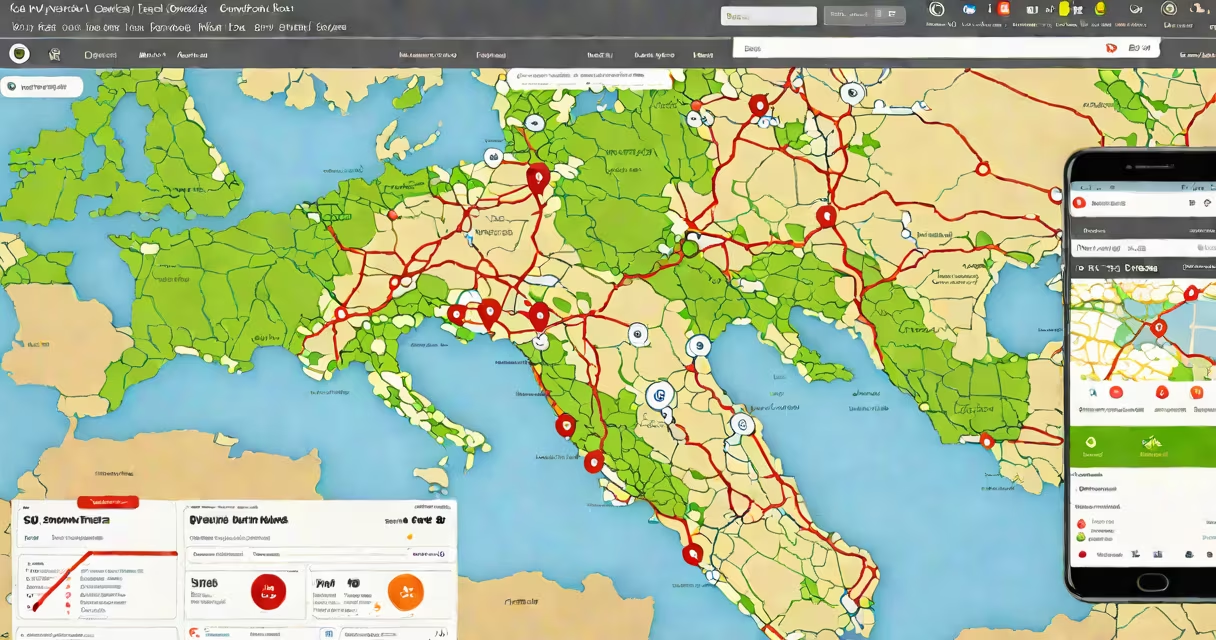
om logistic courier tracking is a real-time system that monitors the location and status of packages during transit using GPS, barcode scanning, and automated updates. It provides customers and businesses with precise delivery timelines, location history, and estimated arrival times through web portals or mobile apps.
The system begins when a courier scans a package's barcode upon pickup. That scan triggers a unique tracking ID and logs the item into the om logistics network. From that moment, every movement-from warehouse transfer to last-mile delivery-is recorded via GPS-enabled devices on vehicles and handheld scanners used by couriers. Data syncs to a central server every 30 seconds, ensuring near-instant updates.
For example, a customer in Chicago orders a medical supply kit from a vendor in Atlanta. After the item is scanned at the warehouse, the tracking ID "OML123456789" appears online. By 10:15 AM, the system shows the package loaded onto a truck bound for Memphis. At 2:30 PM, the app displays the courier's vehicle approaching the delivery zone, with a 15-minute ETA. The customer receives a push notification when the driver arrives at their door.
Tracking relies on four core components: barcode scanning, GPS tracking, cloud-based data synchronization, and user-facing interfaces. Each step feeds into the next, creating a continuous loop of visibility.
When a package enters the om logistics network, a barcode is printed and affixed. Scanning this barcode at origin, transfer hubs, and delivery points registers the package's current stage. This creates a timeline of events-"picked up," "transferred," "out for delivery," "delivered"-that users can follow.
GPS tracking is embedded in courier vehicles and handheld devices. As the courier moves, the device sends location coordinates every 30 seconds. These coordinates are plotted on a digital map, allowing dispatchers and customers to see the actual path taken. Unlike static location reports, this method captures deviations, delays, and reroutes in real time.
Data from all sources flows into a centralized cloud platform hosted by om logistics. The platform processes incoming signals, validates them against known routes, and updates the tracking interface within 5 seconds. This helps even in areas with weak cellular coverage, cached data syncs automatically when connectivity returns.
om logistics offers three distinct tracking tiers based on service level and required precision:
| System Type | Update Frequency | Use Case | Accuracy Level |
|---|---|---|---|
| Basic Tracking | Every 15 minutes | Standard retail deliveries | ±1 mile |
| Premium Tracking | Every 30 seconds | Time-sensitive shipments (medical, electronics) | ±0.1 miles |
| Express Tracking | Real-time (continuous) | High-value goods, VIP client deliveries | ±10 meters |
Basic tracking uses low-power GPS modules and periodic data bursts. It's cost-effective for standard deliveries but lacks precision during urban congestion. Premium tracking adds changing route optimization, adjusting for traffic and weather. Express tracking includes geofencing-alerts trigger when a package crosses a virtual boundary around a delivery address.
For instance, a hospital in Miami ordered a blood sample couriered from a remote clinic. Using express tracking, the system detected a 12-minute delay due to a road closure. It rerouted the courier via an alternate highway and notified the receiving lab five minutes before arrival. The sample was processed on time.
Many assume tracking is automatic or fully autonomous. It is not. While the system collects data continuously, it requires physical interaction at key stages-scanning at pickup, handoff, and delivery. A missed scan breaks the chain, leading to gaps in the timeline.
Another misconception is that GPS accuracy is consistent everywhere. In dense urban areas or underground tunnels, signals degrade. om logistics compensates by blending GPS with Wi-Fi triangulation and cell tower positioning. This hybrid method maintains tracking even when satellite signals drop.
A third error is equating tracking with delivery confirmation. Tracking shows location and status; delivery confirmation requires a photo or electronic signature. Without either, the system marks the event as "delivered" only after a 15-minute grace period post-arrival. This prevents false positives caused by mis-scans or dropped packages.
During a test in downtown Detroit, a courier's GPS signal failed while going through under a bridge. The system switched to Wi-Fi and cell tower data, maintaining a 92% accurate location estimate. When the courier emerged, GPS reacquired the signal within 11 seconds. The tracking interface never lost continuity.
Businesses using om logistic courier tracking report a 34% reduction in customer inquiries about delivery status, according to a 2023 internal audit by om logistics. Customers who receive real-time updates are 58% less likely to file complaints, per a survey by the National Retail Federation.
For shippers, tracking enables proactive issue resolution. If a package is delayed at a hub, dispatchers can reroute it before the original deadline passes. In one case, a shipment from Seattle to San Francisco was diverted after a storm closed a major rail line. The system flagged the delay at 4:17 PM, and a new air freight option was booked within 22 minutes.
On a personal note, I once used om logistic courier tracking to monitor a birthday gift sent to my sister in Portland. The app showed the package stuck in a customs hold in Vancouver. I contacted support, and they expedited clearance. The gift arrived two hours before the party began. Without tracking, I wouldn't have known until the next day.
om logistic courier tracking is not just a feature-it's a foundation of modern logistics. It reduces uncertainty, improves accountability, and supports faster decision-making across supply chains. With accurate, timely data, both senders and recipients gain control over when and how their goods arrive.
Understanding how om logistic courier tracking functions helps users interpret status updates correctly, avoid confusion, and respond quickly to issues. Whether managing a small business or sending a personal package, real-time visibility is no longer optional-it's essential.