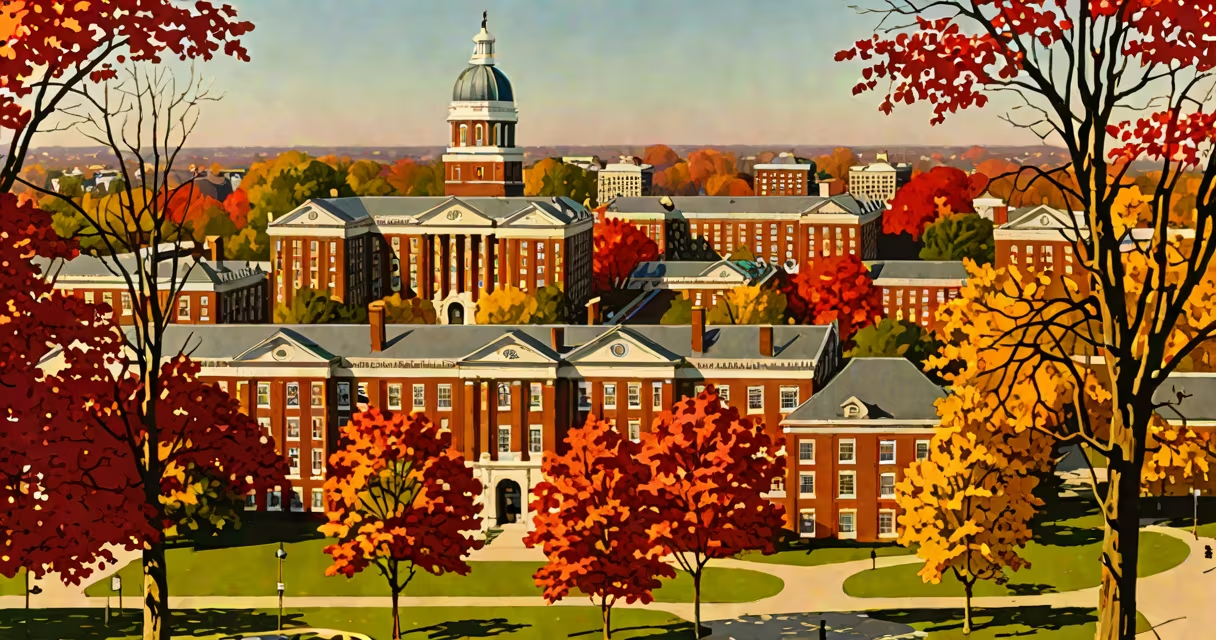
Historically Black Colleges and Universities (HBCUs) are institutions established before 1964 to provide higher education opportunities to African Americans during segregation. They were created in response to systemic exclusion from predominantly white universities and remain important centers of Black academic, cultural, and leadership development.
The first HBCU, Cheyney University of Pennsylvania, was founded in 1837. By 1900, 58 such institutions existed, primarily in the South. Today, the U.S. Department of Education recognizes 101 HBCUs, with 89 located in the United States and 12 in U.S. territories. These schools offer bachelor's, master's, and doctoral degrees across disciplines including engineering, business, and the arts.
HBCUs were not created to replace white institutions-they were built because those institutions refused to admit Black students. The National Association for the Advancement of Colored People (NAACP) documented widespread denial of admission to Black applicants at state universities in the early 20th century. As a result, HBCUs became essential pathways to professional careers, especially in medicine, law, and education.
Most HBCUs were founded by religious groups, philanthropists, and freed people themselves. The Freedmen's Bureau, established in 1865, supported early efforts by providing land and funding. Churches like the African Methodist Episcopal (AME) Church and the Baptist Convention played major roles in founding schools such as Fisk University (1866) and Morehouse College (1867).
Federal support expanded through the Morrill Act of 1890, which required states to create separate land-grant colleges for Black students. This led to the creation of institutions like North Carolina A&T State University and Tuskegee University. These schools received federal funds to develop agricultural and mechanical programs, aligning with national educational goals while serving Black communities.
A key distinction often missed: not all HBCUs were founded solely by Black leaders. Some, like Hampton University (1868), were established by white missionaries with strong Black student and faculty participation. The presence of white donors does not diminish their status as HBCUs-what defines them is their mission and historical role in serving African Americans.
HBCUs vary widely in size, focus, and institutional tier. The following table outlines common categories based on degree offerings and enrollment:
| Type | Examples | Enrollment Range | Specialization |
|---|---|---|---|
| Public Research Universities | Tuskegee University, Howard University | 6,000-12,000 | STEM, Medicine, Law |
| Private Liberal Arts Colleges | Morehouse College, Spelman College | 1,500-3,000 | Humanities, Social Sciences |
| Community Colleges | Delgado Community College (New Orleans) | 3,000-6,000 | Associate Degrees, Career Training |
| Specialized Institutions | Hampton University (military-affiliated), Bennett College (women's college) | 1,000-2,500 | Leadership, Women's Studies, Technical Programs |
Spelman College, founded in 1881, is one of the few HBCUs focused exclusively on women. Its 2023 graduation rate for Black female STEM majors was 78%, above the national average for similar institutions. This demonstrates how targeted missions can yield measurable outcomes.
Not all HBCUs are large or research-intensive. Some operate with fewer than 1,000 students and rely heavily on private donations. For example, Livingstone College in North Carolina, founded in 1879, serves about 1,200 students and focuses on liberal arts and ministry training. Despite limited resources, it maintains accreditation and produces graduates who go on to teach, serve in local government, or enter healthcare.
One persistent myth is that HBCUs are inherently "lower quality" than predominantly white institutions (PWIs). Data from the U.S. Department of Education shows that HBCU graduates have higher rates of persistence in STEM fields. A 2021 study published in Science Advances found that HBCU students were 2.5 times more likely to earn doctorates in physics and chemistry compared to peers at PWIs.
Another misconception is that HBCUs only serve low-income students. While many students qualify for Pell Grants, HBCUs attract a diverse socioeconomic mix. At Howard University, 41% of undergraduates come from families earning over $100,000 annually. The institution's financial aid office reports that 68% of students receive some form of grant or scholarship, but eligibility is not tied to income alone.
Some assume HBCUs are obsolete due to civil rights advancements. But they remain critical. According to the National Center for Education Statistics, HBCUs produce 20% of all Black engineers and 30% of Black physicians in the U.S. These numbers reflect ongoing demand and effectiveness, not nostalgia.
In 2022, I attended a student-led symposium at Clark Atlanta University. The event featured presentations on urban policy, Black entrepreneurship, and mental health advocacy. Students from biology, political science, and music composition shared research. One group presented a mobile app designed to connect rural Black youth with mentors in STEM. The energy was purposeful, collaborative, and rooted in community service.
I spoke with a senior studying public health who had secured a fellowship at the CDC. She said her HBCU mentorship program helped her secure internships and build confidence. "I didn't feel like I had to prove myself," she said. "My professors knew my name and my story." That moment underscored how institutional culture shapes outcomes-not just curriculum.
Despite progress in integration, racial disparities persist in higher education. HBCUs continue to address gaps in access, retention, and representation. They provide safe spaces where Black students can thrive academically and socially. A 2023 report from the White House Initiative on Educational Excellence for African Americans confirmed that HBCUs contribute disproportionately to workforce diversity in healthcare, education, and public service.
When considering what are some historically black colleges, remember: they are not relics. They are living institutions shaped by history, sustained by community, and evolving to meet new challenges. Their existence reflects both the resilience of African American communities and the enduring need for equitable access to education.