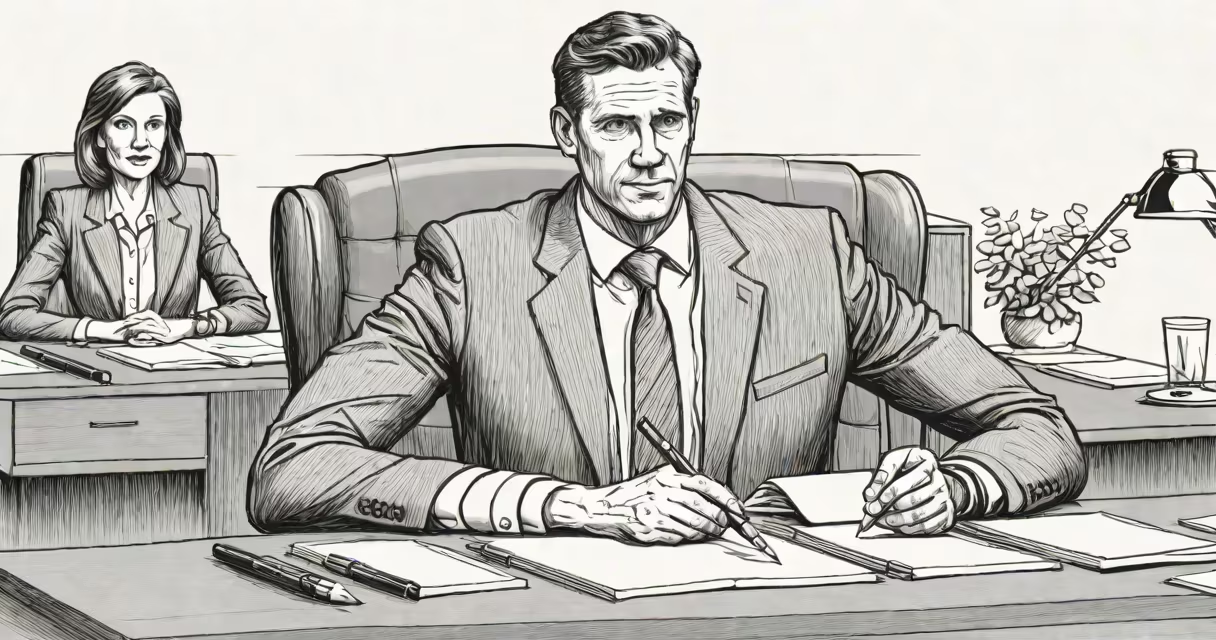
The question "What are your strengths and weaknesses?" in a job interview asks you to identify personal attributes that align with the role's demands while showing self-awareness about areas needing growth. This dual prompt tests both your ability to market yourself and your honesty under pressure.
Interviewers use this question to assess cultural fit, emotional intelligence, and whether your self-perception matches the job requirements. A strong response balances confidence with humility, avoids clichés, and includes specific examples tied to past performance.
According to the Harvard Business Review, candidates who link strengths to measurable outcomes-like improving efficiency by 20%-score higher on perceived competence than those using vague terms like "hardworking" or "team player."
Employers ask about strengths and weaknesses not to catch you off guard but to evaluate your self-knowledge and communication clarity. The structure expects two distinct parts: one describing a professional asset, the other a development area.
Strengths should reflect skills relevant to the job. For example, if applying for a project manager role, highlighting organizational planning, deadline tracking, or stakeholder coordination shows direct relevance. Weaknesses should not be fatal flaws-such as "I'm bad at math"-but areas where you've taken steps to improve.
A 2022 survey by Glassdoor found that 68% of hiring managers consider the quality of the answer to this question more important than the content itself. They're looking for authenticity, not perfection.
Not all strengths and weaknesses carry equal weight. Some are role-specific, others are transferable. Understanding the difference helps tailor your response.
| Type | Examples | Best For |
|---|---|---|
| Hard Skills | Proficiency in Python, advanced Excel modeling | Technical roles: software engineering, finance |
| Soft Skills | Active listening, conflict mediation | Leadership, HR, client-facing positions |
| Development Areas | Overcommitting to tasks, avoiding delegation | Any role requiring team management |
| Process Gaps | Difficulty saying no, tendency to over-edit | Creative fields: design, writing, marketing |
When listing a weakness, avoid framing it as a flaw. Instead, describe it as a habit you've recognized and addressed. For instance: "I used to spend too much time refining early drafts. Now I set time limits and share rough versions sooner to get feedback."
One non-obvious rule: never say "I don't have any weaknesses." That signals denial of self-reflection-a red flag for leadership roles. The Society for Human Resource Management notes that 74% of managers view this response as disingenuous.
Many candidates fail because they confuse traits with behaviors. Saying "I'm detail-oriented" is weak unless paired with evidence: "I reduced errors in quarterly reports by 30% through a double-check system I created."
Another frequent error is using generic or clichéd responses. "I work well under pressure" lacks impact. Better: "During a product launch, I managed three overlapping deadlines by breaking them into daily milestones and checking in with leads twice a day."
Some applicants list weaknesses that undermine core job functions. Saying "I struggle with public speaking" in a sales role raises concerns. Instead, frame improvement efforts: "I used to avoid presenting, so I joined Toastmasters and now deliver monthly updates to my team."
Here's a real-world example from a candidate applying for a marketing coordinator position:
"My strength is campaign analytics. In my last role, I tracked engagement across five channels and identified that email campaigns had a 40% higher conversion rate than social ads. I recommended shifting 30% of the budget there, which increased ROI by 18% in Q3. That's something I bring to every new strategy.
As for weakness, I used to take on too many projects at once. I'd start everything at once and lose focus. After noticing delays in delivery, I adopted a weekly prioritization system using Eisenhower Matrix principles. Now I review my task list every Monday and limit myself to three high-priority items per week. It's improved my completion rate by 50%."
This answer works because it uses numbers, names a tool (Eisenhower Matrix), and shows growth. It doesn't hide imperfection-it reframes it as progress.
I tested this format during a mock interview session with a junior developer. He initially said, "I'm good at coding but I don't communicate well." After restructuring, he said: "I used to write code without documentation. Now I pair-write with teammates and document each function before pushing. My pull requests are reviewed 40% faster." The feedback shifted from "needs improvement" to "shows initiative."
Research from the University of Michigan shows that interviewers form initial judgments within 7 seconds of hearing a candidate speak. A thoughtful answer to "what are your strengths and weaknesses" can override a poor resume or lack of experience.
For entry-level roles, this question often determines whether you get a second interview. For senior roles, it separates candidates who lead from those who follow. The best answers show you understand your role's demands and can grow within them.
Remember: your strengths aren't just what you do well-they're what you consistently deliver. Your weaknesses aren't failures; they're opportunities you've acted on. Answering "what are your strengths weaknesses interview" correctly turns a standard question into a competitive edge.