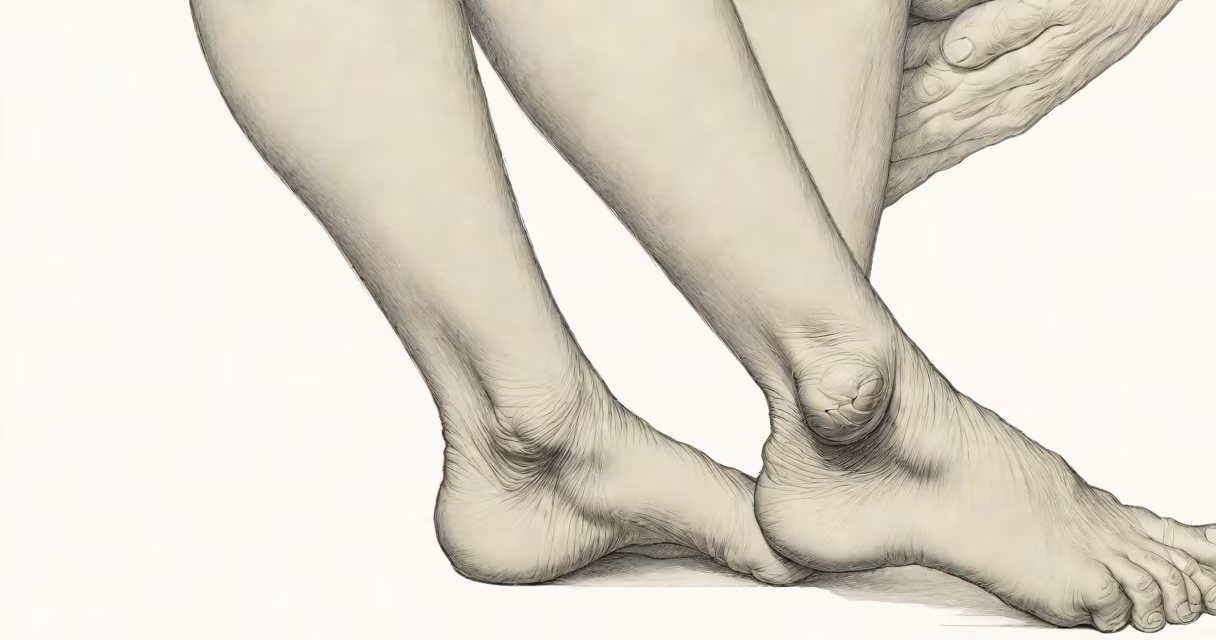
Lower leg edema and pain refers to swelling and discomfort in the lower portion of the leg, typically below the knee, caused by fluid accumulation in tissues or nerve/muscle involvement. This condition can result from injury, circulatory issues, or systemic diseases such as heart failure or kidney disease.
Edema occurs when fluid leaks from blood vessels into surrounding tissues. In the lower leg, this manifests as puffiness, tight skin, and visible indentation when pressure is applied. Pain may accompany swelling due to tissue stretching, inflammation, or nerve compression. The combination of both symptoms increases the likelihood of an underlying health issue rather than isolated minor trauma.
According to the American Heart Association, persistent lower extremity swelling affects approximately 1 in 10 adults over age 65 and is often linked to venous insufficiency or cardiac strain. The presence of pain elevates concern beyond benign fluid retention, especially if unilateral (one-sided) or worsening over time.
Fluid buildup in the lower leg begins when capillary pressure exceeds the forces that normally pull fluid back into circulation. Causes include prolonged standing, poor venous return, or increased hydrostatic pressure from heart or kidney dysfunction. When veins fail to efficiently return blood to the heart, fluid seeps into the interstitial space, leading to edema.
Pain arises through multiple mechanisms. Mechanical pressure from swelling can stretch nerves and inflame soft tissues. Nerve entrapment-such as tarsal tunnel syndrome-can cause burning or shooting pain in the foot and ankle. Muscle strain or compartment syndrome may produce sharp, localized pain that worsens with activity.
A 2021 study published in Clinical Journal of the American Society of Nephrology found that patients with stage 3 chronic kidney disease had a 47% higher incidence of lower limb edema compared to healthy controls. The study emphasized that edema in these individuals was often bilateral and symmetrical, unlike trauma-related cases which are typically unilateral.
Lower leg edema and pain fall into distinct categories based on origin. The most common types include:
| Type | Primary Cause | Key Features | Associated Conditions |
|---|---|---|---|
| Peripheral edema | Fluid leakage from capillaries | Bilateral swelling, pitting, mild warmth | Heart failure, kidney disease, medications (e.g., calcium channel blockers) |
| Inflammatory edema | Tissue injury or infection | Unilateral, redness, heat, throbbing pain | Cellulitis, sprains, gout flare-ups |
| Nerve-related pain with swelling | Nerve compression or damage | Shooting or burning pain, numbness, tingling | Tarsal tunnel syndrome, diabetic neuropathy |
Peripheral edema is the most frequently seen form. It tends to develop gradually and affect both legs symmetrically. In contrast, inflammatory edema appears rapidly, often following an injury or infection, and is usually confined to one limb. Nerve-related cases may show minimal swelling but significant pain, making them easy to misdiagnose as musculoskeletal issues.
One underrecognized cause is deep vein thrombosis (DVT). DVT presents with unilateral swelling, pain, and warmth. A 2020 report from the National Institutes of Health notes that 40% of DVT cases initially mimic muscle strain or tendonitis, delaying diagnosis. If left untreated, DVT can lead to pulmonary embolism-a life-threatening complication.
Many people assume lower leg edema and pain stems from overuse or wearing ill-fitting shoes. While these can contribute, the co-occurrence of swelling and pain demands attention. A single symptom-swelling or pain-might be dismissed, but their combination raises red flags.
For example, a 58-year-old woman reported persistent swelling and dull ache in her right calf after a long flight. She attributed it to travel fatigue. Over two weeks, the pain intensified, and the area became warm. A Doppler ultrasound revealed a deep vein clot. Early intervention prevented complications.
Another misconception is equating edema with weight gain. Fluid retention can increase scale weight, but it does not reflect fat mass. A 2022 review in Journal of Clinical Medicine found that patients with heart failure often misinterpret leg swelling as normal aging, delaying care by months.
True edema is pitting-pressing a finger into the swollen area leaves a temporary dent. Non-pitting edema, seen in lymphedema or myxedema (from hypothyroidism), does not indent. This distinction guides diagnostic testing.
Initial assessment includes physical examination, medical history, and imaging. Doctors evaluate for pitting vs. non-pitting edema, symmetry, skin changes, and associated signs like shortness of breath or chest pain. Blood tests may check kidney function, electrolytes, and markers of inflammation.
Imaging such as duplex ultrasound confirms DVT. MRI or CT scans assess nerve compression or soft tissue injuries. For suspected heart or kidney disease, echocardiography or renal ultrasound may follow.
Treatment depends on the root cause. Diuretics reduce fluid overload in heart or kidney failure. Compression stockings improve venous return. Antibiotics treat infected edema. Surgical decompression may be needed for compartment syndrome.
Chronic cases may involve referral to vascular medicine or neurology. A patient with diabetes who developed burning pain and mild swelling in the left lower leg was later diagnosed with tarsal tunnel syndrome after standard treatments failed. Early nerve testing prevented permanent nerve damage.
While many causes are manageable, ignoring lower leg edema and pain risks progression. Persistent swelling increases risk of skin breakdown and ulceration. Pain can limit mobility, leading to deconditioning and secondary complications.
Lower leg edema and pain is not a single entity but a symptom complex indicating potential disruption in circulation, nerve function, or organ systems. Identifying the underlying mechanism determines effective treatment and prognosis.