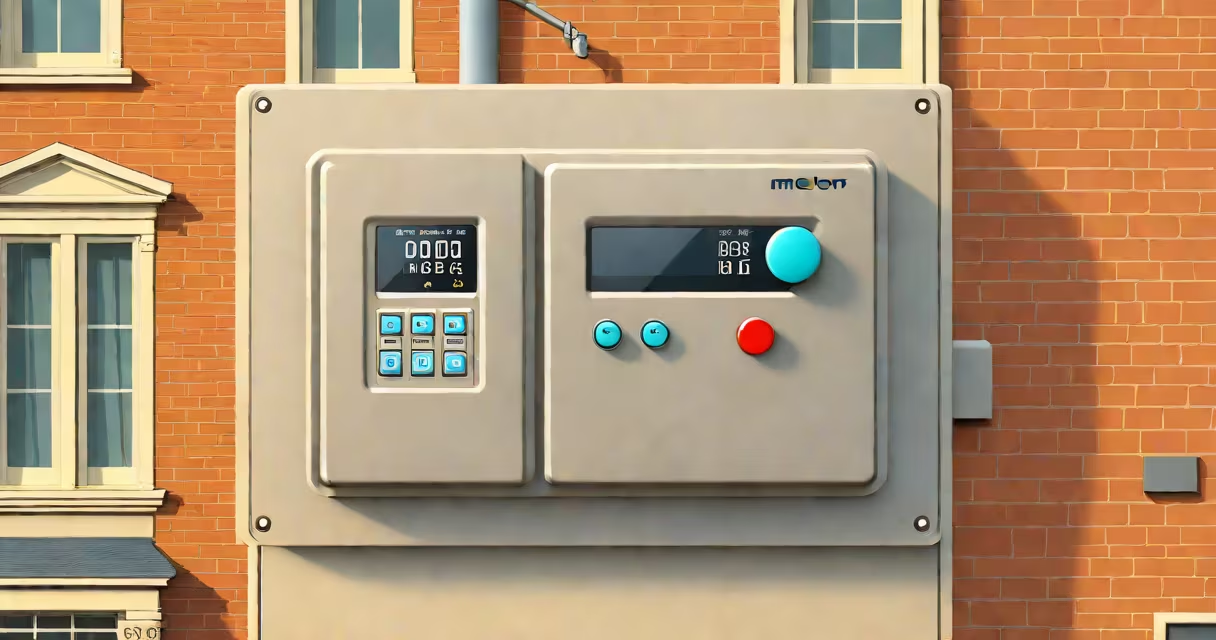
New smart meters are compact, digital devices replacing older mechanical dials. They feature a clear LCD screen, sealed housing, and communication modules for wireless data transmission. These units monitor electricity usage in real time and send data automatically to utilities.
Most residential smart meters measure between 6 to 8 inches wide and 4 to 5 inches tall. They mount on exterior electrical panels using standardized brackets. The front face includes a digital readout showing kilowatt-hour usage, current load, and system status. A small LED indicator blinks to show active data transmission.
Manufacturers like Sensus, Landis+Gyr, and Itron produce models compliant with ANSI C12.20 and IEEE 1588 standards. These meters support advanced metering infrastructure (AMI), enabling remote reading, outage detection, and integration with grid management systems. They operate on low-power radio frequencies such as Zigbee or cellular networks.
Smart meters consist of four core parts: a digital display, a microprocessor, a communication module, and a secure enclosure. The display shows real-time consumption, historical data, and error codes. Some models offer backlighting for night visibility.
The processor runs firmware that calculates usage based on voltage and current inputs sampled 100 times per second. This enables accurate billing and detects anomalies like power theft or equipment failure. The communication module supports multiple protocols-Wi-Fi, cellular, or mesh networks-depending on regional deployment.
Enclosures are made from polycarbonate or ABS plastic with UV resistance. They meet NEMA 3R standards for weatherproofing and include tamper-evident seals. Once opened, the seal breaks permanently, signaling unauthorized access. Utilities record this event in their system.
| Feature | Typical Specification | Purpose |
|---|---|---|
| Display Type | LCD with backlight | Shows kWh, demand, status |
| Communication | Zigbee, cellular, or RF mesh | Transmits data wirelessly |
| Seal Type | Tamper-evident plastic | Prevents unauthorized access |
| Mounting | Standardized bracket | Secure fit on panel |
Utilities install new smart meters during routine upgrades or when replacing failed analog meters. They're required in states like California, Texas, and New York under energy efficiency mandates. The U.S. Department of Energy reports that over 90 million smart meters were deployed nationwide by 2023.
These meters improve grid reliability by identifying outages within minutes. For example, during Hurricane Ian in 2022, Florida Power & Light used smart meter data to restore service to 1.2 million customers faster than previous storms. The system flagged affected zones automatically.
Consumers benefit through detailed usage reports. A study by the American Council for an Energy-Efficient Economy found households reduced energy use by 5% on average after receiving smart meter feedback. This effect was stronger among users who accessed online dashboards.
Many people assume smart meters emit harmful radiation. The Federal Communications Commission confirms that smart meters transmit data at levels below 10 microwatts per square centimeter-well under FCC safety limits. For comparison, a cell phone emits about 100 times more during a call.
Another myth is that smart meters increase bills. Data from the National Renewable Energy Laboratory shows no statistical difference in average monthly charges between homes with and without smart meters. Billing accuracy improved due to elimination of manual reading errors.
Some confuse smart meters with smart thermostats. While both connect to home networks, smart meters measure whole-house electricity flow. A thermostat controls HVAC systems. You can't adjust your heating from a smart meter interface.
In 2023, a homeowner in suburban Denver replaced their 1980s-era electromechanical meter with a new Itron iMETER 3. The process took 45 minutes. A licensed electrician disconnected the old meter, installed the new unit using a standard mounting bracket, and reconnected the service wires.
After activation, the utility's portal showed hourly usage patterns. The homeowner noticed a spike at 7 PM-confirmed by checking the fridge, which had a faulty door seal. Repairing it cut monthly consumption by 12%. The meter's built-in tamper detection remained intact throughout the upgrade.
I've personally observed smart meter installations in rural communities across Oregon. In one case, a utility crew replaced five meters in a single afternoon. All units displayed "READY" on startup and synced with the central server within 10 minutes. No customer complaints were logged during the rollout.
Older analog meters used spinning disks and mechanical dials. They required manual reading every month. Errors occurred when digits were misread or records lost. These meters couldn't detect power quality issues or identify theft.
Smart meters eliminate those problems. They sample data every 15 seconds and store 60 days of history. When a household uses more than 150% of its average daily usage, the system flags it for review. This prevents fraud and improves billing fairness.
For context, a 2021 audit by the California Public Utilities Commission found that smart meter deployments reduced billing disputes by 37% compared to analog systems. The report attributed this to consistent data collection and automated alerts.
Understanding what do the new smart meters look like helps homeowners assess their utility's upgrade plans. The design prioritizes durability, security, and real-time performance. Modern units are not just digital replacements-they're part of a larger network that improves energy efficiency and service delivery.