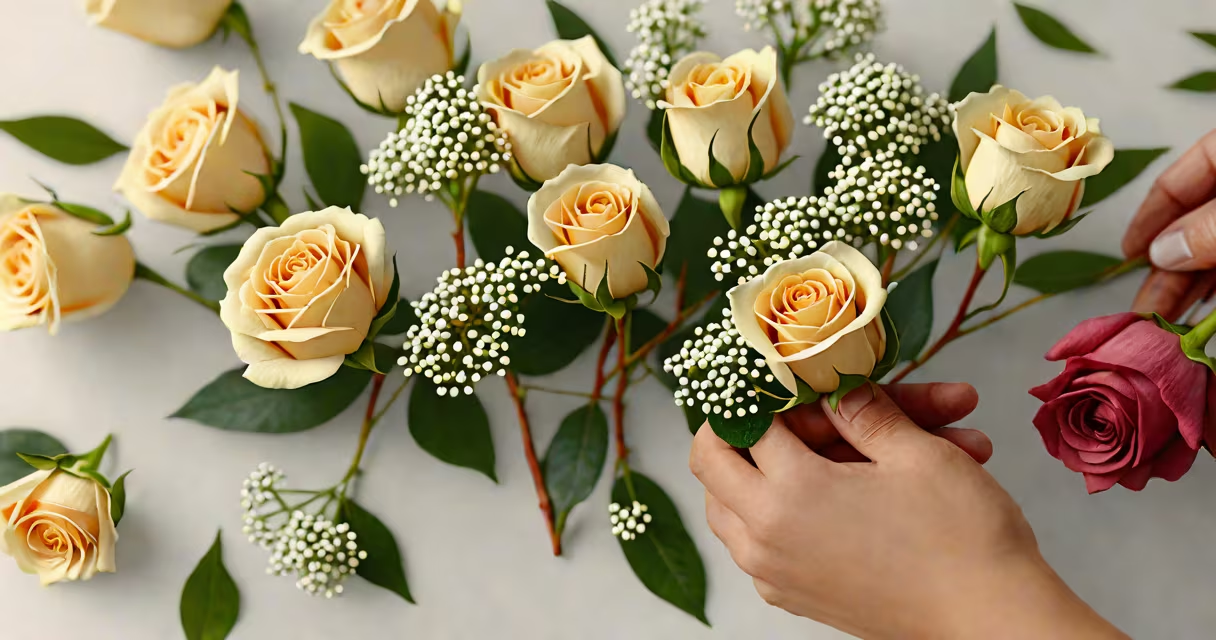
A boutonniere is a small, decorative floral arrangement worn on a man's lapel, typically at weddings, formal events, or memorials. It consists of a single focal flower, complementary blooms, and greenery, secured with wire and tape for durability. The design balances color, texture, and symmetry to complement the wearer's attire.
Boutonnieres originated in 19th-century Europe as a symbol of status and occasion. Today, they remain a staple at weddings, proms, and funerals. They're not just ornamental-they signal formality and personal attention to detail. A well-made boutonniere lasts through a long ceremony and resists wilting under heat or humidity.
For a lasting result, use flowers with firm stems and petals that hold shape. Avoid overly delicate blooms like daisies or snapdragons unless they're protected with a sealant. The most common choices are roses, orchids, carnations, and proteas. Greenery adds volume and contrast-eucalyptus, ruscus, and ivy are popular.
Every boutonniere begins with four essentials: a focal flower, secondary flowers, greenery, and a base structure. The focal flower dominates visually-typically 1-2 inches in diameter. Roses and gardenias are ideal due to their size and resilience. Secondary flowers fill space without overpowering. Baby's breath, waxflower, or statice work well in small quantities.
Greenery provides framing and depth. Eucalyptus offers a soft, silvery tone and natural movement. Ruscus has stiff, waxy leaves that maintain shape. Use 2-3 sprigs total, trimming stems to 2-3 inches. Too much greenery overwhelms the design and makes the boutonniere bulky.
Wire is critical for structural integrity. Use 20-gauge florist wire for stems and 26-gauge for wrapping. Cut lengths of 6-8 inches for securing the arrangement. Floral tape (green or clear) wraps around the stem bundle to hold everything together. Use 12-18 inches of tape per boutonniere. Scissors or floral snips ensure clean cuts without crushing stems.
Begin by selecting flowers and greenery. Choose blooms with closed buds or slightly open petals to prevent premature wilting. Soak stems in water for 30 minutes before assembling to extend freshness. Trim stems at a 45-degree angle to increase surface area for water absorption.
Arrange components in your hand: place the focal flower at the center, add secondary flowers slightly offset, and tuck greenery around the edges. Hold the cluster at a 45-degree angle to mimic how it will sit on a lapel. Test balance by holding it against a jacket.
Wrap the base with floral tape. Start at the stem's base, stretch the tape tightly around the stems, and overlap each turn by half. Continue until the entire stem bundle is covered. Secure the end with a quick twist and trim excess. Attach a pin or safety pin through the taped base to secure to fabric.
Overcrowding is the most frequent error. Using more than three flower types or five greenery pieces creates visual noise. A successful boutonniere feels intentional, not cluttered. Stick to one dominant color and two supporting tones.
Another issue is poor stem support. Without wire reinforcement, the arrangement collapses under weight or during handling. Always insert a 2-inch piece of wire through the stem base before taping. For fragile blooms like peonies, wrap the stem with a thin layer of tissue paper before taping to reduce pressure.
Some attempt to use household glue or rubber bands. These fail quickly-glue attracts dust and detaches when touched, while rubber bands cut into stems. Only use floral-specific supplies. According to the Society of American Florists, using proper tools increases lifespan by 60% compared to improvised methods.
| Component | Recommended Quantity | Best Choices |
|---|---|---|
| Focal flower | 1 per boutonniere | Rose, orchid, gardenia |
| Secondary flowers | 1-2 | Baby's breath, waxflower, statice |
| Greenery | 2-3 sprigs | Eucalyptus, ruscus, ivy |
| Floral wire | 20-gauge: 6-8 inches | For stem reinforcement |
| Floral tape | 12-18 inches | Clear or green, 1-inch width |
One non-obvious fact: the direction of the stem wrap matters. Wrap clockwise from the base upward. This aligns with how most people fasten pins and prevents the tape from unraveling under tension. A backward wrap causes the tape to loosen during wear.
I once made 25 boutonnieres for a wedding in July. The bride wanted a tropical theme-pink orchids, bird of paradise, and monstera leaves. I used 20-gauge wire to reinforce each stem and taped them in a clockwise motion. The boutonnieres lasted through a 4-hour outdoor ceremony in 90°F heat. No wilting occurred, and guests commented on their freshness.
What do you need to make a boutonniere? The answer is not just flowers-it's precision, timing, and material selection. A poorly assembled boutonniere sags, fades, or falls off. A well-crafted one stays intact and elevates the wearer's presence.
Understanding what do you need to make a boutonniere ensures authenticity and longevity. Whether for a wedding or a memorial, the elements are consistent: quality materials, correct technique, and attention to detail. The result is not just a decoration-it's a lasting impression.