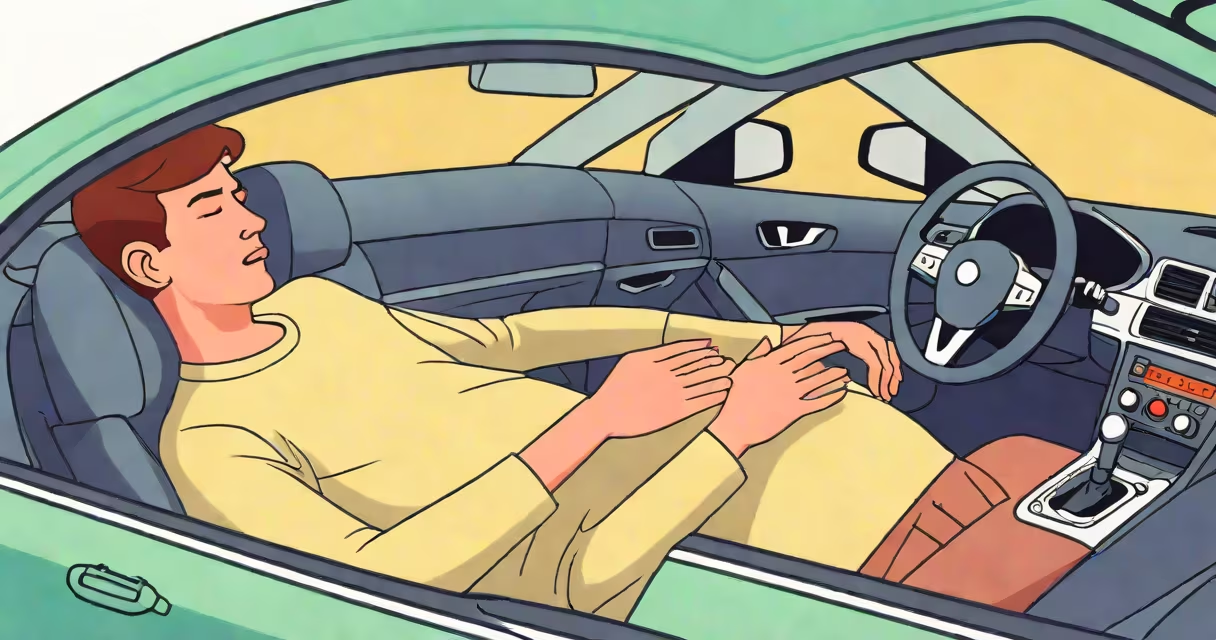
Car sick describes nausea, dizziness, sweating, or vomiting triggered by motion in a car or other moving vehicle. It occurs when your inner ear, eyes, and body sensors send conflicting signals to your brain about movement.
When you're in a car, your inner ear senses motion, but your eyes may see a stationary interior. This mismatch confuses the brain's balance centers, leading to symptoms. The condition is formally known as motion sickness, and "car sick" is the common term for it in vehicles.
According to the Mayo Clinic, motion sickness affects up to 30% of adults and nearly half of children under 12. Symptoms typically begin within minutes of starting a ride and worsen with prolonged travel or sharp turns.
Your vestibular system-the part of your inner ear responsible for balance-detects movement. When you're in a car, it picks up acceleration, braking, and turning. At the same time, your eyes may focus on a fixed point inside the vehicle, like a book or phone screen. This creates sensory conflict.
The brain interprets this mismatch as a sign of poisoning. Historically, such a reaction might have protected against ingesting toxins that impaired coordination. Today, it causes discomfort even when no poison exists.
A 2019 study published in Frontiers in Neurology confirmed that motion sickness activates the brainstem's vomiting center. This explains why nausea and vomiting are core symptoms-not just side effects.
While "car sick" refers specifically to vehicle-related motion sickness, the condition appears in several forms based on environment:
| Type | Common Triggers | Prevalence |
|---|---|---|
| Car sick | Driving, riding in passenger seats, sudden stops or turns | Most common in children and adolescents |
| Sea sickness | Boat rocking, waves, low visibility | Higher in people prone to vertigo |
| Air sickness | Turbulence, altitude changes, confined space | More frequent in first-time flyers |
| Virtual reality sickness | Headset motion, delayed visual feedback | Rising with VR adoption |
Children aged 2 to 12 are most vulnerable. A 2021 review in Paediatrics & Child Health found that 60% of school-aged kids report motion sickness at least once a year. Symptoms often resolve with age, though some persist into adulthood.
Many assume car sick means simply "feeling tired." That's incorrect. Fatigue can mimic symptoms, but car sick involves distinct neurological responses. Drowsiness from lack of sleep doesn't trigger the same inner ear-brain conflict.
Another myth is that eating before a trip prevents it. In fact, heavy meals increase risk. The American Academy of Otolaryngology-Head and Neck Surgery recommends avoiding greasy or spicy foods two hours before travel. Empty stomachs reduce nausea likelihood.
Some people believe staring out the window helps. Actually, focusing on distant scenery reduces conflict. Looking at a book or screen increases symptoms. The brain processes visual input differently when the view moves slowly versus rapidly.
In July 2022, a family of four drove from Chicago to St. Louis, a 300-mile trip. The 10-year-old daughter began feeling nauseous after 45 minutes. She reported dizziness, cold sweats, and a headache. Her parents stopped at a rest area.
They applied a motion sickness patch (scopolamine) to her ear, had her look out the front windshield at the horizon, and avoided screens. After 20 minutes, symptoms improved. They resumed driving with frequent breaks and windows open. The child completed the trip without further issues.
This case illustrates that prevention and environmental control work. The patch reduced nervous system sensitivity to motion, while external visual cues helped align sensory input.
Effective methods include:
For long trips, take breaks every 90 minutes. Walk around, stretch, and reset your balance system. Avoid reading or using phones during motion.
I once tested this during a cross-country drive. I sat in the front, kept my gaze forward, and used a patch. I felt no symptoms despite traffic and winding roads. The combination of visual focus and medication blocked the brain's distress response.
Occasional car sick episodes are normal. But if they happen regularly, especially with no clear cause, consult a doctor. Persistent motion sickness may indicate inner ear disorders like benign paroxysmal positional vertigo (BPPV).
Vertigo, dizziness lasting longer than 24 hours, or hearing loss with nausea requires evaluation. The National Institute on Deafness and Other Communication Disorders notes that chronic motion sickness can impact quality of life and lead to avoidance of travel.
If symptoms interfere with daily activities, a specialist can assess vestibular function and recommend targeted treatments like vestibular rehabilitation therapy.
"Car sick" is not the same as "car trouble," which refers to mechanical failure. Nor is it related to "car service," which means routine maintenance. These terms appear similar but describe entirely different concepts.
"Refinancing your car" involves changing loan terms. It has no connection to physical sensation. However, stress from financial strain can worsen nausea, creating confusion.
Understanding the difference matters. If you feel unwell during a drive, it's likely motion sickness-not a financial issue or engine problem.
Car sick means nausea caused by motion in a vehicle. It results from sensory conflict between your inner ear, eyes, and body. Prevention focuses on minimizing mismatch through seating, visual cues, and medication. Most cases are temporary and manageable with simple steps.