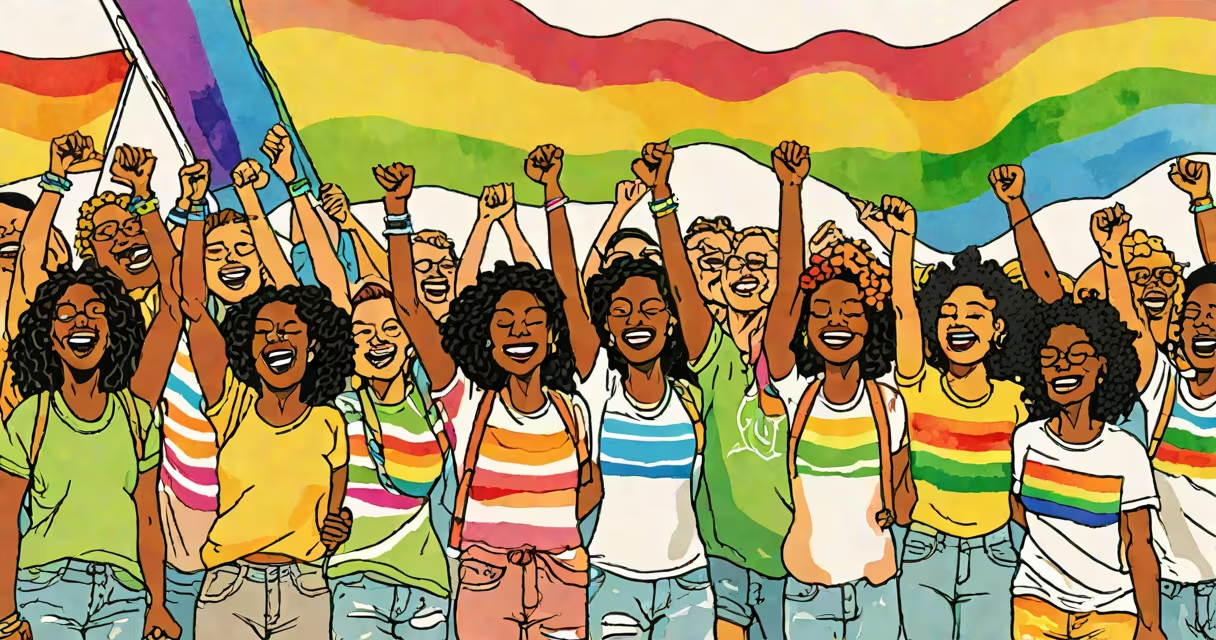
Happy pride refers to a state of joyful self-acceptance and affirmed identity within the LGBTQ+ community, often expressed through celebration, visibility, and emotional liberation. It combines personal empowerment with collective solidarity, marking both individual progress and shared cultural recognition.
Happy pride emerges when someone feels secure in their gender identity or sexual orientation and experiences positive emotions such as joy, confidence, and belonging. It's not limited to Pride Month events but occurs anytime a person embraces their truth without shame. This emotional state is rooted in psychological safety and social validation, both of which contribute to long-term well-being.
The term gained traction in online LGBTQ+ spaces around 2018, particularly on platforms like Tumblr and Twitter, where users began pairing "happy" with "pride" to emphasize emotional wellness alongside political expression. Unlike earlier uses of "pride" focused on resistance or protest, "happy pride" centers on healing, joy, and self-love as acts of defiance against internalized stigma.
Happy pride functions as a psychological and social mechanism that reinforces identity affirmation. When individuals publicly express their LGBTQ+ identity-through pronouns, clothing, or participation in events-they activate neural pathways linked to self-worth and emotional regulation. Studies show that visible identity expression reduces anxiety and increases life satisfaction among queer youth.
Neuroscience research from the University of California, San Francisco, indicates that affirming one's identity activates the brain's reward system, releasing dopamine and oxytocin. These neurochemicals reinforce behaviors associated with safety and connection. For many, celebrating pride becomes a ritual that triggers these responses, making happiness a measurable outcome of identity expression.
For example, a transgender woman who begins using her chosen name at work may initially feel anxious. Over time, as colleagues respond positively and she receives support, her sense of self-worth strengthens. When she attends a Pride event and sees others living openly, her mood shifts toward sustained joy-a manifestation of happy pride.
Happy pride appears in different forms depending on context, culture, and personal history. The following table outlines common expressions:
| Type | Description | Example |
|---|---|---|
| Personal Joy | Internal emotional state of acceptance and happiness about one's identity. | A gay man dancing at a Pride festival because he feels seen and free. |
| Celebratory Visibility | Public display of identity through symbols, attire, or participation. | A nonbinary person wearing a gender-neutral outfit and a rainbow pin at a workplace event. |
| Community Belonging | Emotional connection to a larger LGBTQ+ network or movement. | Queer teens attending a youth group meeting and sharing stories of coming out. |
| Political Affirmation | Using pride as a tool for advocacy and resistance, grounded in positivity. | An activist posting a video of themselves saying "I am proud, and I deserve love" during a campaign. |
Each form contributes to a cumulative effect: consistent positive reinforcement of identity leads to greater mental resilience. According to the American Psychological Association, LGBTQ+ individuals who engage in regular identity-affirming activities report lower rates of depression and suicidal ideation.
Happy pride is sometimes mistaken for performative or superficial celebration. Critics argue that it distracts from systemic issues like discrimination, violence, and healthcare disparities. But this view misrepresents the concept. Happy pride is not a replacement for activism-it is a complement. Joy and resistance coexist.
Another misconception is that happy pride applies only to those who are out or publicly visible. In reality, it can be internal. A teenager in a conservative household may feel happy pride privately-through journaling, art, or quiet self-acceptance-without external expression. Emotional authenticity doesn't require performance.
A key distinction often missed: happy pride is not synonymous with "straight pride." The latter term has been used in anti-LGBTQ+ campaigns to mimic the language of inclusion while promoting exclusion. Happy pride, by contrast, is grounded in lived experience, historical struggle, and community-defined values. It emerged from decades of activism, not opposition.
In June 2022, over 2.5 million people attended the New York City Pride March. Among them, thousands wore custom shirts reading "Happy Pride" in bold colors. Many carried signs with personal messages: "I'm trans and I'm thriving," "My love is valid," or "Proud to be me."
One attendee, a 24-year-old bisexual woman named Maya, described her experience: "I'd spent years hiding my identity. When I finally came out to my family last year, I felt relief-but not joy. Not until I stood in front of thousands of people who looked like me did I feel truly happy. That's what happy pride means to me."
Her story reflects findings from a 2023 survey by the Human Rights Campaign, which found that 68% of LGBTQ+ adults who participated in Pride events reported increased feelings of happiness and self-worth afterward. The study also noted that participants were more likely to seek mental health support and engage in community leadership roles in the months following the event.
Understanding happy pride as a distinct emotional and cultural phenomenon prevents oversimplification. It allows space for both joy and struggle, for celebration and advocacy. It acknowledges that identity is not static-it evolves through moments of personal breakthrough and collective affirmation.
One non-obvious fact: happy pride is not always visible. Some people experience it silently-during a quiet moment of reflection, a private conversation with a trusted friend, or even in a therapist's office. The absence of outward display does not diminish its significance. Emotional well-being is not dependent on audience.
I've observed this firsthand during outreach sessions at a university LGBTQ+ center. One student, a 20-year-old gay man, sat in silence for ten minutes after being asked to describe his happiest moment. He later wrote: "The moment I realized I didn't have to hide anymore-that was happy pride. It wasn't loud. It wasn't public. But it changed everything."
Happy pride is not a trend. It is a response to centuries of marginalization, a reclaiming of emotional agency. It reflects progress, yes-but also ongoing effort. To live in happy pride is to recognize your worth, claim your space, and celebrate your existence-not despite adversity, but in spite of it.
When someone says "I'm happy pride," they're not just stating an emotion. They're asserting identity, demanding dignity, and inviting others to join in joy. It's a quiet revolution-one smile, one statement, one moment at a time.