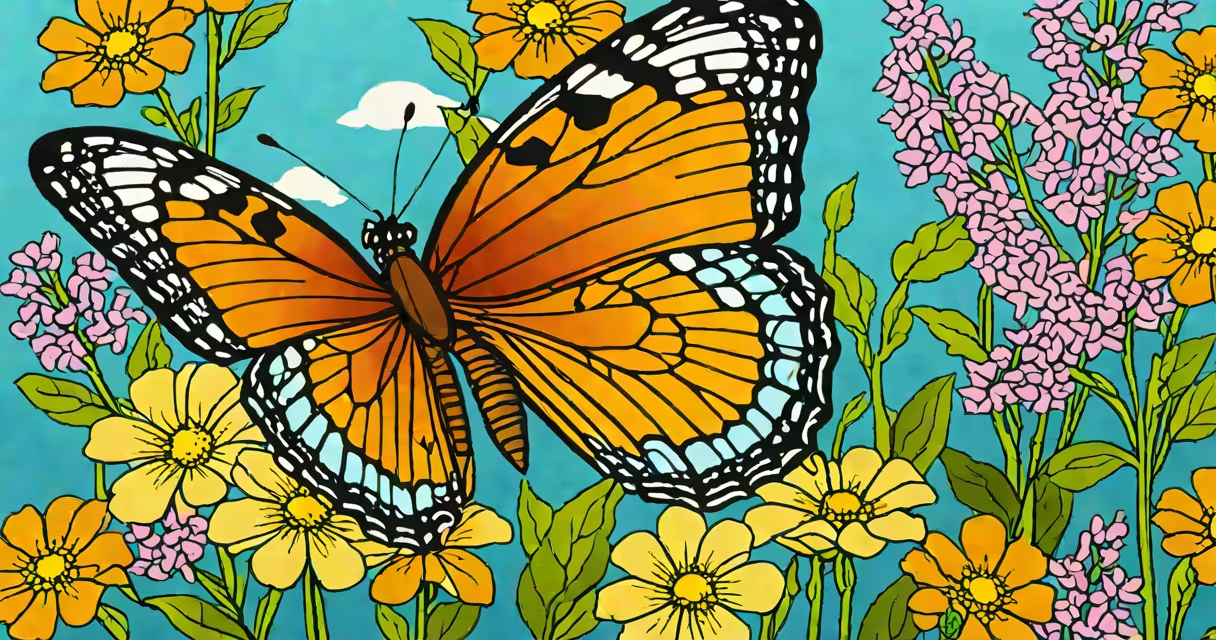
The imago is the sexually mature, reproductive adult stage of insects that undergo complete metamorphosis, characterized by fully developed wings, functional reproductive organs, and specialized mouthparts adapted for feeding on nectar, blood, or plant sap.
Imago represents the endpoint of a complex developmental sequence involving egg, larva, pupa, and finally, the adult form. This stage is distinct from earlier life stages due to its ability to mate, disperse, and reproduce. Insects like butterflies, beetles, flies, and bees progress through this transformation, with the imago being the only stage capable of long-distance flight and sustained reproduction.
For example, a monarch butterfly emerges from its chrysalis as an imago with orange-and-black wings, a proboscis for sipping nectar, and fully functional reproductive systems. It can fly hundreds of miles during migration and lay eggs on milkweed plants-tasks impossible for the caterpillar or pupal stage.
Complete metamorphosis begins when an insect lays an egg. The embryo develops into a larva-such as a caterpillar or maggot-that feeds voraciously and grows rapidly. After reaching a certain size, the larva enters the pupal stage, forming a protective casing like a chrysalis or cocoon.
Inside this structure, internal reorganization occurs. Tissues break down and rebuild into adult structures. This process, called histolysis and histogenesis, is driven by hormones like ecdysone and juvenile hormone. When the transformation completes, the adult insect emerges-this is the imago.
Emergence timing varies. Some may emerge within hours, others take days. For instance, the eastern tent caterpillar (Malacosoma americanum) spends about 10 days in its pupal stage before emerging as an imago with dark wings and a hairy body. The timing ensures adults appear when host plants are available or mating conditions are optimal.
The imago possesses specialized anatomy tailored to survival and reproduction. Wings, if present, are fully formed and often patterned for camouflage or mate attraction. Insects like dragonflies develop wing pads during the pupal stage, but only the imago can use them for powered flight.
Mouthparts differ from larval forms. A mosquito larva uses filter-feeding mouthparts in water, but the imago has a piercing-sucking proboscis for drawing blood. Similarly, a housefly larva is a scavenger with reduced mouthparts, while the imago has a sponge-like proboscis for lapping liquids.
Reproductive organs are fully functional in the imago. Male fruit flies (Drosophila melanogaster) perform courtship dances and transfer sperm during mating. Females lay fertilized eggs shortly after copulation. Without this stage, species cannot perpetuate their lineage.
| Insect Group | Imago Wing Type | Feeding Method | Reproductive Behavior |
|---|---|---|---|
| Butterflies | Membranous, scaled | Proboscis for nectar | Male signals with scent; female selects mates based on wing patterns |
| Beetles | Hardened elytra over soft wings | Chewing mouthparts for pollen and fruit | Antennae used in courtship; males fight for access to females |
| Flies | Single pair of membranous wings | Sponge-like proboscis for liquid food | Swarming behavior during mating season |
Many assume the imago is simply "the adult" without distinguishing it from other life stages. But in entomology, the term specifically applies to the final, reproductive phase of holometabolous insects-those undergoing complete metamorphosis.
Some confuse the imago with the pupa. The pupa is a transitional stage; it does not feed, move freely, or reproduce. The imago is the only stage that performs these functions. A common error is calling a newly emerged butterfly "a pupa," which is incorrect. Once the wings unfold and dry, it becomes an imago.
A lesser-known fact: not all insects reach the imago stage. Environmental stress, predation, or disease can prevent successful emergence. For example, parasitic wasps like *Cotesia glomerata* lay eggs inside caterpillars. The wasp larvae consume the host from within, killing it before it reaches the pupal stage. Thus, no imago forms.
The imago plays a critical role in pollination, decomposition, and food webs. Bees in the imago stage collect pollen and nectar, transferring pollen between flowers. Without this function, many flowering plants would fail to reproduce.
Entomologists use imago characteristics to classify species. Wing venation patterns, antennae shape, and genitalia morphology are key identifiers. The Integrated Taxonomic Information System (ITIS) and the Catalogue of Life rely on imago traits for accurate species descriptions.
I once observed a group of jewel beetles (*Buprestis aurulenta*) emerging from a dead oak tree. They spent 48 hours drying their wings under sunlight before flying off. Their iridescent green bodies reflected light in shifting patterns-distinctive features of the imago stage. This moment confirmed how visually and functionally different the imago is from earlier forms.
Understanding the imago helps control pest populations. Mosquitoes in the imago stage transmit diseases like malaria and dengue. Targeting them with insecticide-treated bed nets reduces transmission. Similarly, agricultural pests like the Colorado potato beetle reach damaging levels only when they become imagoes capable of laying large numbers of eggs.
Complete metamorphosis and the imago stage evolved over 300 million years. Fossil evidence from the Carboniferous period shows early insects with incomplete metamorphosis. The emergence of the imago likely coincided with the rise of flowering plants, enabling niche specialization and increased biodiversity.
Recognizing the imago is essential for ecological monitoring, conservation, and pest management. It is not merely the last stage-it is the defining one.
The imago is the final, reproductive adult form of insects that undergo complete metamorphosis. Its emergence marks the culmination of a biological transformation that enables dispersal, mating, and species continuation. Understanding this stage clarifies insect life cycles, guides pest control strategies, and supports biodiversity research.