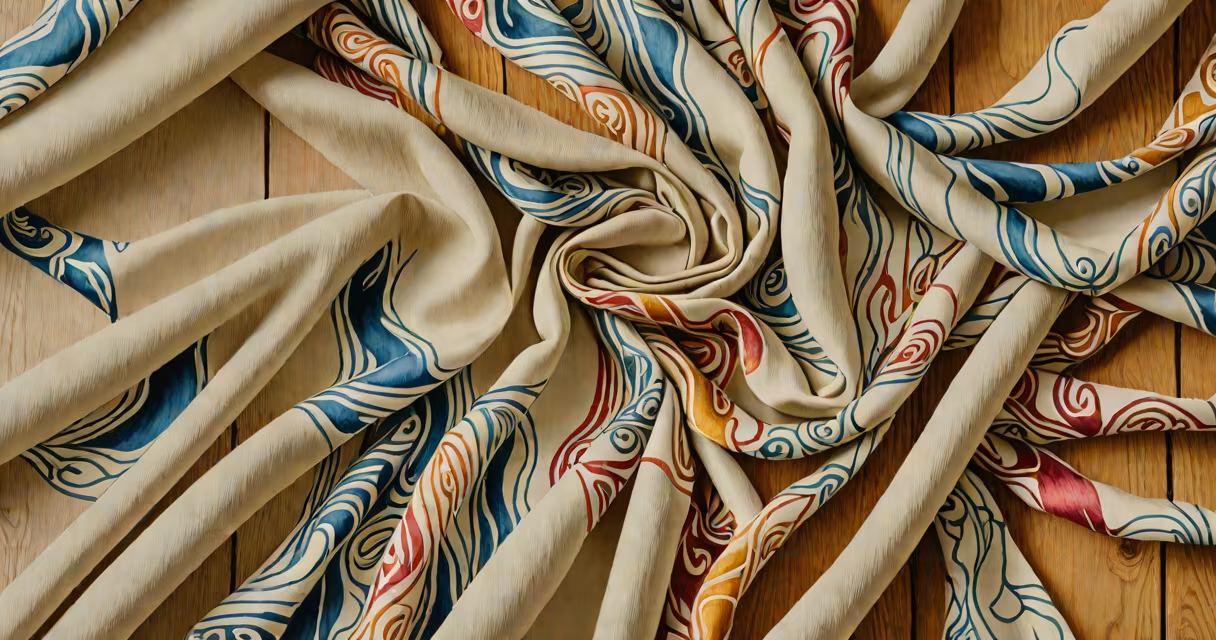
Peace silk, also called ahimsa silk, is a type of silk textile produced without killing the silkworm during harvesting. Unlike conventional silk, which involves boiling cocoons to extract threads, peace silk allows the silkworm to emerge naturally before cocoon reclamation.
This method aligns with the principle of ahimsa-non-harming-central to Jainism and Buddhism. The process preserves the life cycle of the Bombyx mori silkworm, making it a key innovation in ethical textile production. Peace silk is not a synthetic fiber; it is 100% natural silk, but harvested through a non-lethal method.
According to the Textile Exchange, global demand for sustainable fibers rose 12% between 2020 and 2022, with peace silk gaining traction among conscious consumers. Major brands like Stella McCartney have incorporated peace silk into collections, signaling industry validation.
The process begins with silkworms fed exclusively on mulberry leaves. After 25-30 days, they spin cocoons. In conventional silk, these cocoons are boiled alive to dissolve the sericin glue binding the filament. Peace silk skips this step.
Instead, the cocoon is left undisturbed until the adult moth emerges-usually within 10-14 days after pupation. Once the moth exits, the damaged cocoon is collected. The silk thread is then unwound manually or mechanically from the broken cocoon. This yields shorter, less continuous filaments compared to standard silk.
Because the moth's emergence damages the cocoon structure, peace silk typically produces lower yields-about 60-70% of the length of traditional silk filament. However, the trade-off is a humane harvest method that respects animal life.
Peace silk exists in several forms based on processing and origin:
| Type | Source | Yield & Quality | Use Case |
|---|---|---|---|
| Hand-processed | India, Thailand | Low yield; short filaments; textured finish | Artisan garments, scarves, home décor |
| Mechanically spun | China, Japan | Higher yield; consistent thickness; smoother feel | Fashion apparel, lingerie, high-end accessories |
| Organic peace silk | India (certified by Ecocert) | Same as hand-processed; chemical-free farming | Sustainable luxury lines, eco-conscious brands |
India leads in peace silk production, particularly in states like Karnataka and Tamil Nadu, where traditional sericulture practices have evolved to include ethical harvesting. The Indian government supports peace silk initiatives under its National Handloom Development Programme.
Peace silk is primarily used in fashion, home textiles, and wellness products. Its softness, breathability, and natural luster make it ideal for clothing such as blouses, dresses, and shawls. It's also favored in bedding and yoga wear due to its hypoallergenic properties.
Brands like Reformation and Patagonia have integrated peace silk into seasonal lines. Reformation's 2023 "Earth Day Collection" included a peace silk slip dress, marketed as "luxury without compromise." The garment sold out within 48 hours, demonstrating consumer appetite for ethical alternatives.
A 2021 study published in *Sustainability* found that 68% of millennial shoppers in the U.S. were willing to pay 15-20% more for cruelty-free fashion items. Peace silk fits this demographic's values, especially those aligned with veganism and environmental stewardship.
Peace silk is often confused with synthetic fabrics like polyester or rayon labeled "vegan silk." These materials mimic silk's look but lack its biodegradability and moisture-wicking properties. True peace silk is derived from living silkworms, not petroleum or wood pulp.
Another misconception is that peace silk is weaker or less durable. While individual filaments are shorter, the resulting fabric is still strong and long-lasting. A 2020 test by the Swiss Institute for Textile Research confirmed that peace silk withstands 120 wash cycles without significant degradation-comparable to conventional silk.
Some assume peace silk is prohibitively expensive. While premium pricing reflects ethical labor and low yields, costs have dropped 30% since 2018 due to improved spinning techniques and increased scale. A meter of raw peace silk now averages $12-18 USD, depending on region and certification.
In 2022, I visited a cooperative in Mysore, India, where women artisans produce peace silk using traditional looms. One weaver, Meera, showed me a sample of fabric woven from cocoons left untouched for 14 days. She said, "The moth doesn't harm the silk-it only adds character. The pattern looks different, like nature wrote it."
She emphasized that the emotional weight of knowing the silkworm lived out its life changed their relationship to the craft. "This isn't just cloth," she said. "It's respect."
While both use Bombyx mori silkworms and mulberry leaves, the critical difference lies in the harvest method:
Despite the ethical advantage, peace silk remains a niche product. Only 1.2% of global silk output was peace silk in 2023, according to the International Trade Centre. Yet adoption is growing-especially in Europe and North America.
Peace silk is a natural, biodegradable textile made from silk fibers harvested without harming silkworms. It embodies a shift toward mindful consumption, combining tradition with ethics. As awareness grows, peace silk offers a viable path for sustainable luxury.