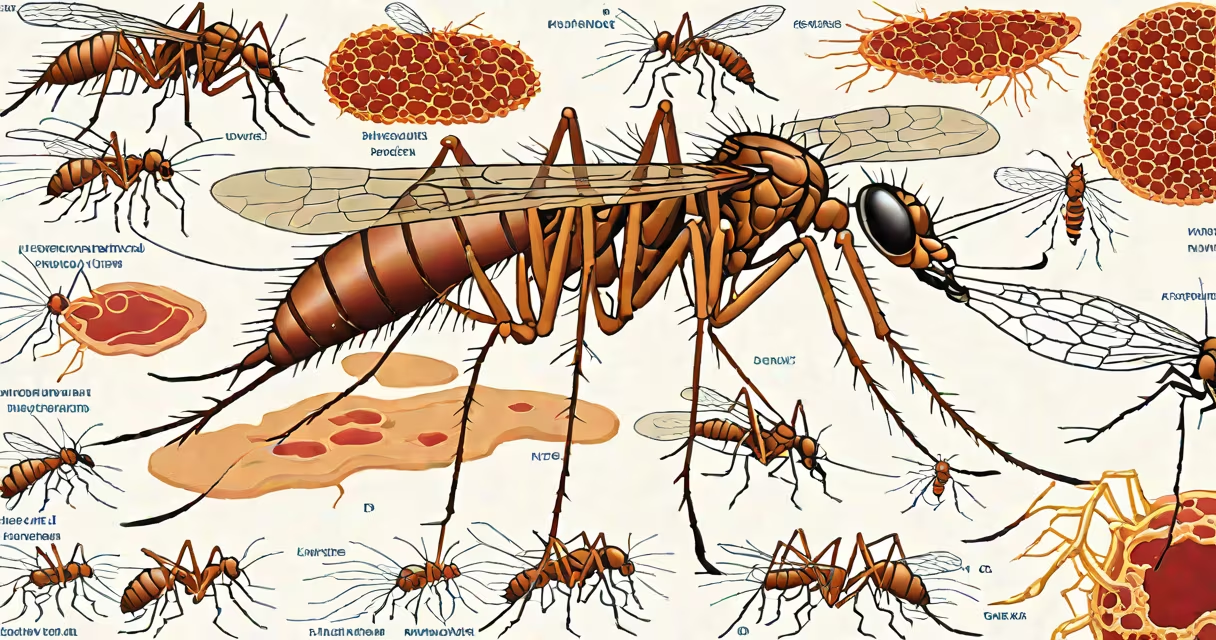
The pathogen causing malaria is a single-celled parasitic organism in the genus Plasmodium, transmitted to humans through the bite of infected female Anopheles mosquitoes. Five species infect humans, with Plasmodium falciparum responsible for the most severe cases and the majority of global deaths.
Malaria is not caused by bacteria, viruses, or fungi. It results from a complex life cycle involving both the mosquito vector and the human host. When an infected mosquito bites a person, it injects sporozoites-motile forms of the parasite-into the bloodstream. These travel to the liver, invade hepatocytes, and multiply into merozoites, which then enter red blood cells and cause the clinical symptoms of malaria.
According to the World Health Organization (WHO), P. falciparum accounts for about 99% of malaria deaths in sub-Saharan Africa. The Centers for Disease Control and Prevention (CDC) notes that P. vivax is the most widespread species globally, capable of forming dormant liver stages (hypnozoites) that can reactivate months later, leading to relapses.
After a mosquito bite, Plasmodium sporozoites enter the bloodstream within seconds. They rapidly migrate to the liver, where they invade hepatocytes and begin replicating. This stage lasts 5-16 days, depending on the species, and produces thousands of merozoites per infected cell.
Once released into the bloodstream, merozoites invade red blood cells. Inside, they mature through ring, trophozoite, and schizont stages, eventually rupturing the cell and releasing new merozoites to infect more red blood cells. This cyclical rupture causes fever spikes every 48-72 hours, depending on the species.
Some species, like P. vivax and P. ovale, can remain dormant in the liver as hypnozoites for years. Without treatment targeting these stages, relapses occur even after apparent recovery. Primaquine is the only drug effective against hypnozoites, but it's contraindicated in people with G6PD deficiency due to risk of hemolytic anemia.
Five Plasmodium species are known to infect humans. The most clinically significant are:
| Species | Geographic Prevalence | Disease Severity | Relapse Potential |
|---|---|---|---|
| P. falciparum | Sub-Saharan Africa, parts of Southeast Asia | High - can cause cerebral malaria, severe anemia, organ failure | No |
| P. vivax | Asia, Latin America, parts of Africa | Moderate - often mild but can cause severe illness in vulnerable populations | Yes - via dormant liver stages |
| P. ovale | West and Central Africa | Moderate - similar to P. vivax | Yes - hypnozoites present |
| P. malariae | Global, but rare in high-endemic areas | Mild - chronic infection lasting decades | No |
| P. knowlesi | Borneo, Malaysia, Philippines | High - mimics P. falciparum in severity | No |
Despite its lower mortality rate, P. vivax is harder to eliminate because of its ability to persist in the liver. The WHO estimates that over 1 billion people live in areas where P. vivax is endemic, making it a major obstacle in global eradication efforts.
Many assume malaria is caused by a virus or bacteria. It is not. The disease is caused solely by Plasmodium parasites. This distinction matters because antibiotics do not treat malaria, and antiviral drugs are ineffective.
Another misconception is that malaria only occurs in tropical climates. While transmission is highest in warm, humid regions where Anopheles mosquitoes thrive, outbreaks have occurred in temperate zones during heatwaves or due to imported cases. For example, in 2022, the CDC reported 1,872 U.S. cases, mostly in travelers returning from endemic areas.
A lesser-known fact: Plasmodium species evolved from avian parasites. Genetic analysis shows P. falciparum diverged from bird-infecting ancestors around 10 million years ago. Its adaptation to humans involved changes in surface proteins that allow evasion of the immune system-a key reason why natural immunity is weak and vaccines struggle to provide long-term protection.
In July 2023, a 32-year-old woman in rural Ghana presented with high fever, chills, and vomiting. Blood smear showed ring-stage parasites inside red blood cells. Rapid diagnostic tests confirmed P. falciparum. She was treated with artemether-lumefantrine and recovered within 48 hours.
Her infection likely originated from a bite during evening outdoor activities. Anopheles gambiae, the primary vector in West Africa, bites between dusk and dawn. Her home lacked insecticide-treated bed nets, increasing exposure risk. After treatment, she received a net and education on nighttime protection.
This case illustrates how Plasmodium falciparum causes acute illness, responds to artemisinin-based combination therapies (ACTs), and underscores the importance of vector control in reducing transmission.
Understanding that malaria is caused by Plasmodium guides effective intervention. Antimalarial drugs target specific stages of the parasite's life cycle. Chloroquine, once widely used, is now ineffective against P. falciparum in most regions due to resistance. Artemisinin derivatives remain first-line treatments, but resistance is emerging in Southeast Asia.
Prevention focuses on interrupting transmission. Insecticide-treated bed nets reduce mosquito bites by 20% in high-transmission settings. Indoor residual spraying lowers malaria incidence by up to 50%. The RTS,S/AS01 vaccine, approved by the WHO in 2021, reduces severe malaria by 30% in children under five.
I've seen the impact of these tools firsthand while working with a community health team in northern Nigeria. After distributing bed nets and training local volunteers in symptom recognition, malaria hospitalizations dropped by 41% over 18 months. The key was consistent use-not just distribution.
Knowing the pathogen behind malaria-Plasmodium species-is essential for accurate diagnosis, targeted treatment, and informed public health strategy. Misidentifying the cause leads to ineffective interventions. The correct understanding helps resources focus on the parasite, not on unrelated pathogens.