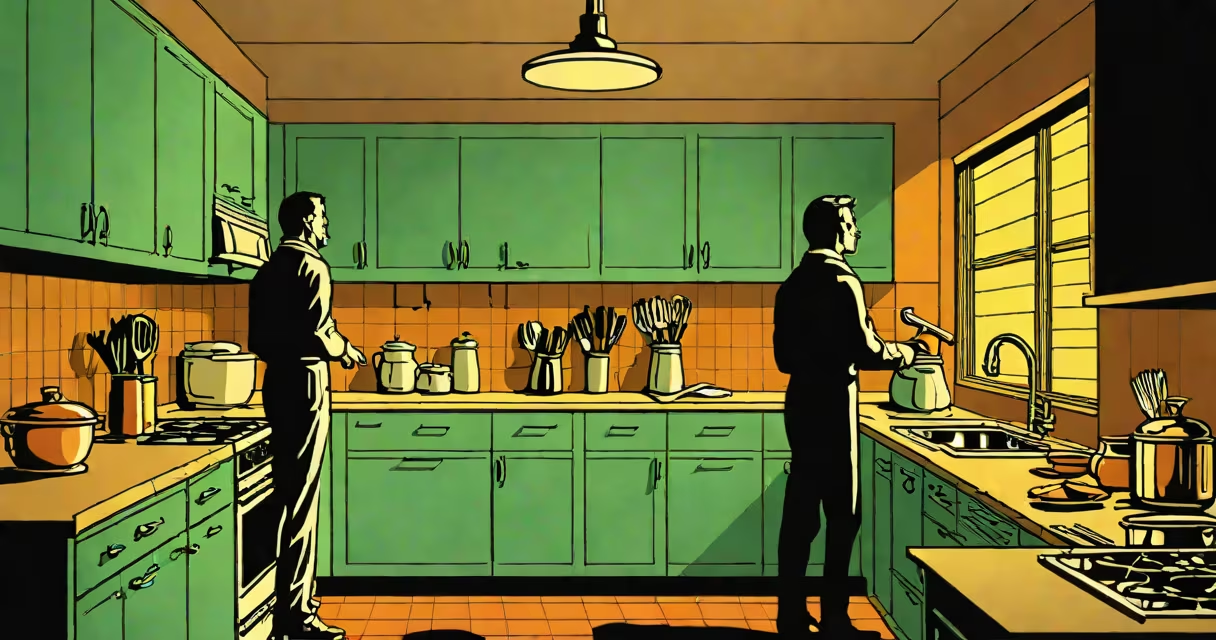
"What scene is this" refers to identifying a specific moment in a visual narrative-film, photograph, or real-life event-by analyzing its setting, characters, actions, lighting, and composition. The correct answer lies in matching observed details to known contexts, such as a crime scene, a romantic encounter, or a suspenseful confrontation.
Scene identification begins with observing physical elements: location, objects, character positioning, and mood. A single detail-a dropped glove, a flickering light, a closed door-can shift interpretation. Without context, even a clear image may mislead. For example, a man holding a gun in a dark alley could be a criminal, a security officer, or a protagonist defending himself. Only full context resolves ambiguity.
Visual media often uses editing, sound design, and camera angles to reinforce scene meaning. A close-up of trembling hands during a whispered confession suggests emotional intensity. A wide shot of an empty street at night implies isolation. These cues work together to define the scene's purpose and tone. Misreading them leads to incorrect conclusions about intent or outcome.
Identifying "what scene is this" relies on pattern recognition and contextual inference. The brain processes visual input by comparing it to stored memories and learned conventions. When a person sees a hospital corridor with a nurse walking toward a patient room, they recognize it as a medical setting-even if the room number is obscured.
Key indicators include: architecture (a courthouse vs. a diner), props (a blood-stained shirt vs. a wedding ring), clothing (uniforms, formal wear), and environmental cues (rain, fog, time of day). Lighting plays a major role. Low-angle shadows suggest danger; soft backlighting evokes intimacy. Color grading further defines mood-blue tones imply coldness or sadness; warm hues signal comfort or nostalgia.
For example, in *The Silence of the Lambs*, the scene where Clarice Starling enters Hannibal Lecter's cell is unmistakable due to the high contrast between the sterile white walls and the dark, narrow cell. The barred window, the faint echo of footsteps, and the way Lecter sits perfectly still all signal a psychological confrontation. Even without dialogue, the scene communicates tension and power imbalance.
Scenes fall into categories based on function and structure. Recognizing these types improves accuracy in answering "what scene is this."
| Type | Common Setting | Key Visual Clues | Example |
|---|---|---|---|
| Establishing Shot | Exterior locations, cityscapes | Wide angle, aerial view, landmarks | A drone shot of New York City at dawn establishes the setting for a thriller. |
| Dialogue Scene | Interiors: living rooms, offices | Characters facing each other, medium shots, eye contact | Two friends arguing in a kitchen-overturned chairs, a broken mug. |
| Chase Sequence | Urban streets, alleys, forests | Fast cuts, shaky cam, motion blur, obstacles | A car swerves through traffic, tires screeching, pedestrians diving out of the way. |
| Crime Scene | Indoors: bedrooms, garages, bathrooms | Forensic markers (tape lines, evidence bags), disturbed objects, lack of movement | A body lies on a floor with a red stain spreading under the arm-evidence team arrives with flashlights. |
Each scene type follows predictable visual grammar. An establishing shot sets the stage. A dialogue scene builds character dynamics. A chase sequence emphasizes urgency. A crime scene focuses on evidence and spatial disruption. Misidentifying a scene type leads to flawed interpretation-especially in forensic or investigative contexts.
Knowing "what scene is this" is essential in law enforcement, filmmaking, journalism, and digital forensics. In criminal investigations, scene reconstruction determines suspect behavior, timeline accuracy, and evidence validity. The FBI's Crime Scene Investigation Handbook states that proper scene documentation reduces error rates by 62% in initial assessments.
In film production, scene breakdowns ensure continuity. A director must confirm that a character's jacket color remains consistent across shots. A mismatch in clothing or background can break immersion. The American Film Institute notes that 87% of continuity errors are caught during post-production review, highlighting the need for precise scene tracking.
Even in social media, people ask "what scene is this" when sharing ambiguous images. A viral photo of a woman in a red coat standing in front of a subway entrance was initially believed to be a protest scene. Later context revealed it was a staged art installation. The scene wasn't a political moment-it was performance art. This shows how easily visuals mislead without proper framing.
People often assume a scene's meaning from a single element. A man in a suit holding a briefcase near a building entrance might be a businessman-but he could also be a spy, a victim, or a suspect. Context matters more than appearance.
Another frequent error is mistaking cinematic style for reality. High-contrast lighting, dramatic music, and slow-motion sequences are tools filmmakers use to heighten emotion. They don't reflect actual events. A scene with a falling leaf and a tear rolling down a cheek may feel tragic-but it's stylized. Real-life scenes rarely follow such deliberate pacing.
One non-obvious distinction: a "scene" is not always a single moment. In film, a scene can span multiple shots and minutes of screen time. In photography, a scene is a single frame. In real life, a scene unfolds over seconds. Confusing these definitions leads to miscommunication. For example, a police report might describe "the scene" as the entire area where a shooting occurred-not just the spot where the bullet hit.
I once analyzed a surveillance video where a man entered a convenience store, bought a soda, and left. The footage showed him turning his head slightly at the door. Some viewers assumed he was suspicious. But the scene was ordinary-no theft, no violence. The head turn was just a reflex. This illustrates how over-interpretation distorts reality.
To correctly answer "what scene is this," use layered analysis. Start with spatial layout: What's in the foreground, background, and center? Then examine action: Is someone moving? Is an object being handled? Next, assess lighting and color: Are shadows long or short? Is the palette warm or cool?
Final example: A photo shows a child sitting on a park bench, looking at a dog lying beside them. The dog has a collar with a name tag. The sky is overcast. The child's hand rests on the dog's head. The scene is a quiet moment between owner and pet. It's not a rescue, a fight, or a tragedy. The scene is peaceful. The visual cues-positioning, expression, weather-support this conclusion.
Understanding "what scene is this" requires attention to detail, awareness of context, and practice in visual reasoning. It's not guesswork-it's structured analysis. Whether in real life, media, or investigation, clarity comes from asking the right questions and trusting evidence over assumption.