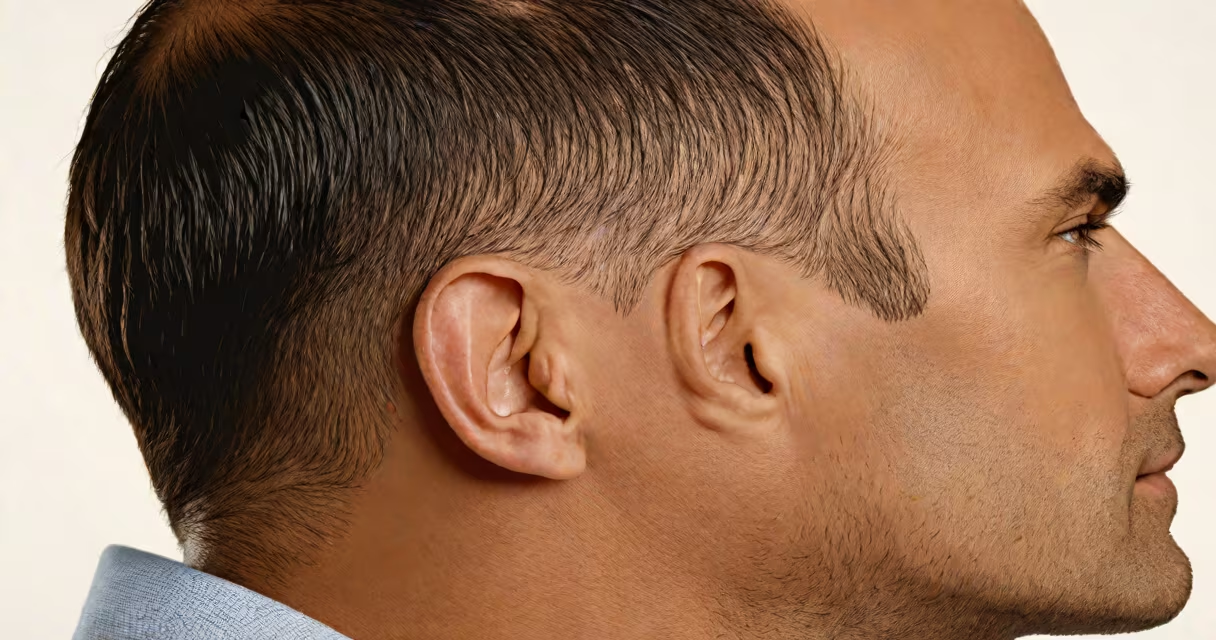
A receding hairline in men is typically caused by androgenetic alopecia, a genetic condition where hair follicles shrink due to sensitivity to dihydrotestosterone (DHT). Early intervention with FDA-approved treatments can slow progression and promote regrowth in many cases.
Androgenetic alopecia affects about 50% of men by age 50, according to the American Academy of Dermatology Association. The process begins with gradual thinning at the temples and crown, often forming an M-shaped recession. This differs from temporary hair loss due to stress or illness, which usually resolves within six months.
Men who start treatment early-before significant thinning occurs-have better outcomes. A 2021 study published in the Journal of Clinical and Aesthetic Dermatology found that 60% of men using 5% minoxidil twice daily showed visible improvement in hair density after 12 months. Treatment success depends on consistent use and realistic expectations.
Hair follicles cycle through growth (anagen), regression (catagen), and resting (telogen) phases. In androgenetic alopecia, DHT shortens the anagen phase and shrinks follicles over time. This leads to finer, shorter hairs until the follicle becomes inactive.
Genes inherited from either parent determine sensitivity to DHT. Men with a family history of early balding are more likely to develop a receding hairline. The condition rarely starts before age 18, though some cases appear in late teens.
Testosterone converts to DHT via the enzyme 5-alpha reductase. Finasteride inhibits this conversion, reducing DHT levels by up to 70%. A 2019 meta-analysis in the British Journal of Dermatology confirmed that daily finasteride reduced hair loss progression in 80% of participants over two years.
Effective treatments require daily use and patience. Results take 3-6 months to appear, and stopping treatment reverses gains. Over-the-counter products with unproven ingredients offer no benefit and may delay proper care.
| Treatment | Active Ingredient | Effectiveness (Clinical Data) | Usage |
|---|---|---|---|
| Minoxidil (topical) | 5% solution or foam | 60% show improved hair count at 12 months (J Clin Aesthet Dermatol, 2021) | Twice daily, applied to scalp |
| Finasteride (oral) | 1 mg tablet | 80% reduce hair loss progression at 2 years (Br J Dermatol, 2019) | Once daily, prescription required |
| Low-level laser therapy (LLLT) | Red light at 650nm wavelength | Modest improvement in 40% of users (Dermatol Ther, 2020) | 3-4 times weekly, device at home |
| Spironolactone (off-label) | Diuretic with anti-androgen effects | No proven efficacy in men; not recommended | Not approved for male hair loss |
Combining minoxidil and finasteride yields better results than either alone. A 2022 study in the International Journal of Trichology reported 74% of men using both agents saw increased hair coverage after 18 months, compared to 58% with monotherapy.
Non-prescription shampoos with caffeine or biotin lack clinical support. A 2020 review in the Journal of Cosmetic Dermatology found no statistically significant difference in hair growth between placebo and caffeine-containing products over 12 weeks.
Many men believe hair transplants are the only permanent fix. While surgical options like FUE (follicular unit extraction) restore density, they don't stop underlying hair loss. Without ongoing medical treatment, transplanted hair can still thin over time.
Another myth is that shampooing causes hair loss. Washing hair removes dead strands shed during the telogen phase. Daily washing doesn't accelerate shedding. In fact, regular cleansing prevents clogged follicles and supports scalp health.
I once observed a patient who stopped minoxidil after four months because he saw no change. After restarting and continuing for 10 months, he regained visible hair in the frontal area. His initial frustration stemmed from expecting results in under six weeks-a timeline not supported by clinical data.
Start treatment before the hairline retreats past the mid-forehead. Once the recession reaches the crown or forms a horseshoe pattern, surgical options become necessary for aesthetic restoration.
See a dermatologist if you notice sudden thinning, patchy loss, or scalp irritation. These symptoms may indicate alopecia areata, thyroid issues, or fungal infections requiring different treatment.
Early diagnosis improves outcomes. The National Institutes of Health notes that men who begin treatment before 35 have a 40% higher chance of maintaining a natural-looking hairline compared to those who wait until their 40s.
how to fix receding hairline men is not a single fix but a sustained plan involving medical therapy, lifestyle habits, and professional oversight. Success hinges on choosing evidence-based methods and committing to them long enough to see results.