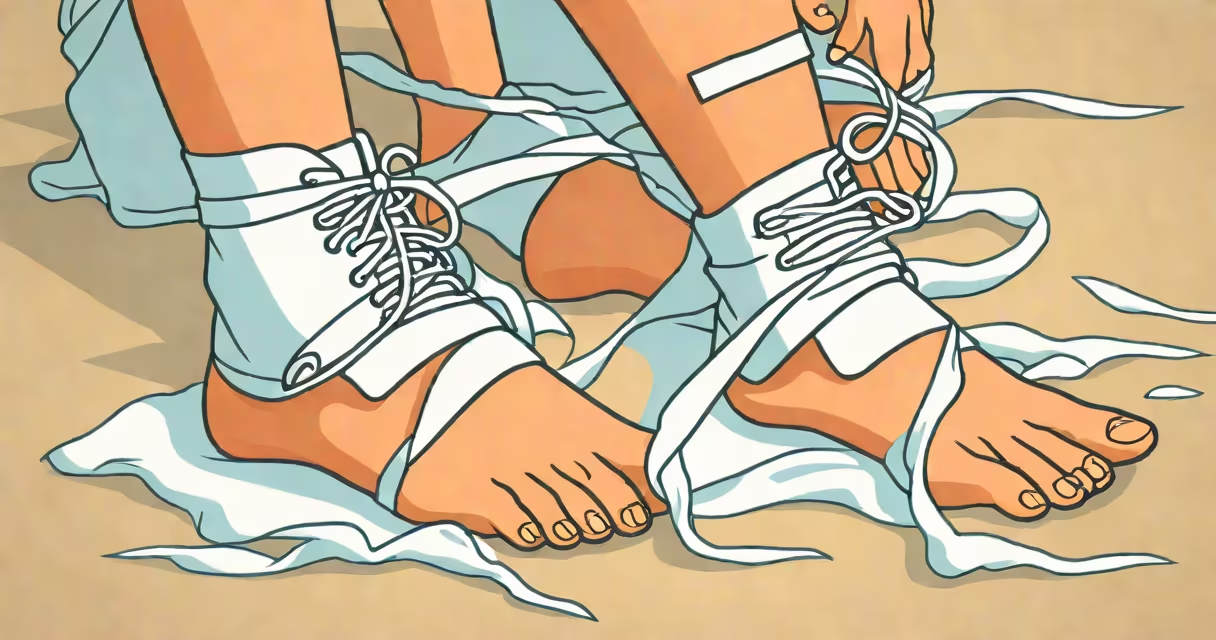
If you sprained your ankle, stop activity immediately, apply ice, compress the area, and improve the foot to reduce swelling and pain. The injury involves stretched or torn ligaments around the joint, typically caused by rolling or twisting the foot.
Ankle sprains occur when the ligaments that stabilize the joint stretch beyond their normal range or tear. Most sprains happen on the lateral side-the outer part-due to sudden inward rolling of the foot. A grade 1 sprain involves mild stretching, grade 2 includes partial tearing, and grade 3 indicates a complete ligament rupture. Symptoms include pain, swelling, bruising, and difficulty bearing weight.
The American Academy of Orthopaedic Surgeons (AAOS) recommends the RICE protocol within the first 48 hours: Rest, Ice, Compression, and Elevation. This reduces inflammation and supports early healing. Delaying treatment increases the risk of chronic instability and prolonged recovery.
Stop walking or putting weight on the injured ankle. Moving too soon can worsen tissue damage and delay recovery. Sit or lie down and avoid standing until swelling subsides.
Apply ice for 15-20 minutes every 2-3 hours during the first 48 hours. Use a cold pack or wrap ice in a towel-never apply ice directly to skin. Cold constricts blood vessels, reducing internal bleeding and swelling.
Wrap the ankle with an elastic bandage to provide support and limit swelling. Wrap snugly but not tightly-check for numbness, tingling, or discoloration in toes. Over-tightening cuts off circulation and causes more harm.
Improve the foot above heart level whenever possible. This uses gravity to drain fluid away from the injury site. Keep the leg raised while sitting or lying down for optimal results.
See a healthcare provider if you cannot bear weight after 24 hours, feel significant instability, or notice deformity. These signs may indicate a fracture or severe ligament tear requiring imaging.
The University of Michigan Health System notes that about 20% of ankle injuries involve fractures. X-rays are often needed to rule out broken bones, especially if pain persists in the bone areas (like the fibula or ankle joint).
Signs of a serious injury include immediate swelling, inability to walk, or visible deformity. Prompt evaluation prevents complications such as chronic pain or arthritis due to improper healing.
Most grade 1 and 2 sprains improve within 2-6 weeks with proper care. Grade 3 sprains may require 6-12 weeks of immobilization and physical therapy. Returning to activity too soon increases re-injury risk.
After initial swelling decreases, begin gentle range-of-motion exercises. Rotate the ankle slowly in circles, flex and point the foot. These maintain mobility without stressing healing tissues.
Once pain-free movement returns, progress to balance training. Stand on one foot with eyes open, then closed. Use a foam pad or balance board to challenge stability. This strengthens muscles and improves joint awareness.
| Grade | Ligament Damage | Recovery Time | Weight-Bearing |
|---|---|---|---|
| 1 | Mild stretch | 2-4 weeks | Partial weight-bearing |
| 2 | Partial tear | 4-6 weeks | Progressive weight-bearing |
| 3 | Complete tear | 6-12 weeks | Non-weight-bearing initially |
Returning to sports or high-impact activities requires functional testing. You should be able to hop on the injured foot 10 times without pain or instability. Skipping this step leads to reinjury in nearly 30% of cases, according to a study published in the Journal of Athletic Training.
Many people apply heat too soon. Heat increases blood flow and swelling, worsening inflammation. Avoid heating pads, hot baths, or saunas during the first 72 hours.
Walking on a sprained ankle is common but harmful. A 2021 study in the British Journal of Sports Medicine found that individuals who resumed walking within 24 hours had 40% longer recovery times compared to those who rested.
Some assume "I can walk through it" means it's minor. Pain tolerance doesn't correlate with injury severity. A moderate sprain can feel manageable but still cause lasting joint damage if ignored.
If pain persists beyond 3 weeks despite RICE, consult a physical therapist or orthopedic specialist. Persistent symptoms may indicate incomplete healing, nerve irritation, or soft tissue entrapment.
I once treated a patient who returned to running after 10 days of rest. He reported no pain and felt "back to normal." Two weeks later, he was diagnosed with a chronic ankle instability due to under-treated ligament damage. His recovery took six months longer than expected.
After full recovery, wear supportive footwear or an ankle brace during sports. Studies show that using a lace-up brace reduces re-injury rates by 50% in athletes.
Strengthen calf and shin muscles through resistance band exercises. Stronger muscles stabilize the joint and absorb impact better. Perform heel raises 2 sets of 15 reps daily.
Balance training reduces fall risk. Practice single-leg stance on uneven surfaces-like a wobble board or carpeted floor-to build neuromuscular control.