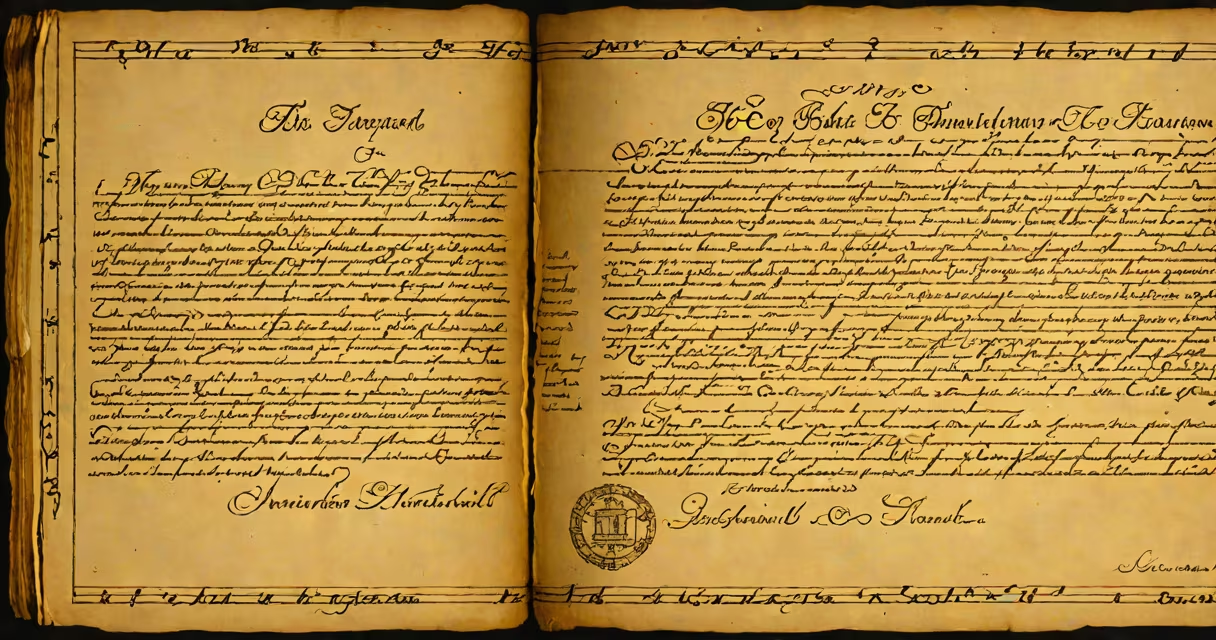
The 1789 bill of rights refers to the first ten amendments to the U.S. Constitution, adopted in 1791 after being proposed by Congress in 1789. These amendments protect individual liberties such as freedom of speech, religion, and the right to a fair trial.
When the original Constitution was drafted in 1787, it did not include specific guarantees of personal rights. Anti-Federalists argued this omission left citizens vulnerable to government overreach. To secure ratification, Federalists promised to add a bill of rights soon after the Constitution took effect. The First Congress convened in 1789 and sent twelve proposed amendments to the states. Ten were ratified by December 15, 1791, becoming the Bill of Rights.
These amendments were not a new legal structure but a formal codification of common law principles and Enlightenment ideals. They reflect centuries of English legal tradition, including Magna Carta (1215) and the English Bill of Rights (1689), as well as philosophical writings by Locke, Montesquieu, and Rousseau. The framers intended them to limit federal power and affirm rights inherent to individuals.
Each amendment in the 1789 bill of rights addresses a specific area of government authority or individual protection. They apply directly to actions by the federal government, not state governments-at least initially. The Fourteenth Amendment later extended most of these protections to state actions through the doctrine of incorporation.
For example, the First Amendment prohibits Congress from making laws respecting an establishment of religion or prohibiting the free exercise thereof. This means the federal government cannot fund religious institutions or ban worship practices. The Second Amendment protects the right to keep and bear arms, though courts have interpreted this right in context-such as for militia service versus individual self-defense.
Amendments are enforced through judicial review. When a law or government action violates a right, individuals can challenge it in court. The Supreme Court has ruled on nearly every clause. For instance, in *Tinker v. Des Moines* (1969), the Court held that students' symbolic speech-wearing black armbands to protest the Vietnam War-was protected under the First Amendment.
The ten amendments form a layered system of protections. They fall into thematic groups based on their focus:
| Amendment | Focus Area | Key Protection |
|---|---|---|
| First | Free expression & religion | Freedom of speech, press, assembly, petition, and no official religion |
| Second | Weapons and military | Right to keep and bear arms |
| Third | Housing and privacy | No quartering of soldiers in private homes during peacetime |
| Fourth | Search and seizure | Protection against unreasonable searches and seizures |
| Fifth | Due process and property | Right to grand jury indictment, protection against double jeopardy, self-incrimination, and deprivation of life, liberty, or property without due process |
| Sixth | Criminal justice | Right to a speedy and public trial, impartial jury, confrontation of witnesses, and legal counsel |
| Seventh | Civil trials | Right to jury trial in civil cases involving more than $20 |
| Eighth | Punishment and bail | Prohibition of excessive bail, fines, and cruel and unusual punishment |
| Ninth | Unenumerated rights | Recognition that rights exist beyond those listed in the Constitution |
| Tenth | State powers | Reserved powers belong to the states or the people |
The Ninth Amendment is often overlooked but critical. It states that the enumeration of certain rights in the Constitution does not deny others retained by the people. This clause prevents the government from claiming that only listed rights are valid. It preserves the idea that people possess fundamental rights not explicitly written down.
One non-obvious fact: the original proposal included a provision that would have applied the Bill of Rights to state governments. That version failed. Only after the Civil War and the adoption of the Fourteenth Amendment did the Supreme Court begin applying most of the Bill of Rights to state actions through the doctrine of selective incorporation.
The 1789 bill of rights is cited daily in American courts, legislation, and public discourse. It forms the basis for challenges to government surveillance, censorship, police conduct, and detention policies. For example, in *Miranda v. Arizona* (1966), the Supreme Court ruled that suspects must be informed of their Fifth Amendment rights before interrogation.
Law enforcement agencies routinely reference the Fourth Amendment when obtaining search warrants. A 2021 report by the Brennan Center for Justice found that over 80% of federal search warrant applications cited the Fourth Amendment. The requirement for probable cause and particularity in describing the place to be searched remains a key check on executive power.
Non-governmental organizations use the 1789 bill of rights to advocate for policy reform. The American Civil Liberties Union (ACLU) files lawsuits based on First and Fourth Amendment violations. In 2020, the ACLU challenged facial recognition use by law enforcement in several cities, arguing it violated privacy rights protected under the Fourth Amendment.
One common misconception is that the Bill of Rights applies only to citizens. It protects all persons within U.S. jurisdiction, including undocumented immigrants. In *Plyler v. Doe* (1982), the Supreme Court ruled that states cannot deny public education to children regardless of immigration status, citing equal protection under the Fourteenth Amendment-but the underlying principle of dignity and access stems from the broader rights affirmed in the 1789 bill of rights.
Many assume the 1789 bill of rights was part of the original Constitution. It was not. The Constitution's Article V allows for amendments, but the Bill of Rights was added later. The original document focused on structural government powers-legislative, executive, and judicial branches-not individual rights.
Another error is thinking the Second Amendment protects an unlimited right to own weapons. Courts have consistently ruled that the right is subject to reasonable regulation. In *District of Columbia v. Heller* (2008), the Supreme Court upheld an individual's right to possess a firearm for self-defense in the home. But it also acknowledged that laws banning guns in schools or prohibiting ownership by felons are constitutional.
A third confusion: the Bill of Rights applies only to federal actions. While originally limited to federal power, the Fourteenth Amendment's Due Process Clause has gradually extended most protections to state and local governments. This process, known as incorporation, occurred over decades. By 1969, the Court had incorporated all but the Seventh Amendment's right to a jury trial in civil cases.
I once attended a public forum in Washington, D.C., where a high school teacher asked whether the Bill of Rights applies to social media companies. The answer is no-private entities are not bound by the First Amendment. However, government censorship of online speech may violate the First Amendment. The Supreme Court has ruled that government officials cannot remove users from social media accounts based on viewpoint, as seen in *Knight First Amendment Institute v. Trump* (2020).
The 1789 bill of rights remains foundational to American governance. Its language is precise, its intent clear, and its reach enduring. It continues to shape debates on privacy, free expression, and justice. Understanding it requires reading not just the text, but the historical context and judicial interpretation that define its meaning today.