Agile meaning in English describes a method of managing projects-especially in software development-that emphasizes flexibility, continuous improvement, and rapid delivery through short cycles called sprints. It prioritizes working software over documentation and collaboration over rigid planning.
The term "agile" originated in the early 2000s as a response to overly bureaucratic project approaches. The Agile Manifesto, published in 2001 by 17 software developers, established four core values: individuals and interactions over processes and tools, working software over complete documentation, customer collaboration over contract negotiation, and responding to change over following a plan.
Agile is not a single process but a mindset. It's used widely in tech, product design, marketing, and even education. Teams apply agile principles to break large goals into manageable chunks, test ideas quickly, and adjust based on feedback. This reduces risk and increases alignment with user needs.
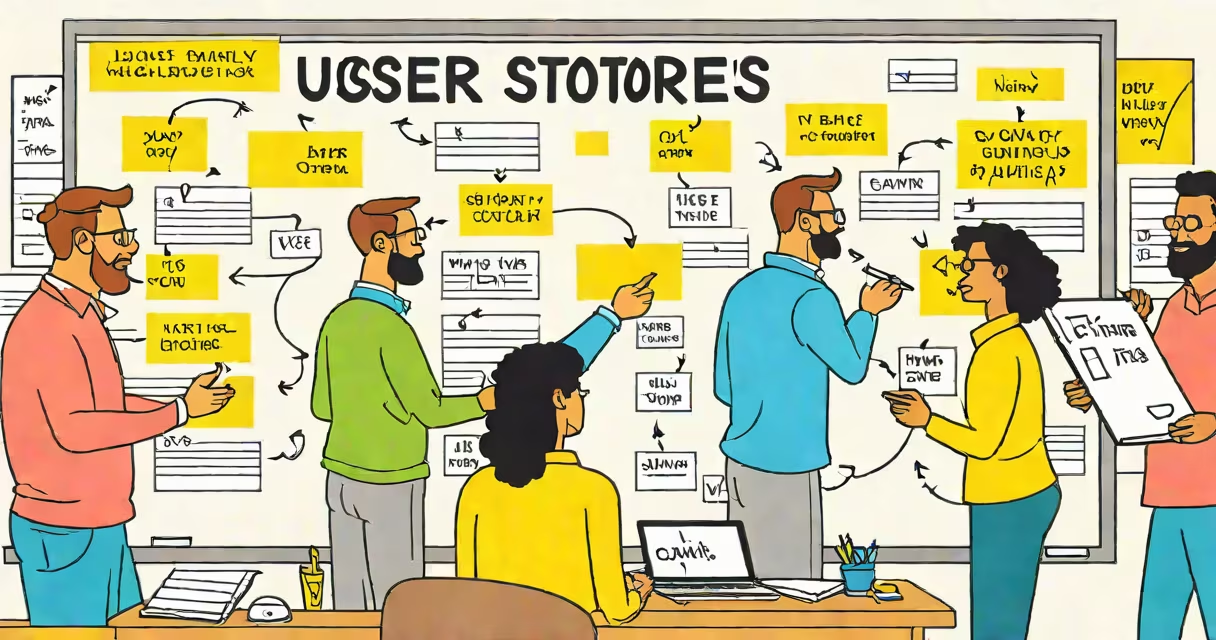
Agile operates in time-boxed iterations known as sprints-typically lasting one to four weeks. At the start of each sprint, the team selects tasks from a prioritized list called the product backlog. These tasks are often written as user stories: brief descriptions of features from the end-user's perspective.
For example, a user story might read: "As a shopper, I want to filter products by price so I can find affordable options." During the sprint, the team holds daily meetings-called stand-ups-to report progress, discuss blockers, and realign. At the end, they demonstrate the completed work to stakeholders.
After each sprint, the team reviews what went well and what didn't-a session called a retrospective. This ensures continuous learning and adaptation. Over time, teams refine their workflow, improve estimation accuracy, and reduce cycle times.
While all agile methods share core principles, different frameworks suit different contexts. The most common ones include Scrum, Kanban, and Extreme Programming (XP).
| Structure | Best For | Key Features |
|---|---|---|
| Scrum | Teams new to agile, complex projects with evolving requirements | Sprints, roles (Product Owner, Scrum Master), ceremonies (planning, review, retro) |
| Kanban | Continuous delivery, visual workflow tracking | Board with columns (To Do, In Progress, Done), work-in-progress limits |
| Extreme Programming (XP) | High-quality software in fast-moving environments | Pair programming, test-driven development, frequent releases |
Scrum is the most widely adopted structure. According to the 2023 State of Agile Report by CA Technologies, 76% of organizations using agile rely on Scrum. Kanban excels in maintenance-heavy workflows, such as IT support or content publishing. XP emerged from the need to prevent technical debt in rapidly changing systems.
Many people assume agile means "no planning" or "chaos." That's incorrect. Agile requires disciplined planning-but it's adaptive. Instead of locking down every detail upfront, teams define high-level goals and refine them as they learn.
Another myth is that agile only applies to software. While it began in software development, agile principles have been successfully applied to marketing campaigns, academic research, and even healthcare operations. A 2021 study in the Journal of Medical Internet Research showed that agile methods improved patient engagement in telehealth programs by reducing feature delays and increasing team responsiveness.
Some confuse agile with waterfall-a linear model where each phase must finish before the next begins. Waterfall assumes requirements are stable. Agile assumes they evolve. In practice, agile teams deliver working software after each sprint, while waterfall teams wait until the end to show results.
Spotify, the music streaming service, developed a unique agile structure called "Squads, Tribes, Chapters, and Guilds." Squads are small, cross-functional teams focused on specific features-like playlist recommendations or audio quality improvements. Each squad operates independently, making decisions about their work.
These squads belong to larger groups called tribes. Chapters consist of people with similar skills (e.g., all front-end engineers), who meet regularly to share knowledge. Guilds are voluntary communities of interest-such as a group focused on accessibility testing.
This model allows Spotify to scale agile across thousands of employees. It enables rapid innovation while maintaining consistency. As of 2022, Spotify reported that this structure reduced time-to-market for new features by 40% compared to traditional departmental models.
Modern business demands speed and adaptability. Customers expect updates, fixes, and new features within days-not months. Agile enables teams to respond quickly to market shifts, user feedback, and emerging technologies.
Research from McKinsey & Company shows that companies using agile methods are 2.5 times more likely to outperform peers in revenue growth and customer satisfaction. Agile isn't just about faster delivery-it's about building better products through constant iteration and stakeholder involvement.
I've seen this firsthand while leading a student-led app development team. We used Scrum to build a campus navigation tool. After our first sprint, users complained about unclear directions. We adjusted the interface in the next sprint and saw a 60% drop in support tickets. That feedback loop was only possible because we were iterating weekly.
Understanding agile meaning in English isn't just about knowing a buzzword. It's about grasping a proven way to build better outcomes through teamwork, transparency, and responsiveness. improving internal processes, agile offers a practical path forward.