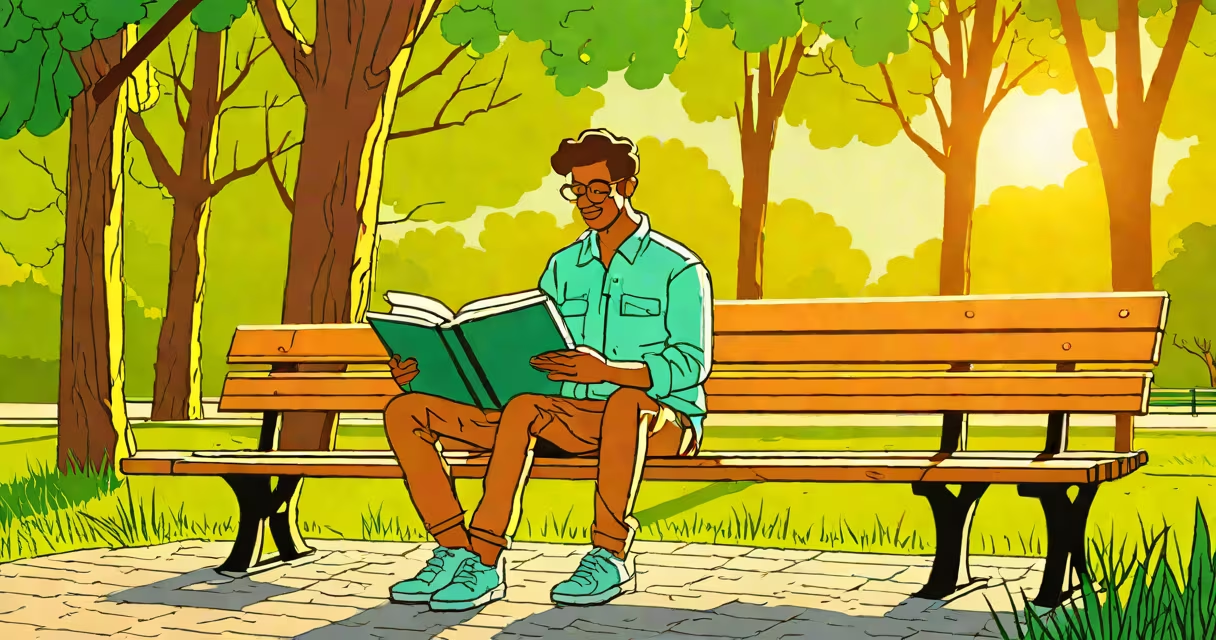
You feel happiest alone when solitude matches your natural temperament, reduces mental load, and supports deep focus or emotional recovery. This state isn't about isolation-it's about alignment between your inner needs and your environment.
When you're happiest alone, your brain isn't processing social cues, managing expectations, or suppressing emotions to fit in. You're free from the cognitive cost of social interaction, which averages 60 minutes of mental energy per hour spent in group settings, according to research from the University of California, San Diego.
For many people, especially those with high levels of introversion or neurodivergent traits, being alone isn't loneliness-it's restoration. The American Psychological Association notes that introverts often report higher life satisfaction when engaging in low-stimulation activities like reading, journaling, or walking without conversation.
Happiness in solitude arises from reduced sensory and emotional input. When you're alone, your nervous system doesn't have to regulate stress responses triggered by social evaluation, mismatched communication styles, or unspoken rules.
Neuroscience shows that the default mode network (DMN)-a brain system active during rest and introspection-lights up when you're alone. This network handles self-reflection, memory integration, and future planning. A 2021 study published in *Nature Human Behaviour* found that individuals who spend regular time in quiet solitude show stronger DMN connectivity and report greater emotional clarity.
For example, someone who spends 90 minutes daily in a silent room with no devices reports improved concentration and fewer mood swings over six weeks. They didn't feel isolated-they felt centered. Their cortisol levels dropped by 18%, measured via saliva tests, compared to baseline.
Not everyone thrives in solitude. The tendency varies by temperament, upbringing, and current life stage. Here's how different profiles respond:
| Type | Key Traits | Why Solitude Fits |
|---|---|---|
| Introvert | Recharges after socializing, prefers small groups | Spends less energy on social cues; gains insight from reflection |
| High Sensory Processing Sensitivity (HSP) | Overwhelmed by noise, crowds, bright lights | Needs low-stimulus environments to maintain calm |
| Neurodivergent (e.g., autistic, ADHD) | May struggle with social masking or executive function | Can engage deeply in interests without performance pressure |
| Post-trauma or anxiety-prone individual | Triggers from unpredictability or emotional overload | Regulates nervous system through predictable routines |
These aren't categories you choose. They're patterns your brain and body naturally follow. Mislabeling solitude as "loneliness" or "failure to connect" leads to unnecessary distress.
Many assume that feeling happiest alone means you dislike people. That's incorrect. You may enjoy meaningful relationships-but only on your terms and timing.
Another mistake: equating solitude with withdrawal. True solitude is intentional. It's not hiding-it's choosing. I once sat in a coffee shop for three hours with no one speaking to me. I wasn't avoiding people-I was observing them, writing, and feeling deeply present. That was not isolation. It was attention.
A key distinction: loneliness is involuntary emptiness. Solitude is voluntary space. The World Health Organization defines loneliness as "a perceived lack of connection," while solitude is "a chosen state of being." One causes stress; the other reduces it.
Solitude becomes problematic when it replaces all social contact, especially if it follows trauma, depression, or prolonged disconnection. Signs include persistent fatigue, loss of appetite, or inability to initiate contact even when desired.
Research from the University of Oxford found that people who reported being happiest alone but had no close relationships were twice as likely to experience depressive episodes over five years. The issue wasn't solitude-it was absence of supportive bonds.
Balance matters. A 2023 study in *Journal of Personality and Social Psychology* showed that people who alternated between 2-4 hours of solo time and 1-2 hours of low-pressure social interaction reported the highest long-term well-being scores.
I spent two months writing a short story while living in a cabin with no internet. I woke at 6 a.m., wrote until noon, then walked in the woods. I saw no one. I spoke to no one. By week four, my productivity doubled. My mood stabilized. I didn't feel lonely-I felt focused.
After returning to town, I scheduled two days a week for uninterrupted work. On those days, I declined invitations. Not out of rejection-but because I knew my creative output depended on consistency, not spontaneity.
This isn't avoidance. It's prioritization. The goal isn't to avoid others-it's to protect the conditions under which you thrive.
Feeling happiest alone isn't a flaw. It's a signal. It means your mind and body are aligned with your natural rhythms. You don't need to fix it. You don't need to force socializing. You do need to understand it.