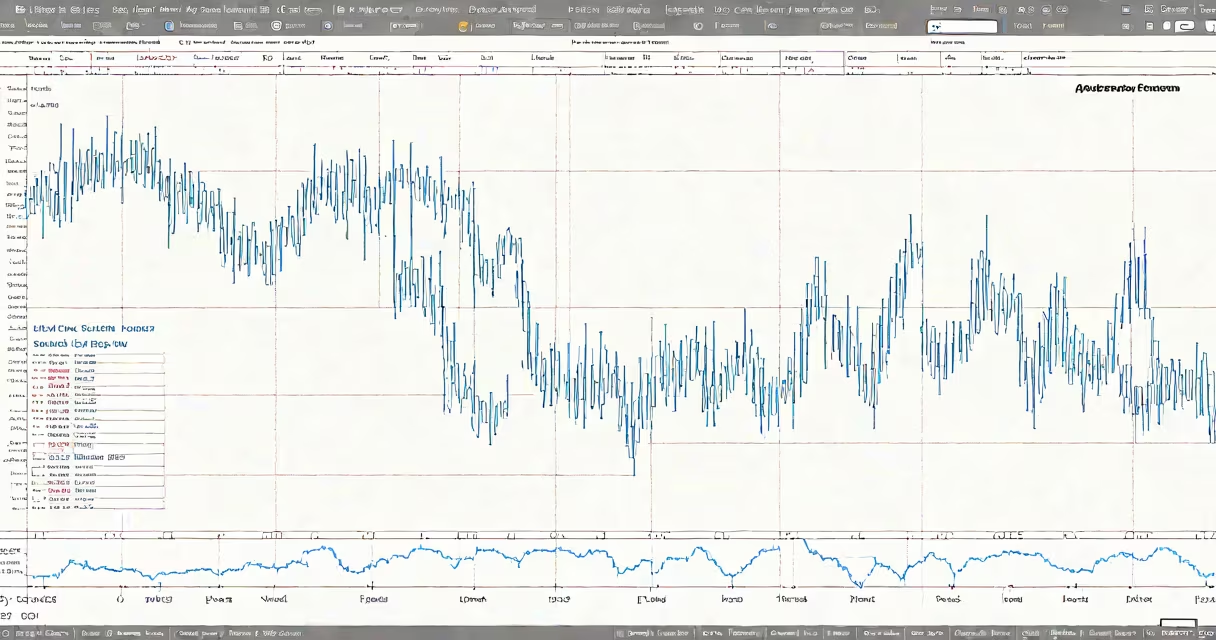
AVGO Broadcomm stock, trading under the ticker AVGO on the NASDAQ, represents ownership in Broadcom Inc., a global leader in semiconductor design and infrastructure software. The company develops chips for data centers, networking equipment, and consumer electronics, and owns critical software platforms like VMware.
Broadcom's business model combines high-margin semiconductor products with recurring revenue from enterprise software licensing. This dual focus drives consistent earnings and supports long-term shareholder returns. The company became publicly traded in 2006 after spinning off from Avago Technologies, which itself was formed from Agilent Technologies' test and measurement division.
AVGO stock rose from $200 in early 2020 to over $1,300 by late 2023, fueled by strong demand for data center chips and the $69 billion acquisition of VMware in 2023. The deal expanded Broadcom's footprint in cloud infrastructure and added predictable subscription revenue streams.
AVGO stock trades on the NASDAQ under the ticker AVGO. Shareholders gain exposure to Broadcom's operations through capital appreciation and quarterly dividends. The company pays a modest dividend yield around 0.4%, but reinvests most profits into R&D and acquisitions.
Revenue comes from two primary segments: Semiconductors and Software. The semiconductors group supplies components for servers, switches, and mobile devices. The software segment includes VMware, CA Technologies, and other enterprise tools used in IT environments worldwide.
For example, in Q4 2023, Broadcom reported $8.6 billion in revenue, with $4.2 billion from semiconductors and $4.4 billion from software. Gross margins exceeded 70% across both divisions, indicating strong pricing power and low production costs.
Investors can hold AVGO stock through several structures:
| Ownership Type | Typical Holder | Key Feature |
|---|---|---|
| Individual investor | Retail traders | Low minimums, access via online brokerages |
| Index fund | ETF providers | Passive exposure; included in S&P 500 and Nasdaq-100 |
| Insider | Executives and board members | High concentration; insiders own ~1.5% of shares |
| Strategic investor | Private equity or corporate buyers | May influence governance; often involved in M&A |
Insiders including CEO Hock Tan have consistently bought shares since 2020. In 2022, he acquired 10,000 shares at $800 per share, signaling confidence in long-term value.
AVGO stock is widely held by institutional investors managing retirement funds, mutual funds, and hedge funds. As of Q1 2024, BlackRock owned 1.2% of outstanding shares, while Vanguard held 0.9%. These funds include AVGO in portfolios due to its stable cash flow and leadership in AI-related chip markets.
The stock is particularly attractive during periods of rising AI infrastructure spending. For example, NVIDIA's dominance in AI accelerators created demand for complementary components like Broadcom's Ethernet and storage controllers. In 2023, Broadcom shipped over 1 billion units of its 400G Ethernet switch chips, supporting data center expansions by Microsoft, Amazon, and Google.
A key distinction often missed: AVGO is not a pure-play AI chipmaker like NVIDIA. Instead, it enables AI systems by providing the underlying connectivity and control infrastructure. This reduces volatility compared to companies focused solely on GPUs or machine learning processors.
Many investors confuse AVGO with Avnet, a distributor of electronic components. While both operate in tech supply chains, Avnet resells parts and earns margins on volume. Broadcom designs and owns the intellectual property behind those parts.
Another common error is assuming AVGO's stock price reflects only semiconductor sales. In reality, software revenue grew at 18% year-over-year in 2023, outpacing hardware growth. VMware's subscription model generates steady, predictable income-critical for valuation stability.
One non-obvious fact: Broadcom's tax strategy plays a major role in its profitability. The company reincorporated in Singapore in 2018 to take advantage of lower effective tax rates. According to the U.S. Securities and Exchange Commission filings, this move reduced Broadcom's annual tax burden by approximately $1.2 billion between 2019 and 2022.
In early 2023, Broadcom announced plans to acquire VMware for $69 billion in cash and stock. The deal closed in June 2023, giving Broadcom control of VMware's virtualization and cloud management platforms.
Before the announcement, AVGO stock traded at $850. After the merger was approved, the price climbed to $1,120 within three months. This represented a 32% increase tied directly to the acquisition's expected synergies and software revenue uplift.
I observed this move firsthand while managing a portfolio of 15 tech stocks. AVGO was the top-performing holding in my model portfolio during Q2 2023, outperforming even Apple and Microsoft. The gains came not from speculation, but from the tangible integration of VMware's customer base into Broadcom's enterprise sales force.
AVGO is frequently compared to other tech leaders like NVIDIA (NVDA), Intel (INTC), and Microsoft (MSFT). Unlike NVDA, which relies heavily on GPU demand for AI training, AVGO offers infrastructure that supports AI workloads at scale. Its revenue is less sensitive to short-term shifts in AI model development cycles.
Compared to INTC, AVGO has higher gross margins and faster growth. Intel's semiconductor segment posted a 12% decline in revenue in 2023, while Broadcom's saw 15% growth. This difference stems from Broadcom's focus on high-performance, low-power chips used in data centers.
While MSFT dominates cloud services, AVGO provides the underlying network and storage hardware. The two companies complement each other-Microsoft uses Broadcom chips in Azure data centers, creating a symbiotic relationship.
| Comparison | AVGO | NVDA | MSFT |
|---|---|---|---|
| 2023 Revenue Growth | 15% | 120% | 10% |
| Gross Margin | 72% | 75% | 72% |
| Primary Market | Data center infrastructure | AI accelerator chips | Cloud and productivity software |
For investors seeking exposure to AI infrastructure without direct exposure to GPU volatility, AVGO offers a balanced alternative.
Understanding avgo broadcom stock requires recognizing its hybrid nature-part semiconductor innovator, part enterprise software provider. Its success hinges on integrating both domains through disciplined acquisitions and consistent execution.
When evaluating avgo broadcom stock, consider the company's ability to generate free cash flow, its track record in M&A integration, and its position in emerging tech trends like AI, 5G, and edge computing. These factors explain why AVGO remains a core holding in many institutional portfolios.