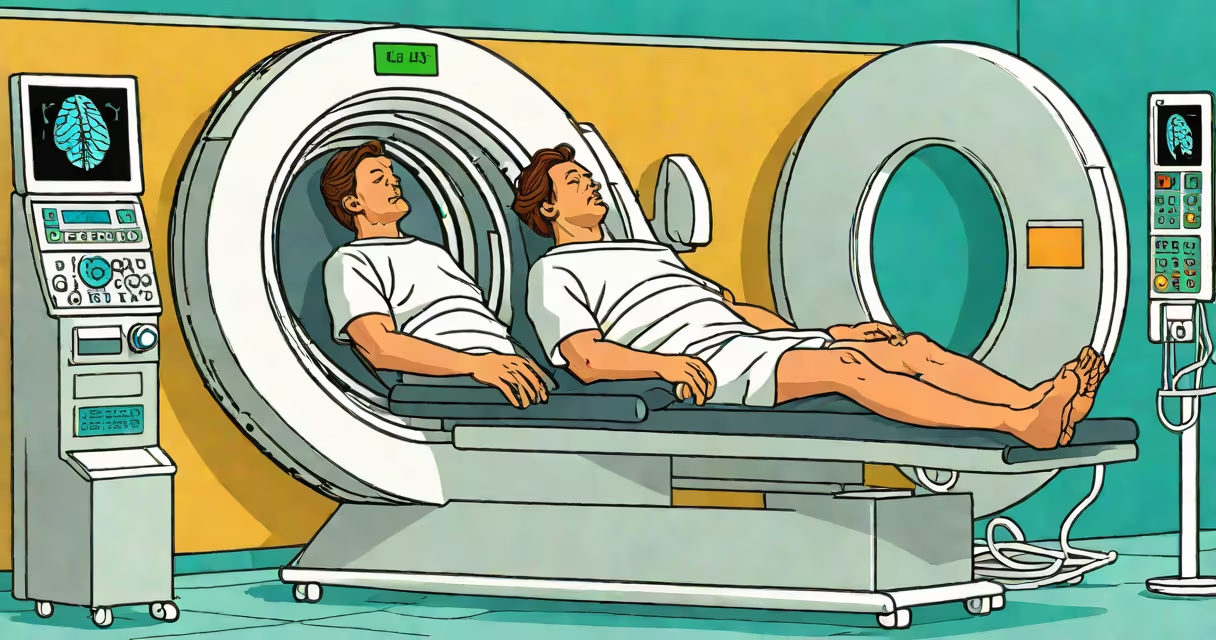
You can typically eat normally before most MRI scans. Fasting is not required unless your doctor specifies otherwise due to sedation, contrast use, or specific clinical needs.
MRI (magnetic resonance imaging) uses useful magnets and radio waves to create detailed images of soft tissues, organs, and internal structures. Unlike CT scans or X-rays, MRI does not use ionizing radiation. Because of this, dietary restrictions are generally not part of standard MRI preparation.
However, exceptions exist. If your scan involves sedation or anesthesia, you may be instructed to avoid food for several hours beforehand to reduce aspiration risk. Similarly, if your MRI includes intravenous contrast, your care team might ask you to fast for 4-6 hours prior. Always follow your facility's written instructions.
MRIs generate images by aligning hydrogen atoms in your body using strong magnetic fields. Radiofrequency pulses then disturb this alignment, and sensors detect the energy released as atoms return to their normal state. This process produces high-resolution cross-sections of internal anatomy.
Food does not affect the magnetic field or the signal generated by hydrogen atoms. Therefore, eating before a routine MRI does not distort results. The scanner detects tissue composition, not digestive contents. A meal won't cause artifacts in brain, spine, or joint scans.
For example, a patient undergoing a knee MRI for a suspected meniscus tear can eat breakfast before the appointment. The scan will still show cartilage damage, ligament tears, and fluid accumulation regardless of whether they had toast and eggs.
Fasting is required only in specific cases. These include:
The American College of Radiology (ACR) states that patients undergoing MRI with sedation should fast for at least 6 hours before the procedure. This reduces the risk of pulmonary aspiration during unconsciousness. For awake adult patients, no fasting is needed unless otherwise directed.
Contrast agents like gadolinium are sometimes used to show blood vessels, tumors, or inflammation. While ingestion doesn't interfere with contrast uptake, some centers require a short fast to minimize nausea or allergic reactions. Check your appointment letter or call your radiology center if unsure.
Many people assume MRI requires fasting because they associate it with other imaging procedures like CT scans or colonoscopies. But MRI differs in both physics and preparation.
A common error is confusing MRI with PET scans. PET scans use radioactive tracers and often require fasting to stabilize glucose metabolism. MRI does not. Another misconception is that food causes motion artifacts. While movement during scanning degrades image quality, eating does not increase motion. Patients remain still during acquisition.
One non-obvious fact: Some MRI sequences sensitive to fat-water separation (like Dixon techniques) can be affected by recent meals in abdominal imaging. However, this is rare and only applies to specialized protocols. Routine MRI exams do not require dietary control.
Not all MRIs are the same. The table below outlines typical preparation based on scan type.
| Scan Type | Fasting Required? | Typical Prep Instructions |
|---|---|---|
| Brain MRI | No | Normal diet allowed. Remove metal objects. |
| Knee MRI | No | Same as above. No contrast unless ordered. |
| Abdominal MRI with contrast | Yes (4-6 hrs) | Fast from solids and liquids. Hydration permitted. |
| Pediatric MRI with sedation | Yes (6-8 hrs) | Clear liquids only after midnight. No solids. |
| Spine MRI | No | Eat normally. Avoid caffeine if anxious. |
I once observed a 42-year-old woman arrive for a lumbar spine MRI after a large lunch. She was anxious about the scan duration. Her technologist confirmed she could proceed. The resulting images showed a herniated disc at L4-L5 with clear nerve root compression-diagnostic quality unaffected by her meal.
If your appointment letter says "fast for 6 hours" or "no food after midnight," follow those instructions. If it says nothing, eating is safe. When in doubt, contact the imaging center directly. Most facilities provide prep guides online or via phone.
Some patients receive conflicting advice. One person reported being told to fast for a breast MRI, which is incorrect. Breast MRI does not require fasting. The ACR guidelines confirm that standard MRI exams have no dietary restrictions unless sedation or contrast is involved.
Bottom line: You can eat before most MRIs. Only fast if sedation, contrast, or specific instructions apply. Always verify with your provider.