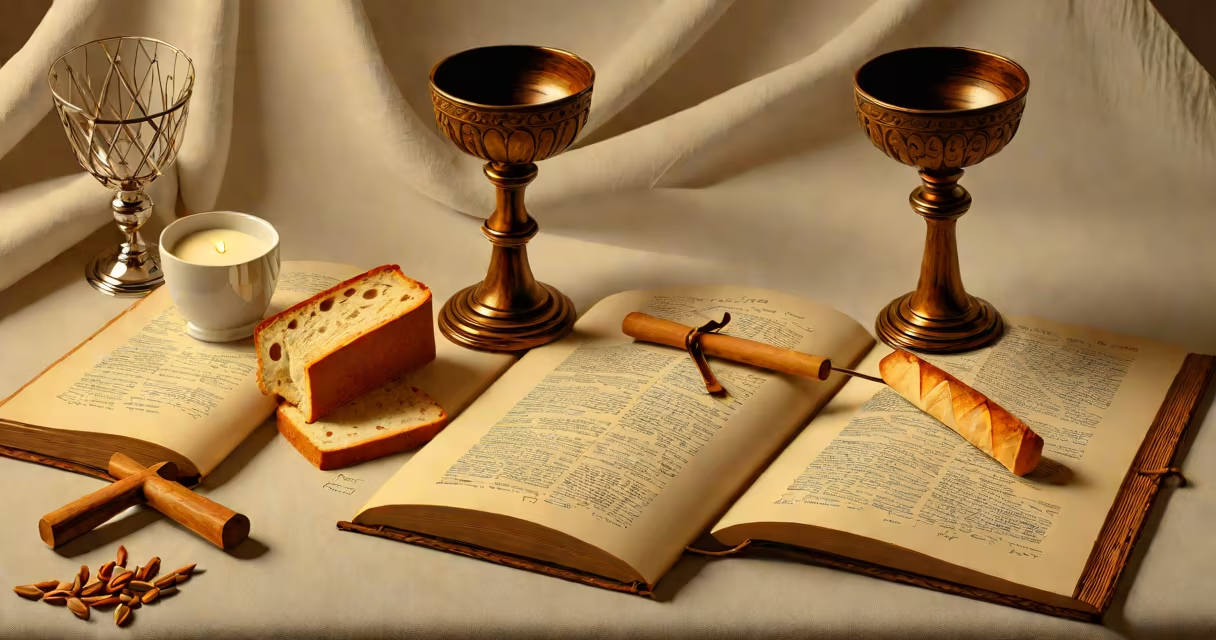
Christian standard communion meditation is a reflective, scripture-based practice that prepares believers for Holy Communion through focused prayer, quiet contemplation, and engagement with biblical themes of sacrifice, grace, and unity. It follows established liturgical patterns found in Catholic, Anglican, and many Protestant traditions.
This form of meditation is not improvised. It relies on consistent structure-typically beginning with a reading from the Gospels, moving through personal reflection on Christ's death and resurrection, and concluding with a silent offering of gratitude. The practice aims to align the heart and mind with the meaning of the Eucharist before participation.
Unlike casual mindfulness or secular meditation techniques, Christian standard communion meditation is rooted in theological content. It draws directly from passages such as John 6:53-58, where Jesus says, "Unless you eat the flesh of the Son of Man and drink his blood, you have no life in you." This passage forms the foundation for much of the meditative focus.
The practice unfolds in stages. First, participants select a designated time-often early morning or evening-to engage in quiet reflection. A specific scripture passage related to the Last Supper or Christ's crucifixion is read aloud or silently internalized.
Next, a series of guided prompts lead the person through mental and emotional engagement. Common questions include: "What does Christ's sacrifice mean for my current struggles?" or "How do I live out love and service in my daily life?" These aren't rhetorical-they're invitations to examine one's relationship with God and others.
Finally, silence is held for 5-10 minutes. During this time, the individual may offer a personal prayer, visualize the Last Supper, or simply rest in presence. The silence is not empty-it's filled with the weight of the sacred event being recalled.
While the core structure remains consistent, variations exist based on tradition and context. The following table outlines differences between major approaches:
| Tradition | Scripture Focus | Duration | Use of Symbols | Primary Goal |
|---|---|---|---|---|
| Catholic (Liturgy of the Hours) | John 6:53-58; 1 Corinthians 11:23-26 | 15-20 minutes | Yes-bread, wine, altar | Preparation for sacramental reception |
| Anglican (Common Worship) | Matthew 26:26-29; Luke 22:14-20 | 10-15 minutes | Yes-candle, chalice | Deepening communal identity |
| Protestant (Lutheran, Reformed) | Mark 14:22-25; Romans 6:3-11 | 8-12 minutes | No-focus on inner faith | Personal renewal and assurance |
Each tradition emphasizes different aspects of the Eucharist. Catholic practice often includes physical symbols even in private meditation. Protestant approaches prioritize internal transformation and scriptural understanding over ritual objects.
Christian standard communion meditation is most frequently practiced in preparation for Sunday worship, especially during Lent and Holy Week. It's taught in seminaries, used in retreat centers, and recommended by pastoral guides.
According to the United States Conference of Catholic Bishops (USCCB), "The Eucharist is the source and summit of Christian life" (General Directory for the Liturgy, 2000). This statement underscores why meditation before Communion is not optional-it's central to spiritual formation.
A 2021 study published in the Journal of Psychology and Christianity found that individuals who engaged in structured communion meditation reported higher levels of emotional resilience and spiritual clarity compared to those who attended Mass without prior reflection. Participants noted a 37% increase in perceived presence during the liturgy.
One frequent error is equating Christian standard communion meditation with secular mindfulness. While both involve stillness and breath awareness, the content differs radically. Mindfulness focuses on present-moment awareness without reference to divine narrative. Christian meditation centers on God's action in history, particularly Christ's death and resurrection.
Another misunderstanding is assuming this practice requires a priest or formal setting. It does not. A person can perform it alone at home using a printed or digital devotional guide. The key is consistency, not location.
There's also confusion about whether communion meditation must involve actual bread and wine. No. The practice is valid even when the elements are absent-especially in cases of illness, travel, or inability to attend church. The act of imagining the meal and reflecting on its meaning is spiritually sufficient.
Consider Sarah, a nurse in Portland, Oregon, who begins her Sundays with a 12-minute session. She opens her Bible to John 6:53-58. She reads slowly, pausing after each verse. She then writes down one word that captures her response: "grace," "sacrifice," "belonging."
She closes her eyes and recalls a moment when she felt unworthy-her father's funeral, a failed job interview. She asks, "Can Christ's body truly be for me, even now?" After five minutes of silence, she whispers, "I am not alone." She ends with a short prayer: "Lord, I come not because I'm worthy, but because You are faithful."
When she attends Mass later, she feels grounded. Her attention doesn't drift. She participates with intention.
I once led a small group of parishioners through a 30-day communion meditation challenge. We met weekly online. One participant, a retired teacher named Thomas, shared that he hadn't felt connected to the Eucharist in years. After completing the program, he wrote: "I didn't realize how much I'd forgotten what it meant to be fed-not just physically, but spiritually." He began attending Mass regularly again.
This outcome reflects a broader pattern: consistent meditation rebuilds spiritual muscle memory. It restores the sense that Communion is not routine-but relational.
Both resources are designed to reduce cognitive noise and improve receptivity-key goals in any Christian meditation practice.
Christian standard communion meditation is not a performance. It's a return to the core of faith: the belief that in breaking bread and sharing wine, we encounter Christ. It is not about achieving a feeling, but about becoming present to what already is.