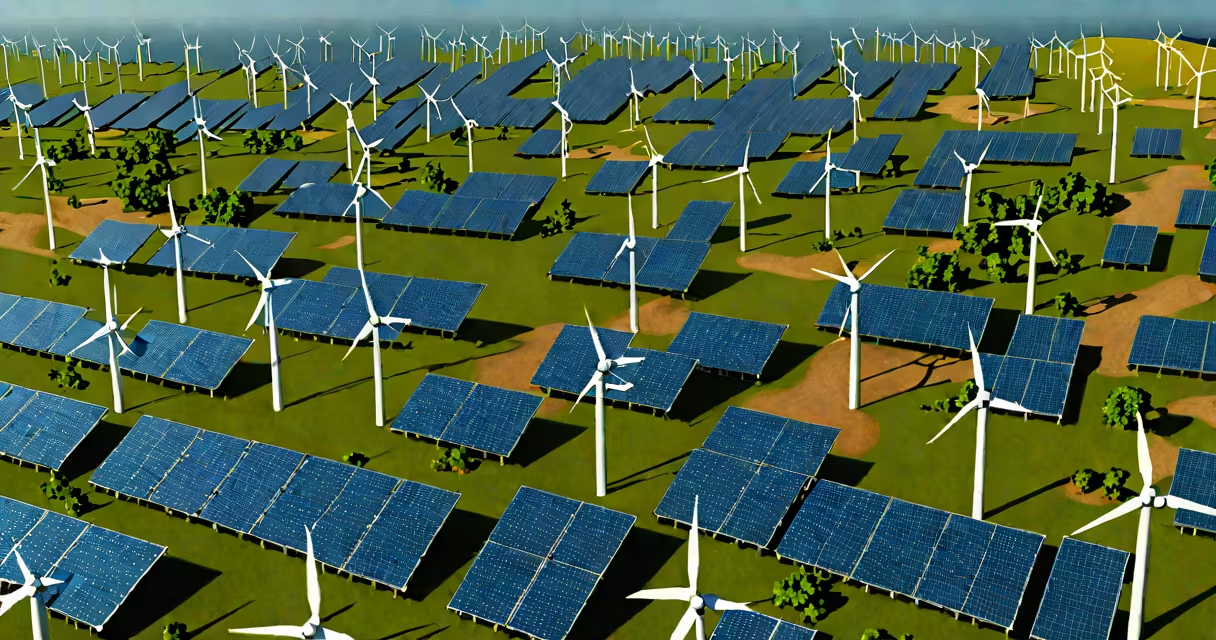
Climate mitigation refers to deliberate actions taken to reduce or prevent the emission of greenhouse gases, particularly carbon dioxide and methane, to slow the pace of global warming. These efforts aim to stabilize atmospheric concentrations of heat-trapping gases and limit long-term climate disruption.
Climate mitigation operates through two primary mechanisms: reducing emissions at their source and enhancing natural or technological systems that remove carbon from the atmosphere. Examples include switching from coal-fired power plants to solar and wind energy, improving building insulation to cut heating demand, and planting forests to absorb CO₂. The goal is to lower net emissions to levels consistent with international climate targets, such as those set in the Paris Agreement.
The Intergovernmental Panel on Climate Change (IPCC) states that limiting global temperature rise to 1.5°C above pre-industrial levels requires global net-zero carbon dioxide emissions by around 2050. This timeline underscores the urgency and scale of mitigation efforts needed across energy, transport, agriculture, and industry sectors.
Mitigation begins with identifying major sources of greenhouse gas emissions. The largest contributors are fossil fuel combustion for electricity and transportation, industrial processes like cement production, and land-use changes such as deforestation. Once sources are mapped, policies and technologies are applied to reduce output.
For example, replacing internal combustion engines with electric vehicles reduces tailpipe emissions. In power generation, shifting from coal to renewables cuts CO₂ per kilowatt-hour by up to 90%. Energy efficiency measures-such as LED lighting, high-performance insulation, and smart thermostats-also contribute by lowering energy demand.
Carbon sequestration complements emission reductions. Natural methods include reforestation and soil carbon enhancement through regenerative farming. Technological approaches involve direct air capture (DAC), where machines extract CO₂ from ambient air, and carbon capture and storage (CCS), which traps emissions from industrial facilities and stores them underground.
Strategies fall into four broad categories based on the sector they target:
| Type | Examples | Impact |
|---|---|---|
| Energy transition | Solar farms, offshore wind, grid modernization | Reduces 70% of global CO₂ emissions from electricity |
| Transport decarbonization | Electric buses, hydrogen trains, EV charging networks | Cuts 15% of global emissions by 2050 (IEA) |
| Agriculture and land use | Reduced tillage, livestock feed additives, agroforestry | Can remove 5-10 GtCO₂ annually by 2050 |
| Industrial and waste | Green steel, carbon capture in cement plants, methane recovery from landfills | Addresses hard-to-abate sectors |
Each category requires different infrastructure, investment, and regulatory frameworks. For instance, scaling solar power demands large-scale land use planning and grid upgrades, while methane reduction in livestock involves research into feed supplements like Asparagopsis seaweed, which can cut enteric fermentation emissions by up to 80% in trials.
Nations implement mitigation policies to meet national commitments under the Paris Agreement. Countries report their Nationally Determined Contributions (NDCs), outlining emission reduction goals and pathways. The United States, for example, pledged to cut emissions by 50-52% below 2005 levels by 2030, relying heavily on clean energy deployment and vehicle electrification.
Urban areas are key sites for mitigation due to concentrated energy use. Cities like Copenhagen and Stockholm have committed to becoming carbon neutral by 2025 and 2030, respectively, using district heating, renewable energy, and strict building codes. In Copenhagen, over 60% of residents commute by bike or public transit, reducing transport emissions by 40% since 2005.
Private companies also engage in mitigation. Microsoft announced it would be carbon negative by 2030, meaning it will remove more carbon from the atmosphere than it emits. The company uses internal carbon pricing, invests in reforestation projects, and powers data centers with 100% renewable energy.
A common error is assuming that individual actions alone can achieve climate mitigation. While personal choices like reducing meat consumption or flying less contribute, systemic change is required. The IPCC reports that individual behavior change accounts for only about 10% of necessary emissions reductions. Policy levers-carbon pricing, renewable mandates, and subsidies-are far more effective at scaling impact.
Another misconception is equating mitigation with carbon offsetting. Offsetting allows organizations to compensate for unavoidable emissions by funding projects like tree planting or clean cookstove distribution. However, offsets do not reduce global emissions directly. A 2022 study in Nature found that nearly half of voluntary carbon credits lack measurable additionality-meaning the emission reductions wouldn't have occurred without the credit funding.
Germany's energy transition, known as Energiewende, began in 2000 and exemplifies large-scale climate mitigation. The program phased out nuclear power and coal, expanded solar and wind capacity, and introduced feed-in tariffs to incentivize renewable investment.
By 2023, renewables supplied 52% of Germany's electricity, up from 6% in 2000. Coal use dropped from 45% to 18% of the mix. Electricity sector emissions fell by 48% between 2000 and 2022, despite rising demand from electric vehicles and digital infrastructure.
However, challenges remain. Grid congestion and intermittency require storage solutions and cross-border interconnections. Germany still relies on imported natural gas and coal from neighboring countries, highlighting that domestic mitigation cannot succeed in isolation.
Every 0.1°C of warming beyond 1.5°C increases the risk of irreversible impacts. The World Meteorological Organization notes that current NDCs, even if fully implemented, would lead to 2.5°C of warming by 2100. This gap underscores that climate mitigation must be accelerated, not delayed.
Defining climate mitigation separates it from passive environmentalism. It is a structured, science-based response to a physical problem: excess carbon in the atmosphere. Success depends on coordinated action across governments, industries, and individuals-not just goodwill.
Understanding define climate mitigation enables informed participation in policy debates, corporate decisions, and personal lifestyle choices. It is not a vague ideal but a measurable, actionable structure to preserve planetary stability.