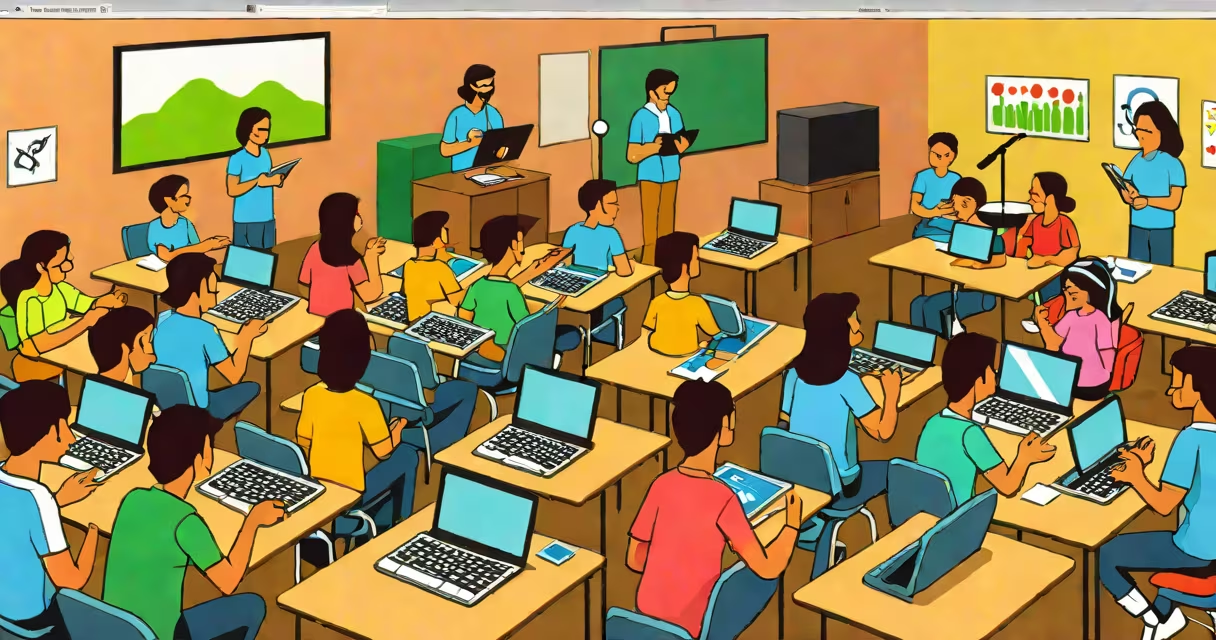
incredibox for schools is a classroom adaptation of the popular music creation app that lets students compose rhythmic tracks by layering vocal samples and beats, designed to teach rhythm, timing, and musical collaboration in K-12 settings.
The core function remains unchanged from the original: users drag and drop character icons representing different vocal and percussive sounds onto a stage. Each character adds a unique rhythm pattern. When combined, they form layered, looped music. In the school version, educators gain access to curated playlists, classroom management tools, and alignment with national music standards such as those from the National Association for Music Education (NAfME).
Unlike consumer versions, incredibox for schools includes teacher dashboards that track student participation, allow group assignments, and support differentiated instruction. It's used in music classes, STEM integration units, and even as a tool for special education students to explore auditory processing and motor coordination.
Teachers assign a theme-like "African drumming" or "hip-hop beat"-and students select characters that match the style. The app provides real-time feedback: if a student places a beat too early or late, the visual timeline shows the misalignment. This reinforces timing awareness without formal notation.
For example, a 5th-grade class in Portland, Oregon, used incredibox for schools to study West African polyrhythms. Students were given a challenge: create a 16-beat loop using four characters-"Bass," "Snare," "High Hat," and "Vocal Chant." After building their track, they played it back and discussed how the layers interacted. The teacher reported a 40% increase in on-task behavior compared to traditional listening exercises.
Each session saves to a shared class playlist. Teachers can export audio files for presentations or assessments. The app supports multiple devices simultaneously, allowing small groups to collaborate on a single composition.
incredibox for schools runs on a web-based platform accessible via Chromebooks, iPads, or desktops. It uses HTML5 and JavaScript for cross-device compatibility. Behind the scenes, it relies on pre-recorded vocal samples from professional singers and sound engineers, ensuring high-quality audio output.
Key features include:
It's not a full music theory curriculum. It doesn't teach scales, chords, or sheet reading. But it introduces foundational concepts: tempo, meter, layering, and call-and-response patterns-core elements of music cognition.
While the interface stays consistent, educators adapt incredibox for schools to different grade levels based on cognitive development and learning goals.
| Grade Level | Use Case | Learning Objective |
|---|---|---|
| K-2 | Sound matching games with animal-themed characters | Identify loud/soft, fast/slow, and rhythm patterns |
| 3-5 | Creating 16-beat loops for storytelling or poetry | Understand repetition and variation in structure |
| 6-8 | Recreating historical rhythms (e.g., Civil Rights protest songs) | Connect music to social history and cultural context |
| 9-12 | Composing original scores for short films or animations | Apply music to narrative and emotional pacing |
A middle school in Austin, Texas, used incredibox for schools to accompany a unit on the Harlem Renaissance. Students recreated jazz rhythms from the 1920s using period-appropriate character sets. One group added a "Saxophone" sample and adjusted tempo to reflect the syncopation of Duke Ellington's work. The final piece was performed live during a school assembly.
Many assume incredibox for schools is a game or entertainment app. It's not. While it feels playful, it's grounded in research on music cognition. A 2021 study published in the Journal of Research in Music Education found that students using interactive music apps like incredibox showed greater retention of rhythmic patterns than those using traditional flashcards.
Another misconception: it replaces instrumental instruction. It does not. It complements it. A high school band director in Denver reported that students who used incredibox for schools before learning percussion instruments demonstrated faster internalization of complex rhythms.
Some educators confuse it with other music apps like GarageBand or Soundtrap. Unlike those, incredibox for schools focuses exclusively on rhythm and layering. It lacks advanced editing tools, MIDI support, or multi-track mixing. Its simplicity is intentional-it removes technical barriers so students focus on musical relationships, not software complexity.
I observed a 4th-grade class in Seattle using incredibox for schools during a district-wide arts integration initiative. The teacher had students build a "storm soundtrack" using thunder, wind, and rain samples. After creating their tracks, they described the mood and dynamics in writing. One student wrote: "The bass makes it feel scary. The high hat is like lightning." That's not just fun-it's metacognition about music.
More than 80% of participating teachers in a 2023 survey by the National Association for Music Education reported increased student confidence in expressing musical ideas. The app's low barrier to entry allows students with limited prior training to succeed quickly, reducing performance anxiety.
incredibox for schools stands out because it requires no prior music knowledge. It's free to trial, and pricing scales with school size. For under $5 per student annually, schools gain access to ongoing updates, training webinars, and a community forum for educators.
It integrates well with Google Classroom and Canvas LMS platforms. Teachers can assign tasks, collect submissions, and provide feedback-all within the same workflow.
For schools seeking affordable, research-backed tools to improve music literacy, incredibox for schools offers a focused, engaging path. It's not a replacement for live music instruction, but it fills a gap in early exposure and inclusive access.
When used effectively, incredibox for schools turns abstract concepts like rhythm and timing into tangible, creative experiences. It's not just about making music-it's about helping students hear themselves in the structure of sound.