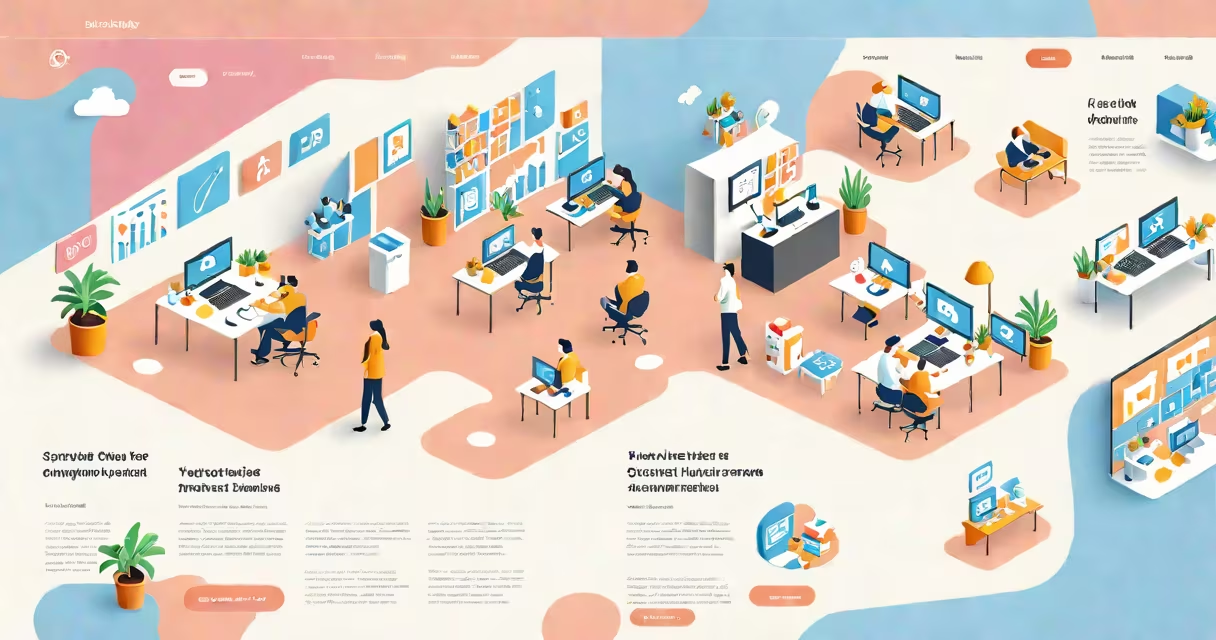
A Dribbble landing page is a public profile on the Dribbble platform that showcases a designer's work through visual project previews, project descriptions, and personal branding elements. It functions as a digital portfolio tailored for creatives seeking clients, collaborators, or job opportunities.
Dribbble, founded in 2010, hosts over 10 million designers and 2 million projects. A well-crafted landing page on the platform increases visibility among recruiters, agencies, and potential clients who browse the site daily. The page displays project thumbnails, titles, tags, likes, and comments-elements that signal quality and engagement.
Unlike generic web portfolios, a Dribbble landing page integrates directly with social sharing tools and analytics. Designers can track views, likes, and shares per project. This data helps refine future work and identify high-performing styles or formats.
When a designer uploads a project to Dribbble, it appears on their public profile page. This profile acts as a landing page-a centralized hub for their creative output. Each project is displayed as a card with a thumbnail, title, and metadata such as category (UI/UX, branding, illustration), date posted, and engagement metrics.
Users can click on any project to view a larger version, read the designer's notes, and engage via likes, comments, or shares. The platform uses algorithms to surface popular or trending projects in feeds, increasing exposure. Projects with higher engagement often appear in "Dribbble Daily" or "Top Picks" newsletters, which reach hundreds of thousands of subscribers.
Designers can also link their Dribbble profile to external websites, LinkedIn, or email addresses. This integration turns the Dribbble landing page into a lead-generation tool. For example, a freelance UX designer might include a "Hire Me" button linking to a Calendly booking page.
A functional Dribbble landing page includes several key elements:
These components work together to create a cohesive narrative about the designer's skills and focus areas. A consistent visual language-such as using the same color palette or typography across projects-reinforces brand identity.
Designers tailor their Dribbble profiles based on goals. Here's how different types serve distinct purposes:
| Type | Focus | Best For | Example |
|---|---|---|---|
| Freelancer | Client acquisition | Independent designers offering services | Profile with 15 projects, 5 testimonials, and a "Hire Me" CTA linked to Upwork or Fiverr |
| Agency | Team showcase and brand authority | Design studios pitching to enterprise clients | Profile with team photos, project case studies, and client logos |
| Job seeker | Employer outreach | Designers applying for roles at tech companies | Profile with 10-12 polished projects, resume PDF link, and "Open to Work" badge |
| Student | Portfolio building and feedback | Art school graduates gaining early experience | Profile with 6-8 academic projects, process sketches, and "Learning UI/UX" tag |
Each type leverages Dribbble's structure differently. Freelancers prioritize high-engagement visuals and clear CTAs. Job seekers emphasize consistency and completeness. Students focus on showing growth and learning.
Designers use Dribbble landing pages primarily to build credibility and attract opportunities. According to a 2023 survey by Dribbble, 68% of hiring managers at tech startups use Dribbble to scout talent. The platform's algorithm rewards consistency-designers who post weekly see 3x more profile views than those posting monthly.
For example, Maya Lin, a UI designer based in Austin, grew her freelance business by 400% after optimizing her Dribbble landing page. She added detailed project breakdowns, included client testimonials, and tagged each project with relevant keywords. Within six months, she received 12 outreach messages from global clients, including one from a London-based fintech startup.
Another use case is collaboration. Designers often comment on others' projects to initiate conversations. A common practice is leaving constructive feedback on a project with a follow-up message: "Love the micro-interactions in your login flow-would love to discuss how we could adapt this for a health app." These interactions build relationships that lead to co-design opportunities or referrals.
Many assume a Dribbble landing page is just a gallery of images. That's incorrect. It's a changing interface for storytelling and networking. A project titled "Minimalist Dashboard Redesign" with no description or context fails to communicate intent. A better version includes: "Designed for a SaaS company to reduce cognitive load. Used dark mode toggle and progressive disclosure to improve task completion by 22%."
Another misconception is that high follower counts guarantee success. Dribbble's data shows that followers don't correlate strongly with job offers. Instead, engagement per project matters more. A designer with 500 followers but 15 projects averaging 200 likes each attracts more inbound interest than one with 5,000 followers and low engagement.
Finally, some think Dribbble is outdated. But in 2023, Dribbble reported 1.4 million daily active users. The platform launched Dribbble Pro in 2022, adding features like analytics dashboards, custom domain support, and enhanced privacy controls. These upgrades show ongoing investment in creator tools.
A Dribbble landing page is more than a collection of designs-it's a strategic tool for visibility, reputation, and opportunity. When built intentionally, it becomes a living document of a designer's evolution. The best pages don't just display work-they invite conversation, demonstrate process, and reflect purpose. For creatives aiming to stand out, mastering the Dribbble landing page is essential.