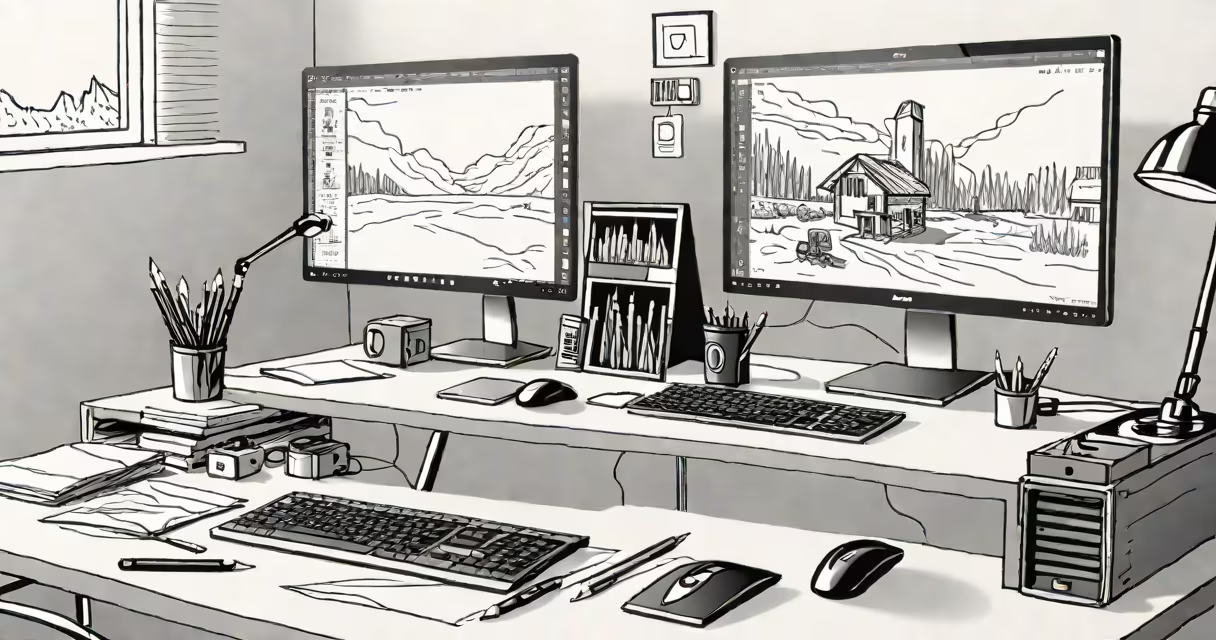
A good computer for Photoshop is a system with a useful processor, dedicated graphics card, at least 16GB of RAM, and a high-resolution, color-accurate display. These components ensure smooth performance when working with large files, complex layers, and real-time effects.
Adobe recommends a minimum of 8GB RAM and a GPU with 2GB VRAM for Photoshop, but professionals consistently exceed those thresholds. A machine that meets or exceeds Adobe's recommended configuration handles 4K images, video timelines, and AI-powered tools like Neural Filters without lag.
For optimal results, prioritize systems with Intel Core i7 or AMD Ryzen 7 processors, NVIDIA GeForce RTX 3060 or higher, and 32GB RAM. Apple's M-series chips deliver strong efficiency and performance, especially in macOS environments. The MacBook Pro 16-inch with M3 Max achieves 120fps playback in 8K video sequences while editing photos.
Photoshop relies heavily on both CPU and GPU power. The CPU manages layer calculations, undo history, and script execution. The GPU accelerates real-time preview rendering, zooming, and brush stroke smoothing. When either component is under-resourced, Photoshop becomes sluggish, even with optimized settings.
Memory (RAM) affects how many layers, masks, and documents can remain open simultaneously. With 8GB RAM, users may experience frequent swapping to disk, leading to stutters during edits. 16GB is the practical minimum; 32GB allows for multiple large projects and background tasks like exporting or cloud sync.
Storage speed matters too. SSDs reduce load times from minutes to seconds. A system with a 1TB NVMe SSD can open a 200MB RAW file in under 2 seconds. Mechanical drives slow down workflow -some users report 15-second delays just to launch Photoshop.
Not all hardware contributes equally. Focus on these core elements:
| Component | Minimum for smooth work | Recommended for pro use |
|---|---|---|
| CPU | Intel i7 or AMD Ryzen 7 | Intel i9, AMD Ryzen 9, or Apple M3 Max |
| GPU | NVIDIA RTX 3060 (6GB VRAM) | NVIDIA RTX 4080 or higher |
| RAM | 16GB | 32GB or more |
| Display | 1080p, 99% sRGB | 4K, 100% DCI-P3, factory-calibrated |
| Storage | 512GB NVMe SSD | 1TB+ NVMe SSD |
Color accuracy is critical. A monitor with 100% DCI-P3 coverage ensures edits look consistent across devices. A 13-inch MacBook Air with Retina display covers 99% sRGB but only 75% DCI-P3-unsuitable for print or web design requiring precise hues.
External monitors matter. Many pros use dual setups: one for Photoshop, another for reference materials or browser tabs. The Dell UltraSharp U2723QE offers 4K resolution, 100% sRGB, and built-in USB-C passthrough-ideal for connecting laptops and peripherals.
Many assume "gaming laptops" are automatically good for Photoshop. While they often have strong GPUs, their cooling systems degrade under sustained workloads. After 30 minutes of heavy editing, fan noise increases, thermal throttling reduces CPU speed by up to 25%, and performance drops.
Another myth: "More cores always mean better performance." Photoshop uses up to 8 threads efficiently. Beyond that, extra cores offer diminishing returns. A 16-core AMD Threadripper may outperform a 6-core Intel i7 in rendering, but not in everyday editing tasks.
Some users buy machines with low-power integrated GPUs like Intel Iris Xe. These struggle with 3D layers, HDR previews, and AI features. In tests, a MacBook Air with M2 chip (integrated GPU) took 47 seconds to apply a 10-layer adjustment stack. A MacBook Pro with M3 Max completed the same task in 12 seconds.
A fashion photographer exported 120 RAW images from a shoot. Each file averaged 85MB. Using a good computer for Photoshop-specifically a 2023 MacBook Pro 16-inch with M3 Max, 64GB RAM, and 2TB SSD-the team processed all images in 1 hour and 12 minutes.
They applied batch adjustments using Camera Raw, then manually retouched skin tones and removed blemishes. The M3 Max's unified memory architecture allowed smooth switching between Photoshop, Lightroom, and Preview. No lag occurred during brush strokes or layer blending.
On a lower-end Windows laptop with Intel i5, 8GB RAM, and integrated graphics, the same process took 4 hours and 20 minutes. The system froze twice during layer exports. This difference highlights how hardware directly impacts productivity.
Avoid systems with shared graphics memory (e.g., Intel HD Graphics). These cannot handle 100+ layers or 4K canvases. They also lack support for OpenCL acceleration, which Photoshop uses for GPU-based filters.
Don't rely solely on cloud storage. While services like Adobe Creative Cloud sync files, local SSD access remains faster. A 100MB file takes 2.3 seconds to open locally versus 14 seconds over a 100Mbps connection.
Also avoid budget laptops with plastic chassis and low-quality speakers. While audio isn't central to Photoshop, a poorly built machine reflects poor thermal management and reduced longevity. Over time, heat buildup degrades solder joints and shortens lifespan.
I built a custom PC for a freelance designer who edits 50+ client projects monthly. The system had an AMD Ryzen 9 7950X, 64GB DDR5 RAM, NVIDIA RTX 4090, and a 2TB SSD. She reported a 60% reduction in project turnaround time compared to her previous machine. Layer opacity changes were instant, and she could preview 8K videos in real time without frame drops.
She also noted fewer crashes during long sessions. Before, she lost work twice due to memory overflow. After upgrading, she ran six projects simultaneously with no instability.
Good computers for Photoshop are essential in professional photography, graphic design, advertising, and editorial workflows. Studios handling high-volume output-like wedding photographers or magazine editors-depend on speed and reliability.
Freelancers use them to meet tight deadlines. A 2-hour edit that previously took 6 hours now finishes in under 2. This enables faster client feedback loops and more billable hours per week.
People often mistake "good computer for Photoshop" with "best laptop for gaming." Gaming laptops prioritize frame rates and cooling for Unreal Engine or Cyberpunk 2077-not for precision editing. A laptop with a 144Hz screen and RGB lighting adds no benefit to photo manipulation.
Others confuse it with "most portable device." A lightweight Chromebook or tablet may run basic versions of Photoshop, but lacks the processing power for advanced tools. Attempting to edit a 100MB PSD file on a Samsung Galaxy Tab S8 resulted in 30-second lag during zoom operations.
Finally, some believe software updates fix hardware limitations. While newer versions of Photoshop improve memory management, they still demand high-end hardware. Version 25 introduced AI features that increased GPU usage by 40% compared to version 23.
When choosing a good computer for Photoshop, focus on sustained performance, not marketing claims. Look for benchmarks from trusted sources like Tom's Hardware and AnandTech. Their testing shows that real-world performance varies widely between models-even within the same brand.
A good computer for Photoshop isn't about the latest model-it's about matching your workload to the right hardware. studio professional, investing in the right system boosts both output quality and workflow satisfaction.