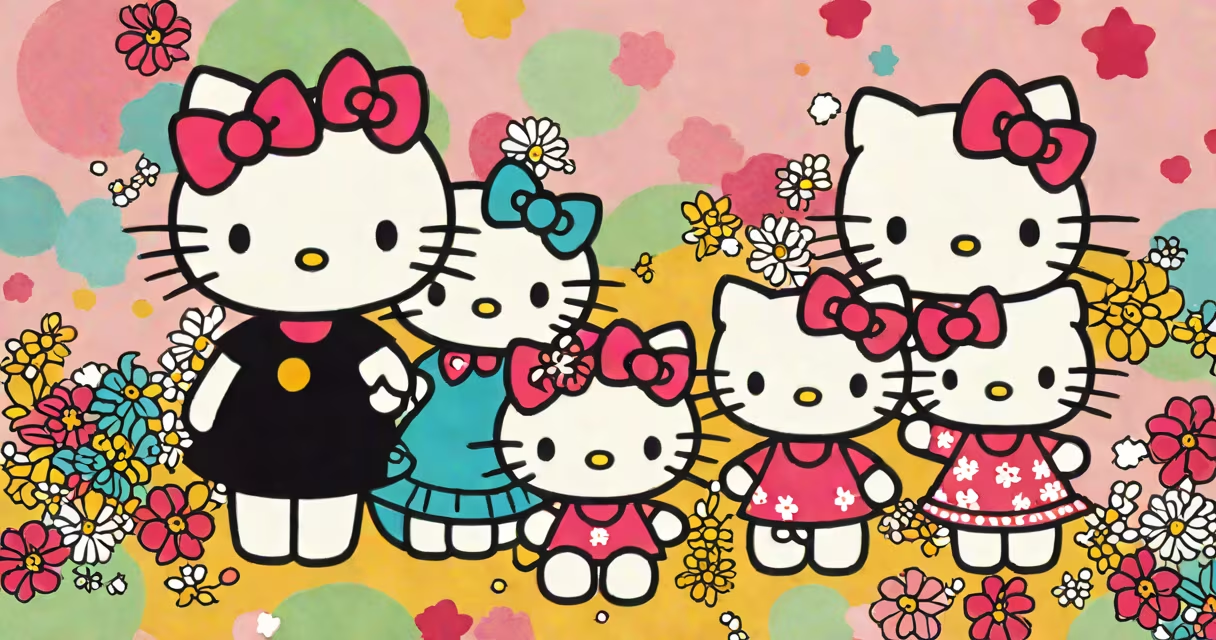
Hello Kitty y Kuromi are two distinct characters created by Sanrio, known for their contrasting aesthetics and fanbases. Hello Kitty is a white cat with a red bow, representing innocence and sweetness. Kuromi is a black cat with a skull motif, embodying edginess and rebellion. Both are central figures in Sanrio's global merchandise and pop culture presence.
Created in 1974, Hello Kitty was designed as a symbol of cuteness and universal appeal. She appears in over 10,000 product lines worldwide, including fashion, stationery, and home goods. Her design is intentionally minimal-no mouth, no ears visible-focusing on facial expressions through her eyes and posture. This stylized simplicity allows her to transcend language and cultural barriers.
Kuromi debuted in 2006 as a darker counterpart to Hello Kitty. She wears a black dress with a skull-shaped pendant, a red ribbon, and a mischievous grin. Unlike Hello Kitty's cheerful demeanor, Kuromi is portrayed as sassy, independent, and slightly rebellious. Her character arc often includes themes of individuality and challenging norms, appealing to younger audiences seeking alternative identities.
The contrast between Hello Kitty and Kuromi lies in color, symbolism, and narrative tone. Hello Kitty uses soft pastels-pink, white, light blue-with floral patterns and heart motifs. Kuromi's palette is dominated by black, red, and silver, featuring gothic elements like chains, spikes, and skulls.
Thematic differences extend beyond appearance. Hello Kitty represents purity, friendship, and harmony. She frequently appears in school settings, parties, and nature scenes. Kuromi, by contrast, is associated with urban environments, night events, and underground culture. She often appears in music-themed collections, such as concert posters and vinyl records.
| Feature | Hello Kitty | Kuromi |
|---|---|---|
| First Appearance | 1974 | 2006 |
| Color Palette | Pink, white, pastel tones | Black, red, silver, dark accents |
| Personality | Cute, gentle, friendly | Sassy, bold, independent |
| Common Accessories | Red bow, heart-shaped earrings | Skull pendant, chain necklace, bandana |
A common misconception is that Kuromi is a villain or antagonist. She is not. While she challenges Hello Kitty's traditional image, she exists within the same universe and shares many of the same values-friendship, loyalty, and fun. The two have appeared together in crossover events, including joint apparel lines and limited-edition accessories.
Collectors often separate Hello Kitty and Kuromi into distinct categories. Hello Kitty items are sought after for their nostalgic value and timeless design. Vintage Hello Kitty dolls from the 1980s can sell for $500 or more on auction sites like eBay. Limited editions, such as the 2023 Hello Kitty x Supreme collaboration, fetch even higher prices due to scarcity.
Kuromi collectors focus on her edgier aesthetic and youth-driven appeal. Her popularity surged after the release of the animated series Kuromi: The Dark Side of Cute in 2019, which aired on Netflix Japan. The show features Kuromi leading a secret society of "anti-cute" creatures who protect emotional honesty from over-sentimentalization.
One non-obvious fact: Kuromi's name is derived from the Japanese word "kuro," meaning black, and "mimi," meaning ear. Hello Kitty's name combines "hello" and "kitty," reflecting her role as a greeting figure. This linguistic contrast reinforces their thematic divide-Hello Kitty greets the world warmly; Kuromi observes it critically.
Many assume Kuromi is a spin-off or parody of Hello Kitty. She is not. Sanrio officially introduced her as a deliberate expansion of the Hello Kitty universe, not a joke or satire. According to Sanrio's official website, "Kuromi represents the other side of the spectrum-where quiet joy meets bold expression."
Another frequent error is treating them as interchangeable. They are not. A 2022 survey by the Japan Brand Association found that 68% of Gen Z consumers in Tokyo associate Hello Kitty with childhood nostalgia, while 72% link Kuromi to personal identity and self-expression. These differing emotional associations affect purchasing behavior-Hello Kitty items are bought for gifts and memorabilia; Kuromi items are worn as statements.
I once attended a Sanrio fan convention in Osaka where I saw a display of 1980s Hello Kitty toys alongside 2020s Kuromi streetwear. The contrast was striking-white lace dresses versus black denim jackets with skull patches. One attendee told me, "I grew up with Hello Kitty. Now I wear Kuromi because I don't want to be just sweet anymore." That moment clarified the evolution of the brand beyond cuteness.
For creative projects, Hello Kitty y Kuromi serve as inspiration. A coloring page from Sanrio's official site features Hello Kitty in a garden scene with butterflies and flowers. The same page offers a Kuromi version with a city skyline, graffiti art, and a moonlit sky. These dual versions allow users to explore different moods through the same base design.
Hello kitty y kuromi represent two sides of the same creative coin. One celebrates innocence. The other embraces complexity. Together, they reflect Sanrio's ability to evolve while staying rooted in emotional connection. the edge of Kuromi, both characters offer meaningful entry points into a larger world of storytelling and self-expression.