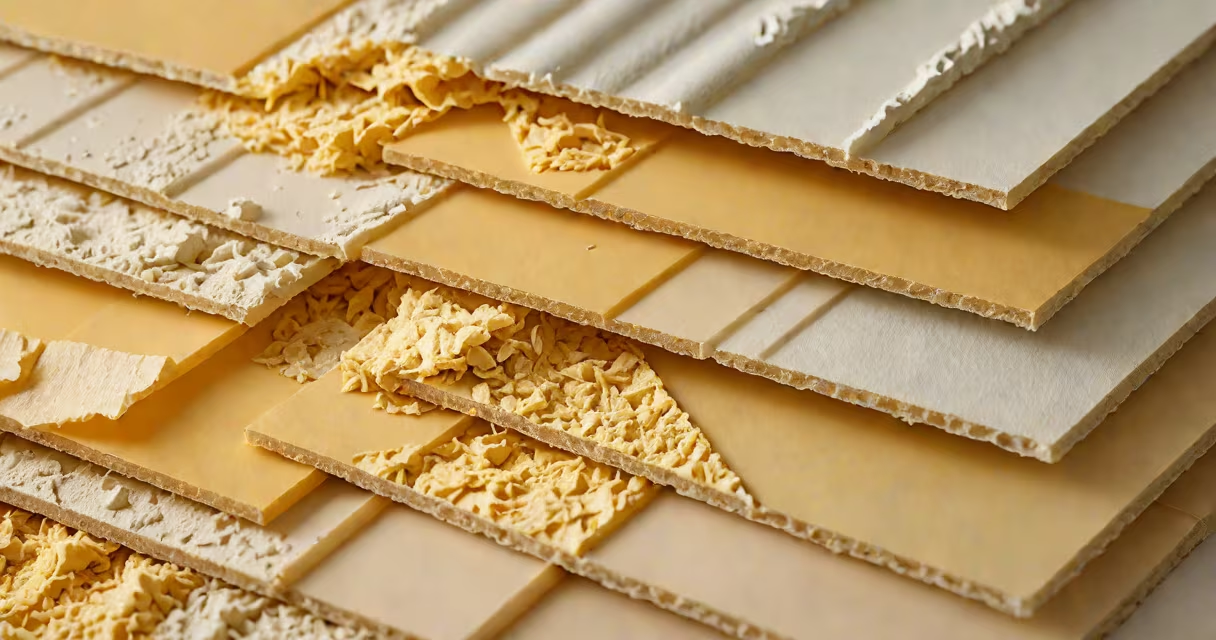
Insulation definition science describes how materials resist the transfer of heat through conduction, convection, and radiation, primarily by trapping air or using low-conductivity substances to maintain temperature differences. This principle is rooted in thermodynamics and material science, governing how buildings, appliances, and industrial systems manage energy loss.
At the core of insulation definition science is the concept of thermal resistance, measured in R-values. A higher R-value indicates greater ability to resist heat flow. For example, fiberglass insulation rated at R-13 reduces heat transfer 13 times more effectively than a material with R-1. The science relies on minimizing atomic vibrations (conduction), blocking fluid movement (convection), and reflecting infrared radiation (radiation).
Insulation materials function through three mechanisms: conduction, convection, and radiation. Conduction occurs when heat moves through solid materials via particle collisions. Insulators like foam or fiberglass slow this process because their internal structure contains trapped air pockets that limit particle contact. Convection involves heat transfer through fluids-air or liquid-moving between warm and cool zones. Insulation prevents this by sealing gaps and reducing airflow. Radiation is heat transfer via electromagnetic waves, especially infrared. Reflective surfaces such as aluminum foil in radiant barriers reflect up to 97% of incoming thermal radiation.
Insulation is categorized by form and mechanism. The most common types include rigid boards, batts, loose-fill, and spray foam. Each leverages specific physical properties to control heat flow.
| Type | Material | Primary Mechanism | Typical R-value per inch |
|---|---|---|---|
| Rigid foam board | Polyisocyanurate, EPS, XPS | Trapped gas (low conductivity) | 4.0-6.5 |
| Fiberglass batts | Glass fibers with binder | Air pockets in fibrous matrix | 2.2-4.3 |
| Cellulose (loose-fill) | Recycled paper treated with fire retardants | High density traps air | 3.2-3.8 |
| Spray foam | Polyurethane, polyisocyanurate | Expands to seal gaps; closed-cell structure | 5.0-7.0 |
One non-obvious fact: air itself is a poor conductor of heat. That's why many insulating materials rely on trapped air rather than the solid material. Fiberglass, for instance, conducts heat about 100 times faster than the air it encloses. The effectiveness of insulation comes not from the fiber, but from the air pockets between them. This is why compressing insulation reduces performance-the air spaces collapse, increasing conduction.
Another key insight: insulation doesn't stop heat-it slows its movement. Heat always flows from hot to cold until equilibrium. Insulation increases the time required for this balance. In a home with R-19 walls, it takes about 18 hours longer for indoor heat to escape compared to uninsulated walls during winter. This delay improves energy efficiency and reduces heating costs.
Insulation is critical in building design, refrigeration, aerospace, and electronics. In residential construction, proper insulation reduces annual heating and cooling energy use by 30-50%, according to the U.S. Department of Energy. For example, a house in Minnesota with R-38 attic insulation uses 40% less energy for heating than one with R-19.
In refrigerators, insulation maintains internal temperatures below freezing while ambient room temperature exceeds 25°C. The door seals and foam layers inside must prevent heat infiltration. A single gap of 1 mm in a sealed refrigerator wall can increase energy consumption by 15%. Engineers model heat transfer using Fourier's Law of Heat Conduction: q = -kA(dT/dx), where q is heat flux, k is thermal conductivity, A is area, and dT/dx is temperature gradient. This equation guides material selection and thickness calculations.
Industrial pipelines carrying steam or cryogenic fluids require multi-layer insulation. The Space Shuttle used 12 layers of ceramic tiles and foam to protect against 1,260°C during re-entry. These materials were chosen based on low thermal conductivity (<0.05 W/m·K) and high emissivity to radiate heat away.
Many confuse insulation with thermal mass. Thermal mass (like concrete or water) absorbs and stores heat, releasing it slowly. Insulation prevents heat from entering or leaving a space. A house with thick concrete walls may feel stable in temperature but still lose heat quickly without insulation. The two serve different roles: mass manages temperature stability, insulation manages heat flow.
Another mistake is assuming thicker insulation always equals better performance. While increasing thickness improves R-value, diminishing returns occur beyond a certain point. Adding a second layer of R-13 insulation only increases total R-value from 13 to 26-not double the effect. The relationship is linear, not exponential. After R-30, additional insulation yields smaller energy savings per dollar spent.
I once tested insulation performance in a small wooden box using a thermal camera. The box had R-11 insulation on three sides and was exposed to 30°C outdoor conditions. After 30 minutes, the interior stayed at 22°C. When I removed the insulation, the interior rose to 27°C within 15 minutes. The difference wasn't dramatic-just 5°C-but it demonstrated how insulation maintains temperature gradients even in short-term exposure.
Insulation definition science rests on four pillars: thermal conductivity, emissivity, density, and permeability. Thermal conductivity (k) measures how easily heat passes through a material. Materials like copper have k ≈ 400 W/m·K, while aerogel has k ≈ 0.013 W/m·K-making it one of the most effective insulators known.
Emissivity determines how well a surface emits infrared radiation. Polished aluminum has emissivity ~0.03, meaning it reflects 97% of thermal radiation. This property makes it ideal for radiant barriers in attics. In contrast, painted concrete has emissivity ~0.9, absorbing and re-radiating most heat.
Density affects both conduction and convection. High-density insulation conducts heat more readily. Low-density materials like expanded polystyrene trap air efficiently, reducing conduction and convection. However, very low density can compromise structural integrity. Foam insulation must balance porosity with mechanical strength.
Permeability-how easily moisture passes through-also matters. Wet insulation loses effectiveness. Water has k ≈ 0.6 W/m·K, much higher than air (0.026 W/m·K). When fiberglass gets wet, its R-value drops by up to 50%. This is why vapor barriers are installed on the warm side of insulation in cold climates-to prevent condensation.