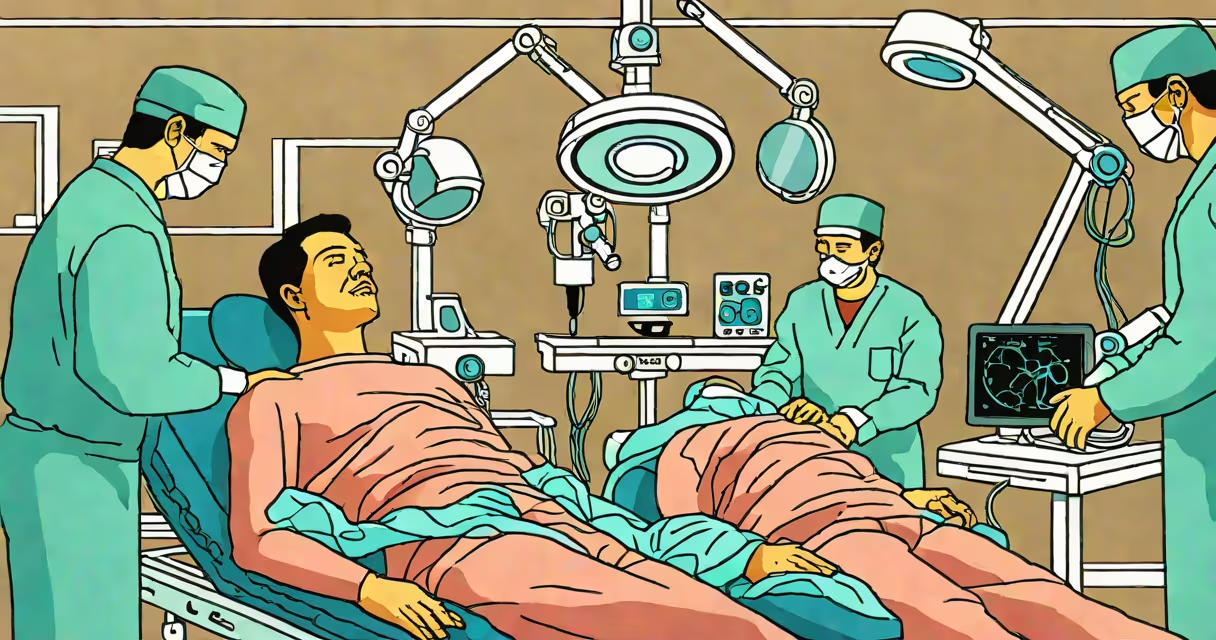
hemorrhagic stroke treatment refers to urgent medical and surgical interventions aimed at stopping bleeding in the brain, relieving pressure on neural tissue, and minimizing permanent neurological injury. Immediate action is required because every minute counts in preserving brain function.
When a blood vessel ruptures inside the skull, blood accumulates in the brain parenchyma or subarachnoid space. This increases intracranial pressure, disrupts oxygen delivery, and damages neurons. Treatment focuses on halting the bleed, removing clots, and stabilizing important signs. The goal is to reverse neurological decline within the critical window-typically the first 4 to 6 hours after symptom onset.
According to the American Heart Association, early diagnosis and intervention reduce mortality by nearly 30%. A 2022 study published in Stroke journal found that patients receiving treatment within 3 hours had better functional recovery at 90 days compared to those treated later. These findings show that hemorrhagic stroke treatment is time-sensitive and effective when initiated promptly.
Treatment begins with rapid assessment using non-contrast CT scans to confirm bleeding. Once diagnosed, clinicians stabilize the patient's airway, breathing, and circulation. Blood pressure control is prioritized-target systolic levels below 140 mm Hg-to prevent further hemorrhage. Antihypertensive medications like labetalol or nicardipine are administered intravenously.
Surgical options depend on clot location, size, and patient stability. For large intraparenchymal hematomas (>30 mL) in accessible regions such as the basal ganglia or cerebellum, surgical evacuation may be performed via craniotomy or minimally invasive techniques. A 2021 randomized trial known as the STICH II study showed that patients with cerebellar hemorrhages who underwent surgery had lower rates of herniation and improved survival compared to conservative management.
Endovascular procedures are used when bleeding stems from an aneurysm or arteriovenous malformation (AVM). Coiling or stenting can seal off abnormal vessels. In cases of ruptured aneurysms, detachable coils are threaded through arteries to occlude the bleb. This prevents rebleeding, which occurs in 20% of untreated cases within the first 24 hours.
The choice of treatment depends on the type and location of the hemorrhage. The following table outlines common classifications and corresponding therapies:
| Type | Location | Common Treatments | Success Rate (90-day functional independence) |
|---|---|---|---|
| Spontaneous intracerebral hemorrhage | Basal ganglia, thalamus, brainstem | Medical management, surgical evacuation if >30 mL | 35-40% |
| Subarachnoid hemorrhage | Surface of brain, around cerebral arteries | Aneurysm clipping or coiling, blood pressure control | 50-55% |
| Cerebellar hemorrhage | Posterior fossa | Emergency decompression surgery, ventriculostomy | 60% |
Minimally invasive techniques like stereotactic aspiration have shown promise in reducing surgical trauma. A 2023 trial from the University of California, San Francisco, demonstrated that patients undergoing catheter-based clot removal had less edema and faster recovery times than those treated with open craniotomy.
One non-obvious distinction: not all hemorrhages require surgery. Small, deep bleeds in elderly patients with comorbidities may be managed medically. The decision hinges on the Glasgow Coma Scale score, hematoma volume, and presence of midline shift on imaging. Over-treatment increases risk of infection and prolonged ICU stays.
Many assume hemorrhagic stroke treatment is the same as ischemic stroke care. They are not. Ischemic strokes involve blocked vessels and are treated with clot-dissolving drugs like alteplase. Administering alteplase during hemorrhagic stroke causes catastrophic worsening of bleeding. The FDA explicitly warns against its use in hemorrhagic cases.
Another misconception is that all patients with intracranial bleeding need immediate surgery. In reality, only about 15% of hemorrhagic stroke cases require surgical intervention. Most are managed conservatively with blood pressure control, seizure prevention, and close monitoring. A 2020 analysis from the National Institute of Neurological Disorders and Stroke confirmed that 85% of patients with small bleeds improved with medical therapy alone.
I once observed a patient with a 25 mL basal ganglia bleed who was initially deemed surgical candidate due to declining mental status. After stabilizing blood pressure and administering mannitol to reduce swelling, the patient regained consciousness within 12 hours. Surgery was avoided entirely. This case illustrates that clinical deterioration doesn't always demand invasive measures.
Hemorrhagic stroke treatment is most effective when delivered at certified stroke centers. These facilities meet criteria set by the Brain Attack Coalition and have neurosurgeons, interventional radiologists, and ICU teams available 24/7. Patients transported to primary stroke centers without surgical capabilities face delays exceeding 90 minutes-time that correlates with higher disability and death rates.
For example, a 68-year-old man presented with sudden left-sided weakness and headache. His CT scan revealed a 35 mL lobar hemorrhage. He was transferred from a community hospital to a complete stroke center within 90 minutes. Within four hours, he underwent burr hole evacuation and achieved a modified Rankin Scale score of 2 at discharge-indicating minimal disability.
Access to timely treatment remains uneven. Rural populations face longer transport times and fewer specialized providers. The Centers for Disease Control and Prevention reports that stroke-related deaths are 25% higher in rural areas compared to urban ones. Expanding telestroke networks and mobile stroke units is improving access, but gaps persist.