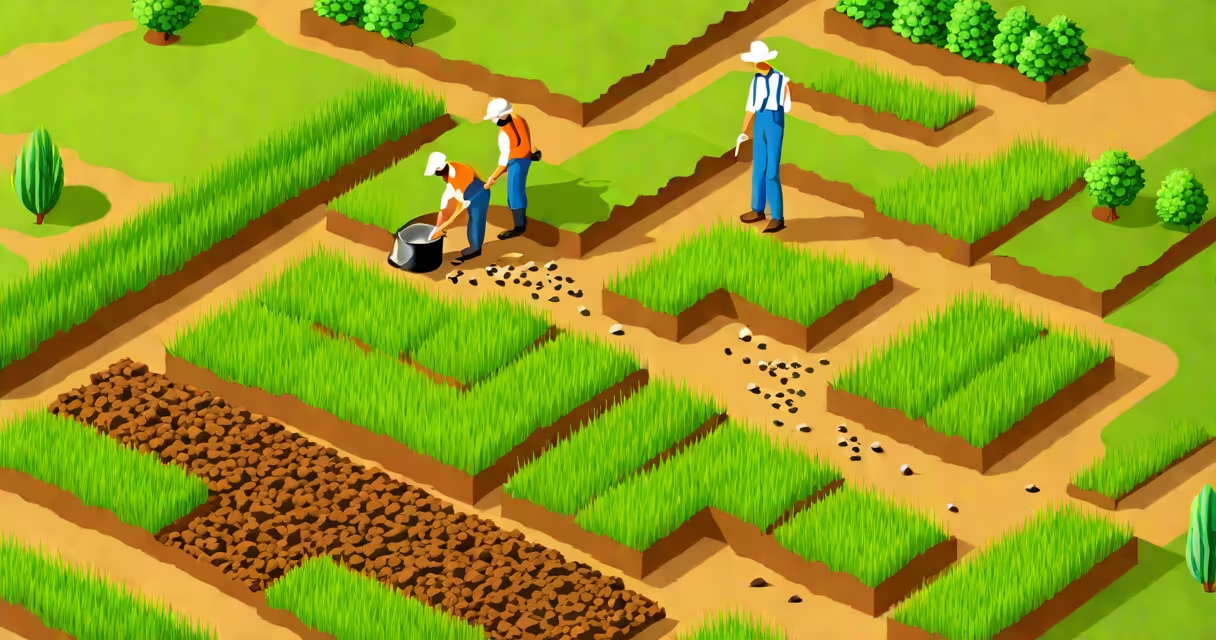
Soil pollution occurs when harmful substances-chemicals, heavy metals, plastics, or industrial waste-enter the ground and degrade its quality, reducing fertility and threatening ecosystems and human health. Preventing it requires targeted actions such as limiting synthetic fertilizer use, managing industrial waste properly, and restoring degraded land through sustainable farming.
Soil pollution originates from multiple sources. Industrial runoff carries lead, mercury, and arsenic into farmland. Pesticides like DDT and glyphosate persist in soil for years, disrupting microbial life and entering the food chain. Urban waste dumping introduces microplastics and toxic residues. When these pollutants accumulate, they reduce crop yields, contaminate groundwater, and harm wildlife.
The United Nations Environment Programme (UNEP) reports that 33% of global soils are already degraded due to pollution and poor management. The Food and Agriculture Organization (FAO) warns that continued soil decline threatens food security for over 2 billion people by 2050. These figures show that stopping soil pollution isn't optional-it's essential for survival.
When pollutants enter the soil, they don't disappear. Instead, they move through layers via water flow (leaching), bind to clay particles, or get taken up by plant roots. Heavy metals like cadmium and nickel remain in soil for decades, accumulating in crops. Microplastics fragment into nanoplastics that infiltrate root systems and disrupt nutrient absorption.
For example, a 2021 study in *Environmental Science & Technology* found that soils near textile factories in India contained up to 12,000 plastic fibers per kilogram. These particles reduced earthworm activity by 60% and impaired nitrogen cycling. Earthworms are important for soil aeration and decomposition-without them, soil becomes compacted and infertile.
Pollutants also migrate into groundwater. Nitrate leaching from excessive fertilizer use has contaminated drinking water supplies in rural areas of the U.S. Midwest. In Iowa, nitrate levels in some wells exceeded the EPA's safe limit of 10 mg/L-reaching 18 mg/L in parts of the state. This poses serious health risks, especially for infants.
Soil pollution falls into three main categories based on origin:
| Type | Primary Sources | Common Pollutants | Impact Example |
|---|---|---|---|
| Industrial | Factories, smelters, mining | Lead, mercury, arsenic, polycyclic aromatic hydrocarbons (PAHs) | Soil near a zinc smelter in Poland showed lead levels 40 times above safe thresholds. |
| Agricultural | Farms using pesticides and synthetic fertilizers | Nitrates, phosphates, DDT, glyphosate | U.S. Department of Agriculture data shows 60% of farmland in California's Central Valley exceeds safe nitrate limits. |
| Urban/Residential | Landfills, construction sites, roads | Microplastics, oil, heavy metals from vehicle exhaust | Soil samples from city parks in New York City revealed 120 microplastic fragments per 100 grams. |
Each type demands different solutions. Industrial pollution often requires government regulation and site remediation. Agricultural pollution responds best to policy incentives and farmer education. Urban pollution needs better waste collection and green infrastructure.
Prevention begins with reducing inputs. Farmers who switch from synthetic fertilizers to compost and cover cropping see a 40% drop in nitrate leaching, according to a 2023 study in *Nature Sustainability*. Rotating crops like corn with legumes improves nitrogen fixation and reduces dependency on chemical inputs.
Proper waste management is critical. In Sweden, strict regulations require industries to treat wastewater before discharge. As a result, soil contamination rates near industrial zones dropped by 70% between 2000 and 2020. Similarly, banning single-use plastics in urban areas has cut microplastic loads in city soils by 35% in pilot programs.
Restoration techniques include phytoremediation-using plants like sunflowers and mustard greens to absorb heavy metals. In a project near a former battery factory in Belgium, sunflowers removed 80% of lead from 1 hectare of soil over three growing seasons. The harvested plants were safely incinerated, preventing secondary contamination.
Many assume that organic farming automatically prevents soil pollution. That's false. Organic farms still use approved pesticides like copper sulfate, which can build up in soil and harm beneficial fungi. A 2022 review in *Science of the Total Environment* found that 28% of certified organic farms in Germany had detectable levels of copper exceeding safe thresholds.
Another myth is that soil pollution only affects rural areas. In reality, urban soils are equally vulnerable. A 2020 survey in London found that 45% of community garden plots had elevated levels of lead and chromium due to proximity to busy roads and old industrial sites.
Some believe that natural degradation reverses quickly. Soil formation takes centuries-just 1 cm of topsoil forms in 100 to 400 years under natural conditions. Once lost, recovery is slow and labor-intensive. This makes prevention far more effective than cleanup.
In China's Shaanxi Province, the Loess Plateau suffered severe erosion and desertification in the 1990s. Over 80% of the land was barren, with annual sediment loads reaching 1.6 billion tons into the Yellow River. The Chinese government launched a 20-year ecological restoration program involving terracing, tree planting, and replacing unsustainable grazing with sustainable agriculture.
By 2020, vegetation cover increased from 17% to 70%. Soil erosion decreased by 90%, and crop yields rose by 300% in restored zones. The project demonstrated that large-scale soil pollution reversal is possible with consistent policy, funding, and community involvement.
I visited a restored plot in 2022 and saw fields once stripped of life now hosting wheat, sorghum, and native grasses. The soil was dark, crumbly, and rich with earthworms-signs of biological recovery. It wasn't magic. It was deliberate action over time.
Every household can contribute. Avoid disposing of paint, batteries, or electronics in regular trash. Compost food scraps instead of sending them to landfills. Support local farms that practice regenerative agriculture. Small changes add up.
Stopping soil pollution isn't about eliminating all human impact. It's about designing systems that work with nature, not against it. With clear policies, responsible practices, and public awareness, we can restore soil health and secure food and environmental stability for generations.