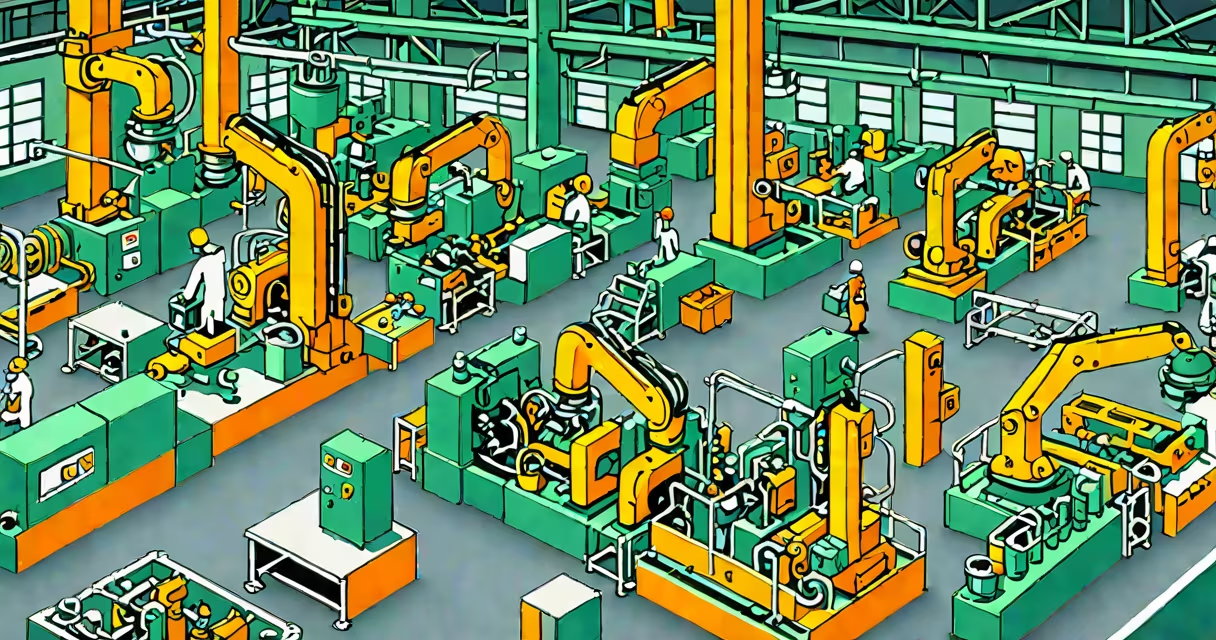
"How is it made" refers to the sequence of processes, materials, and labor required to change raw inputs into a finished product. This includes sourcing, fabrication, assembly, quality control, and packaging. The method varies drastically depending on whether the item is biological (like figs), synthetic (like coenzyme Q10), or industrial (like rubber).
Understanding "how is it made" begins with identifying the core components and their origin. For physical goods, this means tracing raw materials-minerals, plant matter, petrochemicals-and mapping the transformation steps. A single product may involve dozens of specialized stages across multiple facilities. The process is rarely linear; bottlenecks, waste streams, and regulatory constraints shape efficiency.
For example, figs are grown in orchards, harvested by hand or machine, dried, sorted, and packaged. Coenzyme Q10 is synthesized chemically using precursors like benzoquinone and isoprenoid chains. Rubber comes from latex tapped from rubber trees, then vulcanized with sulfur to improve elasticity. Each path reflects distinct engineering, chemistry, and logistics.
Every manufactured good passes through several phases: input acquisition, processing, assembly, testing, and distribution. Input acquisition involves locating and extracting or cultivating raw materials. Processing converts those materials into usable forms-grinding, refining, fermenting, or polymerizing. Assembly combines parts into a functional unit. Testing ensures performance and safety. Distribution moves the product to market.
Consider the production of a smartphone. Silicon is mined and refined into ingots, then sliced into wafers for chip fabrication. Metals like copper and gold are extracted and purified for circuitry. Plastic polymers are molded into cases. Components are soldered onto printed circuit boards. Final units are assembled, tested for function, and shipped. Each stage requires precision equipment, skilled labor, and compliance with environmental and safety standards.
Not all "how is it made" processes are industrial. Biological products follow life cycles. Figs grow on trees in Mediterranean climates, requiring specific soil pH, rainfall, and pollination by fig wasps. Harvesting occurs over weeks during summer. After picking, figs are dried at 60°C for 12 hours to reduce moisture content to below 20%. They're then sorted by size and color, vacuum-packed, and stored at 4°C to prevent spoilage.
Different products rely on different methods. The table below outlines common approaches based on material type and scale.
| Material Type | Common Process | Example Application | Key Inputs |
|---|---|---|---|
| Organic (plant-based) | Harvesting & drying | Figs, herbs, spices | Soil, water, sunlight, labor |
| Synthetic (chemical) | Multi-step synthesis | CoQ10, insulin, dyes | Precursor chemicals, catalysts, solvents |
| Mineral-based | Smelting & casting | Steel beams, aluminum cans | Ore, energy, limestone |
| Polymer-based | Extrusion & molding | Plastic bottles, car parts | Petroleum, heat, pressure |
Industrial-scale rubber production relies on natural latex from Hevea brasiliensis trees. Tapping begins at 18 months post-planting. Each tree yields 15-20 mL of latex daily. Collected latex is stabilized with ammonia to prevent coagulation. After transport, it's coagulated with formic acid, washed, pressed into sheets, and vulcanized with 3% sulfur at 140°C for 30 minutes. The result is durable, elastic rubber suitable for tires and seals.
Many assume "how is it made" implies a single factory or a single step. In reality, most products involve global supply chains. A pair of sneakers may have soles made in China, uppers from Vietnam, laces from Italy, and glue from Germany. No single facility produces the entire item.
Another myth is that manufacturing is purely mechanical. Chemistry plays a central role. Even in mechanical assembly, lubricants, adhesives, and surface treatments alter performance. A car engine's lifespan depends not just on machining tolerances but on the chemical composition of the oil used during break-in.
A lesser-known fact: some products are made partly through biological systems. Bioplastics derived from corn starch are produced via fermentation. Yeast converts glucose into lactic acid, which is then polymerized. This method reduces fossil fuel dependence. According to the U.S. Department of Agriculture, bioplastics accounted for 1.8% of global plastic production in 2023, up from 0.9% in 2018.
Take the production of a standard 12-ounce aluminum beverage can. The process begins with bauxite mining in Jamaica. Bauxite is processed into alumina via the Bayer process-using caustic soda and heat at 250°C. Alumina is smelted into molten aluminum using electrolysis at 950°C. The metal is cast into ingots, rolled into thin sheets, and cut into circular blanks.
These blanks are drawn into cups using hydraulic presses. The cups are cleaned, coated internally with epoxy to prevent corrosion, and labeled. The bodies are joined to domed tops via a double-seam crimping process. Each can is inspected under X-ray for defects. Finally, they are filled, capped, and palletized. The entire cycle-from ore to filled can-takes about 24 hours.
During my visit to a beverage can plant in Ohio, I observed the seam inspection station. Machines scan each can's joint at 120 per minute. Defective cans are ejected automatically. Over one week, 1.2 million cans were produced with a defect rate of 0.007%. This level of consistency is only possible through tightly controlled automation and real-time feedback loops.
When examining "how is it made," focus on traceability. Ask: Where do the materials come from? What energy sources power the process? How much waste is generated? Who handles disposal? These questions reveal hidden costs and sustainability trade-offs.
Knowing "how is it made" enables informed choices. Consumers who understand the complexity behind everyday items can assess quality, ethics, and environmental cost. Whether evaluating food, medicine, or electronics, the answer lies in tracing the process from raw input to finished form.
Each product tells a story of science, labor, and design. The deeper you look, the clearer the path becomes-from seed to shelf, from molecule to machine. The next time you ask "how is it made," remember: the answer isn't just a list of steps. It's a map of human ingenuity and planetary limits.