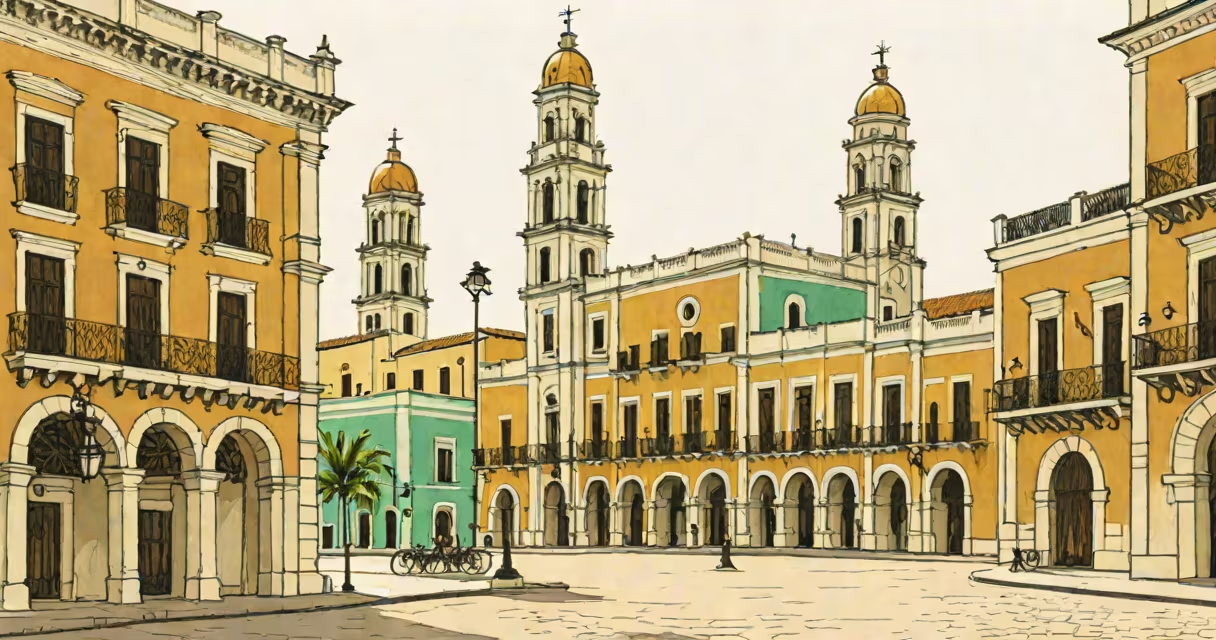
Merida Yucatan Mexico is the capital city of Yucatán state in southeastern Mexico, known for its well-preserved colonial architecture, rich Maya heritage, and vibrant cultural life. Founded in 1542 by Spanish conquistadors, it sits atop the ruins of the ancient Maya city of T'ho, blending pre-Hispanic and European influences.
The city's identity rests on two pillars: its role as a cultural and administrative center in the Yucatán Peninsula, and its position as a gateway to nearby archaeological sites like Chichén Itzá and Uxmal. Merida's urban layout follows a grid pattern laid out by Spanish colonists, with the Plaza Mayor at its heart-a square dominated by the 16th-century Metropolitan Cathedral and the ornate City Hall, both constructed using local limestone.
Merida's climate is tropical savanna (Köppen Aw), with distinct dry and rainy seasons. Average temperatures hover between 24°C and 30°C (75°F-86°F) year-round. The city's elevation is about 15 meters above sea level, contributing to relatively stable weather patterns compared to coastal areas.
Merida's layout reflects a fusion of indigenous and colonial planning. The original Maya settlement centered around sacred plazas and ceremonial structures. After the Spanish conquest, the city was rebuilt on the same axis, aligning the new cathedral and government buildings with the cardinal directions, a practice rooted in both Catholic tradition and Maya cosmology.
Local construction uses chukum, a type of limestone quarried from nearby sinkholes. This material resists humidity and provides natural insulation. Homes and public buildings feature thick walls, high ceilings, and louvered windows to manage heat. Traditional Merida homes often have interior patios called "patios de luz," designed to capture daylight and airflow.
Every year, the city hosts the Festival Internacional de Música de Yucatán, drawing classical musicians from Latin America and Europe. Events take place in restored 18th-century mansions and the Palacio de Gobierno, showcasing how historical spaces remain functional in contemporary life.
Merida's architecture combines Maya, Spanish, and Caribbean influences. Buildings use white-washed stucco, wrought-iron balconies, and red-tiled roofs. The city's signature color scheme-pastel yellows, corals, and sky blues-originates from 19th-century restoration efforts during the Porfiriato era, when wealthy landowners revived colonial aesthetics.
Cuisine in Merida centers on traditional Yucatecan dishes. Panuchos, made from fried tortillas topped with refried beans, shredded turkey, avocado, and pickled red onions, are a staple. The region's use of achiote paste gives food a distinctive earthy flavor. Sopa de lima, a chicken soup with lime and sour cream, is common in home kitchens and restaurants alike.
Merida is also home to the Universidad Autónoma de Yucatán (UADY), founded in 1974. The campus, located in the northern part of the city, includes research centers focused on Mayan languages and sustainable agriculture. Students from across Latin America attend programs in environmental science and indigenous studies.
Merida ranks among Mexico's top ten tourist destinations. In 2023, it welcomed 1.4 million visitors, including 380,000 international travelers. Most arrive via Mérida International Airport (MID), which handled 1.2 million passengers in 2022. The airport offers direct flights from Houston, Dallas, and Cancún.
Key attractions include the Gran Museo del Maíz, which explores the history of maize cultivation in Mesoamerica, and the Centro de las Artes, a cultural complex hosting theater, dance, and visual art exhibitions. The city's walkable core makes it ideal for tourists seeking low-impact travel.
For those interested in deeper exploration, the nearby Cenote Ik Kil-featured in the film *The Jungle Book* (1967)-is a 30-minute drive from downtown. Its turquoise waters drop 30 meters into a limestone cave system. Visitors enter through a stone archway, then descend a wooden staircase to swim in the cool, clear water.
| Type | Description | Example Location |
|---|---|---|
| Colonial | Spanish-style buildings with courtyards and tile roofs | Plaza Mayor, Merida |
| Mayan Ruins | Pre-Columbian ceremonial centers with pyramids and ball courts | Chichén Itzá, 2 hours away |
| Cenotes | Natural sinkholes filled with groundwater, formed by limestone collapse | Cenote Ik Kil, near Valladolid |
Merida is sometimes mistaken for a beach resort town. It lies inland, approximately 120 kilometers from the Caribbean coast. While nearby towns like Tulum and Playa del Carmen attract sun-seekers, Merida appeals to travelers interested in history, culture, and cuisine.
A second misconception is that the city lacks authenticity due to its popularity. On the contrary, Merida maintains strong community traditions. The annual Feria de la Ciudad, held in October, features folk dancing, regional crafts, and live music. Local artisans sell handwoven huipiles (traditional blouses) and embroidered textiles from nearby villages like Tekit and Oxkintok.
One underreported fact: Merida has one of the highest rates of bilingualism in Mexico. Over 60% of residents speak both Spanish and Yucatec Maya. The city's school system includes mandatory Maya language instruction in primary grades. This linguistic diversity supports cultural preservation and strengthens civic identity.
In 2022, I spent a morning exploring the Mercado de San Juan, a bustling indoor market in the city center. I bought fresh chaya leaves (a nutritious green used in traditional soups), a small jar of habanero-infused honey, and a handmade clay bowl from a vendor whose family has sold ceramics in the market since 1948. The air carried the scent of roasted cacao, marigolds, and grilled pork.
I watched a woman prepare tamales using corn husks and a steaming basket. She explained that her recipe had been passed down from her grandmother, who learned it from a Maya elder during the 1920s. The market operates daily from 6 a.m. to 8 p.m., serving locals and tourists alike.
Merida Yucatan Mexico is not a single destination-it's a living intersection of history, language, and field. From its ancient roots beneath colonial facades to its modern role as a hub for sustainable tourism, the city offers layered experiences. Whether walking through the Plaza Mayor, swimming in a cenote, or sharing a meal with a family in a courtyard, visitors engage with a place that continues to evolve while honoring its past.