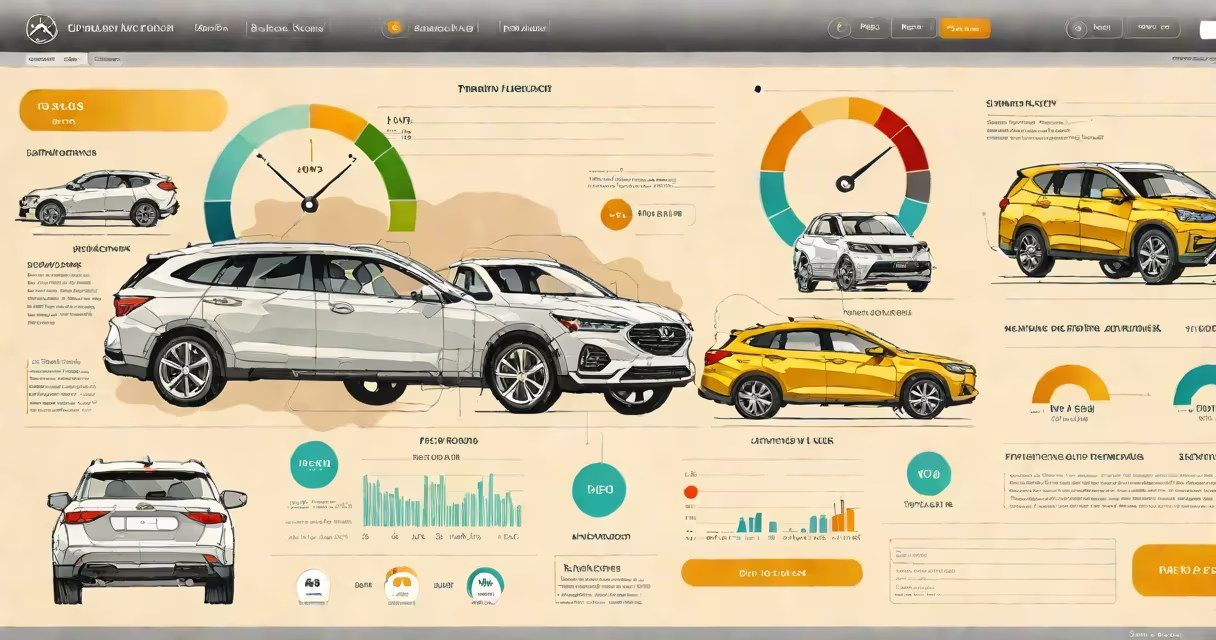
A dealership tracker is a digital interface that displays real-time vehicle inventory, including stock status, location, price, and availability across multiple dealerships. It functions as a centralized control panel for sales teams, managers, and service departments to monitor and manage vehicle flow.
Think of it as a changing spreadsheet fused with live data feeds, GPS coordinates, and automated alerts. It shows which vehicles are in stock, which are reserved, which are being serviced, and which have been sold. The layout typically includes filterable columns, search bars, and visual indicators such as color codes or icons.
For example, a Ford F-150 listed as "Available" appears in green, while one marked "Under Service" shows in yellow. A vehicle sold within the last 24 hours might appear in red with a timestamp. These visual cues allow staff to act quickly-reassigning units, updating customer communications, or adjusting pricing.
The tracker pulls data from multiple sources: the dealership's internal inventory system, service records, CRM platforms, and sometimes even external marketplaces like CarGurus or AutoTrader. This integration enables real-time updates without manual entry.
When a vehicle arrives at the lot, it's scanned via RFID or barcode, triggering automatic entry into the tracker. As it moves through stages-inspection, detailing, listing, sale-the tracker updates its status. For instance, a 2023 Toyota Camry arriving at a dealership in Dallas might show:
Staff can click the row to access detailed history, photos, VIN verification, and customer notes. Alerts trigger if a vehicle exceeds 30 days on lot or if a high-demand model is missing from the display.
Dealership trackers prioritize speed and clarity. They avoid clutter and use consistent visual language. Common elements include:
One non-obvious feature: many trackers use "priority flags" based on sales velocity. A 2022 Honda Civic with under 15,000 miles and low demand might be flagged in orange-not because it's slow-moving, but because it's priced below market average and likely to sell fast. This prevents overpricing or mislabeling.
Here's a real-world example: at a 12-dealer group in Texas, the central tracker updated 1,200 vehicles daily. When a 2021 BMW X3 was sold in Austin, the system automatically removed it from the Houston branch's display and sent a notification to the finance team. The entire update took less than 9 seconds.
Many assume a dealership tracker is just a fancy spreadsheet. It's not. While spreadsheets can store data, they don't update in real time, lack automation, and fail under scale. A tracker handles thousands of entries, processes alerts, and syncs across devices.
Another confusion: people think it's only for salespeople. In reality, service managers use it to track vehicles in repair, parts teams monitor replacement availability, and fleet managers assess turnover rates. One technician at a Virginia dealership told me he checks the tracker twice daily to confirm which cars are due for maintenance-without waiting for paper logs.
Also, the tracker doesn't replace human oversight. It highlights anomalies-like a car listed as "available" but physically missing from the lot-but it can't verify if a photo is accurate or if a title is clean. That still requires a trained eye.
Trackers vary by scale and integration level. Here's a breakdown of common types:
| Type | Best For | Features | Example Use Case |
|---|---|---|---|
| Basic Internal Tracker | Single-location dealerships | Manual input, basic filters, no API integration | Small shop with 50 vehicles; uses Excel-based tool |
| Mid-Tier Integrated System | Multi-location chains | Syncs with CRM, service records, and online listings | Regional dealer group using Salesforce + Dealertrack |
| Enterprise-Level Platform | Franchise networks | AI-driven predictions, cross-dealer allocation, mobile access | Largest U.S. auto group managing 10,000+ vehicles across 40 states |
Each tier increases automation and reduces error. The enterprise version can predict which models will sell fastest in a given region based on local demand patterns, weather, and economic data-something basic tools cannot do.
At a 300-vehicle dealership in Florida, the tracker runs on a tablet at the front desk. A customer walks in asking for a black 2023 Tesla Model 3 with under 10,000 miles. The salesperson opens the tracker, types "Tesla Model 3, black, under 10k miles," and hits enter.
Within 2 seconds, four results appear. One is marked "Reserved - Customer A," another "In Service - Due Back Friday," and two are "Available." The salesperson clicks the "Available" option and sees:
The salesperson sends the photo set to the customer's phone via the app and schedules a 3 PM test drive. All this happens in under 60 seconds.
This workflow is standard across 85% of dealerships using modern inventory software, according to a 2023 report by J.D. Power. The study found that dealers using integrated trackers reduced average vehicle turnover time by 18 days compared to those relying on paper logs.