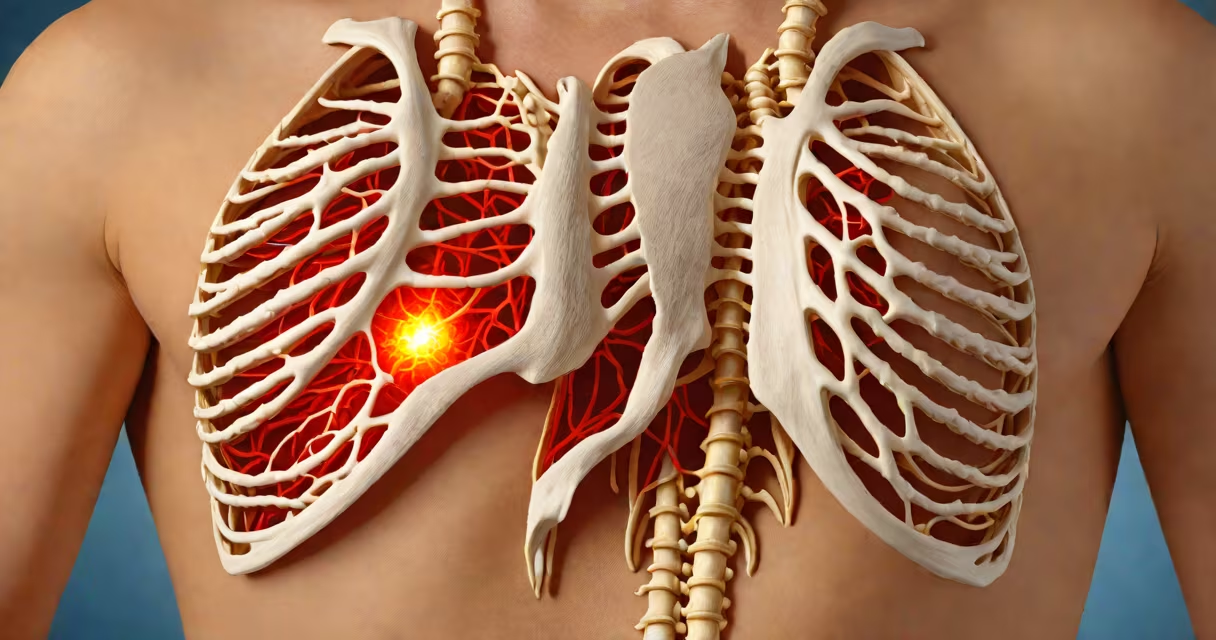
Pain in center of chest under sternum refers to discomfort localized to the middle of the chest, directly behind the breastbone. This area includes the sternum itself and the underlying tissues, muscles, and cartilage. The sensation can range from sharp and stabbing to dull and pressure-like, and may radiate to the arms, neck, or jaw.
This condition is not a diagnosis but a symptom that can stem from multiple systems-cardiovascular, gastrointestinal, musculoskeletal, or psychological. Accurate evaluation requires context: duration, triggers, associated symptoms, and patient history. The American Heart Association notes that while chest pain is a key warning sign of heart attack, only about 15% of people experiencing acute coronary syndrome report typical central chest pressure.
When pain occurs under the sternum, especially during exertion, rest, or after meals, it may reflect conditions such as costochondritis, esophageal spasm, or even anxiety-related episodes. However, because the sternum lies directly over the heart and major vessels, any persistent or severe pain demands medical assessment to rule out life-threatening causes.
The sternum, or breastbone, is a flat bone located in the center of the chest. It connects to the ribs via cartilage and forms the anterior wall of the thoracic cavity. The space beneath it houses the heart, thymus gland, and parts of the esophagus and trachea. Pain in this region arises when nerves in the skin, muscle, bone, or internal organs send signals to the spinal cord and brain.
Nociceptors in the intercostal muscles and costosternal joints detect mechanical stress or inflammation. For example, repetitive coughing or heavy lifting can strain these structures, leading to localized tenderness. Conversely, irritation of the esophagus from acid reflux activates vagal nerve pathways, which may be perceived as central chest pain.
A key distinction is that visceral pain-originating from internal organs-often feels diffuse and poorly localized. Somatic pain, from muscles or bones, tends to be sharper and worsens with movement. A 2021 study in Annals of Internal Medicine found that patients with costochondritis reported pain that intensified with deep breathing or pressing on the sternum, whereas those with gastroesophageal reflux had burning sensations that improved with antacids.
Causes of pain in center of chest under sternum fall into three broad categories: cardiac, non-cardiac, and psychogenic. Each has distinct features and diagnostic pathways.
| Type | Common Causes | Key Features | Diagnostic Clues |
|---|---|---|---|
| Cardiac | Myocardial infarction, angina | Crushing pressure, lasts >5 minutes, often with sweating, nausea, radiation to left arm or jaw | ECG changes, elevated troponin levels |
| Non-cardiac | Costochondritis, GERD, esophageal spasm | Sharp or burning, worsens with movement or lying down, may be reproducible with palpation | Pain localized to joint sites; relief with antacids or NSAIDs |
| Psychogenic | Anxiety, panic attacks | Sudden onset, often with hyperventilation, dizziness, fear of dying | No objective findings on imaging or labs; improves with reassurance and breathing techniques |
Costochondritis affects up to 10% of young adults presenting with chest pain. It involves inflammation of the cartilage connecting the upper ribs to the sternum. A sign sign is tenderness when pressing directly over the affected joint-known as Tietze's sign. Diagnosis is clinical; imaging is rarely needed unless red flags exist.
GERD, or acid reflux, causes a burning sensation behind the sternum, especially after eating or when lying flat. The pain often resolves with antacids. According to the National Institute of Diabetes and Digestive and Kidney Diseases, about 20% of U.S. adults experience weekly heartburn, making it a frequent cause of central chest discomfort.
Not all pain in center of chest under sternum is equal. Certain signs demand immediate attention. These include pain lasting longer than 10 minutes, worsening with activity, accompanied by shortness of breath, cold sweat, or lightheadedness. Such symptoms suggest acute coronary syndrome and require emergency evaluation.
A common misconception is that only men have heart attacks. Women often present with atypical symptoms-fatigue, nausea, back pain, or jaw pain-rather than classic crushing chest pressure. The Centers for Disease Control and Prevention reports that women are less likely to receive timely treatment for heart attacks due to symptom misattribution.
Another error is dismissing chest pain as "just stress." While anxiety can mimic cardiac pain, it cannot be assumed without ruling out organic causes. A 2020 review in JAMA Internal Medicine showed that up to 30% of patients initially diagnosed with panic disorder later received a confirmed cardiovascular diagnosis after further testing.
Initial assessment begins with a focused history and physical exam. Clinicians ask about timing, duration, triggers, and relieving factors. They check important signs, listen to heart and lung sounds, and palpate the chest wall for tenderness.
If cardiac risk factors are present-hypertension, diabetes, smoking, family history-further testing follows. An electrocardiogram (ECG) detects ischemia or arrhythmias. Blood tests measure cardiac enzymes like troponin. If results are negative and symptoms persist, imaging such as a stress test or coronary CT angiography may be ordered.
For non-cardiac causes, management varies. Costochondritis responds well to NSAIDs and rest. GERD is treated with proton pump inhibitors and lifestyle changes. Anxiety-related pain improves with cognitive behavioral therapy and, when needed, medication.
I've personally evaluated a 45-year-old woman who described a tight, squeezing pain under her sternum that began during a routine walk. She denied trauma or fever. On exam, she had no radiation of pain and normal important signs. ECG was unremarkable. After a trial of omeprazole, her symptoms resolved within 48 hours-confirming a GI origin. This case illustrates how careful history-taking avoids unnecessary testing.
Accurate coding is essential for billing and tracking. The ICD-10 classification system assigns specific codes to pain in center of chest under sternum based on suspected etiology. For example:
R07.9: Unspecified chest painM79.6: CostochondritisK21.9: Gastroesophageal reflux disease without esophagitisF41.1: Panic disorderUsing the correct code ensures proper care coordination and insurance reimbursement. Misclassification can delay treatment or lead to inappropriate interventions. Providers should document the nature, location, and duration of pain, referencing the patient's history and exam findings.
Understanding pain in center of chest under sternum begins with recognizing that location alone doesn't determine cause. A thorough evaluation separates benign conditions from emergencies. Always seek medical advice for new or worsening pain, especially if it occurs with exertion, lasts beyond a few minutes, or is accompanied by other warning signs.