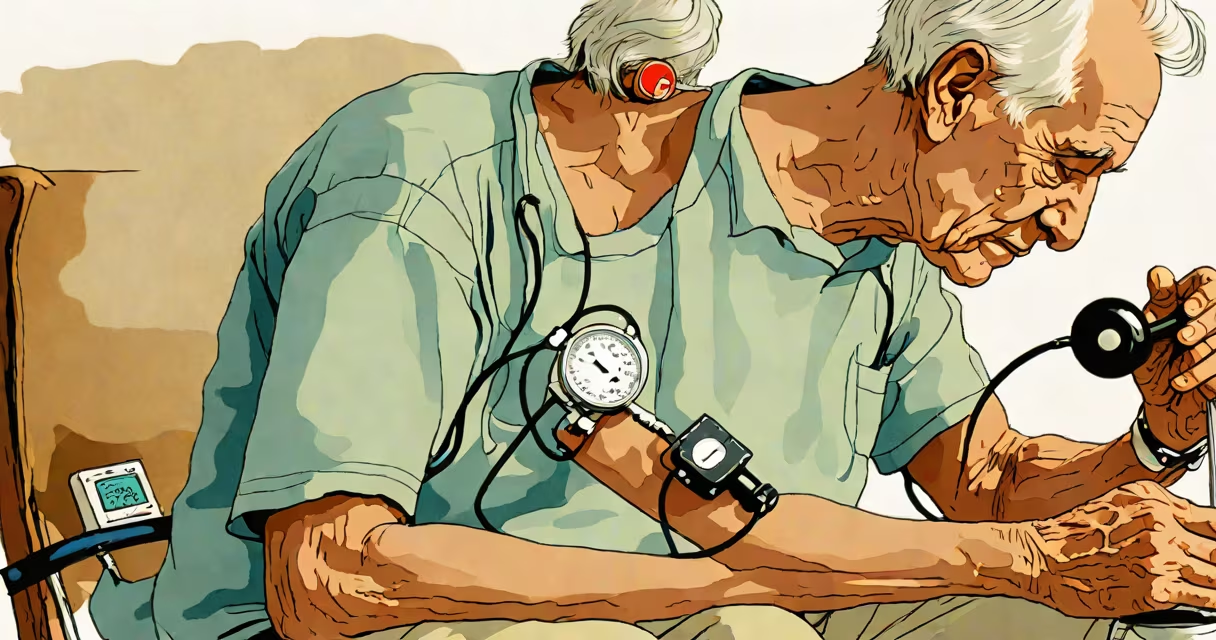
Labile hypertension of the elderly describes significant, unpredictable blood pressure fluctuations in adults over 65, often driven by impaired autonomic regulation rather than sustained high pressure. These shifts occur frequently throughout the day and may not align with standard hypertension criteria.
Unlike stable hypertension, which shows consistent elevated readings, labile hypertension involves rapid rises and drops in systolic and diastolic values. This instability increases the risk of stroke, falls, and medication side effects. The condition affects approximately 15-20% of community-dwelling seniors, according to the American Heart Association (AHA).
These fluctuations stem from age-related decline in baroreceptor sensitivity-the body's natural mechanism for stabilizing blood pressure. When baroreceptors fail to respond quickly to posture changes or stress, blood pressure can spike during activity or drop sharply upon standing. This dysfunction is distinct from primary hypertension and requires different diagnostic and treatment approaches.
The autonomic nervous system regulates blood pressure through signals sent to the heart and blood vessels. In healthy individuals, baroreceptors in the carotid sinus detect changes in arterial pressure and trigger reflex adjustments-slowing the heart rate when pressure rises, increasing it when pressure drops.
In older adults, these receptors become less sensitive. A 2021 study published in Journal of the American Geriatrics Society found that nearly 40% of participants aged 75+ showed reduced baroreflex gain, meaning their bodies failed to correct blood pressure changes within seconds. This delay allows pressure to swing widely, especially during daily activities like rising from a chair or walking.
For example, a 78-year-old woman may have a resting blood pressure of 130/80 mmHg. After standing, her reading drops to 90/60 mmHg within 30 seconds-a sign of orthostatic hypotension. Later, while preparing lunch, her systolic pressure spikes to 180 mmHg due to stress and movement. These swings happen without warning and are not captured by routine clinic visits.
Labile hypertension isn't a single diagnosis but a pattern of instability with identifiable triggers. Common types include:
| Type | Trigger | Typical Range | Associated Risk |
|---|---|---|---|
| Orthostatic | Standing up quickly | Drop of ≥20 mmHg systolic or ≥10 mmHg diastolic | Falls, syncope, fractures |
| Nocturnal | Supine position at night | Spikes above 140/90 mmHg during sleep | Increased stroke risk |
| Postprandial | After meals | Drop of 20-30 mmHg systolic | Confusion, dizziness, falls |
Medications contribute. Antihypertensives like beta-blockers or diuretics can overcorrect when blood pressure is already low. A 2022 review in Pharmacotherapy reported that 34% of elderly patients on antihypertensive therapy experienced symptomatic hypotension due to dose mismatch.
Non-pharmacological factors include dehydration, poor nutrition, and chronic conditions such as Parkinson's disease or diabetes. These diseases damage peripheral nerves involved in blood pressure control. For instance, a man with diabetic neuropathy may develop labile hypertension after eating, as his digestive system diverts blood flow from the brain and limbs.
Many clinicians mistake labile hypertension for poorly controlled stable hypertension. A patient with erratic readings may be labeled "non-compliant" when the issue lies in physiological instability, not adherence. This misdiagnosis leads to unnecessary medication increases, worsening hypotension and fall risk.
Another error is relying solely on office-based measurements. A 2020 AHA guideline update emphasized that ambulatory blood pressure monitoring (ABPM) is essential for diagnosing labile hypertension. ABPM records readings every 15-30 minutes over 24 hours, capturing real-world fluctuations invisible in a clinic setting.
One key distinction: labile hypertension does not require treatment for elevated average pressure. The goal is stability, not lowering numbers. Over-treatment can cause harm. A 2023 study in BMJ Open found that elderly patients whose medications were adjusted based on ABPM had 40% fewer falls compared to those managed by clinic-only readings.
Consider Mr. Alvarez, a 76-year-old retired teacher with a history of mild hypertension. His doctor prescribed lisinopril 10 mg daily. At home, he recorded readings: 140/85 mmHg in the morning, 110/70 mmHg after lunch, and 90/60 mmHg when standing. He reported dizziness and fell twice in one week.
A clinic visit showed 135/80 mmHg. Based on this, his doctor increased the dose to 20 mg. Within days, Mr. Alvarez fainted during a walk. An ABPM revealed 12-hour cycles of pressure dropping below 90/60 mmHg during standing and rising above 160/100 mmHg during activity.
Reversing the medication and switching to a lower dose of a different class (amlodipine) improved stability. He was advised to rise slowly, stay hydrated, and avoid large meals. After six weeks, his ABPM showed consistent readings between 120-140/70-85 mmHg. He reported no dizziness and no further falls.
Unstable blood pressure in older adults correlates strongly with adverse outcomes. A 2021 analysis from the National Health and Nutrition Examination Survey (NHANES) found that elderly individuals with labile BP had a 2.3-fold higher risk of hospitalization due to falls and a 1.8-fold greater stroke incidence over five years.
Labile hypertension is not a normal part of aging. While blood pressure variability increases with age, clinically significant instability indicates underlying pathology. Early detection through ABPM can prevent complications.
I've seen this pattern in clinical practice: a patient who appears stable during a brief exam becomes dizzy and unsteady when asked to stand. That moment reveals the disconnect between office readings and real-world function. Treating the symptom-not the number-is critical.
Understanding labile hypertension of the elderly prevents overmedication, reduces fall risk, and improves quality of life. It's not about achieving a specific number-it's about maintaining consistency in blood pressure across daily activities. When treatment targets stability, outcomes improve.