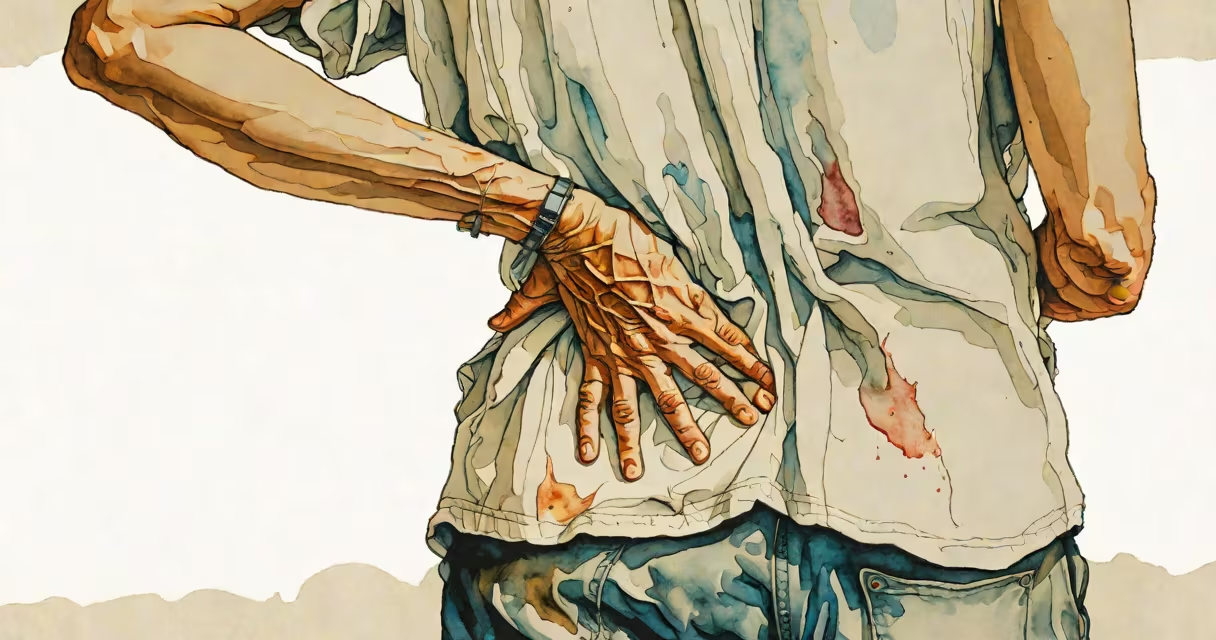
Pain in left side waist and back refers to discomfort localized between the lower ribs and the hip on the left side, often involving muscles, nerves, or internal organs. It may feel sharp, dull, achy, or radiating, depending on the cause.
This pain arises from structures including the lumbar spine, quadratus lumborum and erector spinae muscles, the left kidney, and the left ureter. Common triggers include physical strain, poor posture, or underlying medical conditions such as kidney stones or nerve compression.
Unlike generalized back pain, pain in left side waist and back typically affects one side and may worsen with movement, standing, or lying on the affected side. It can limit daily activities and disrupt sleep if persistent.
The left side of the lower back houses the left kidney, part of the digestive system (left colon), and the left side of the lumbar vertebrae. The area is supported by deep and superficial muscles that stabilize the spine during motion.
Pain originates when tissue is irritated or damaged. For example, a strained muscle can cause localized soreness that worsens with twisting or bending. A kidney stone moving through the ureter can trigger intense, cramping pain that starts in the flank and radiates toward the groin.
Nerve involvement occurs when spinal discs herniate or spinal stenosis narrows the nerve root canal. This leads to radicular pain-shooting, burning, or electric-like sensations that follow a specific nerve path, such as the left L1-L3 dermatomes.
Causes fall into four categories: musculoskeletal, visceral (organ-related), neurological, and referred pain. Understanding the category helps narrow diagnosis.
| Type | Common Causes | Distinctive Features |
|---|---|---|
| Musculoskeletal | Strained lower back muscles, ligament sprains, facet joint arthritis | Dull ache, worsens with movement or prolonged standing; improves with rest |
| Visceral (Organ) | Kidney stones, pyelonephritis (kidney infection), diverticulitis | Flank pain, fever, nausea, blood in urine; may radiate to groin |
| Neurological | Herniated disc, sciatica, spinal stenosis | Burning, tingling, numbness along the left leg; pain worsens with sitting |
| Referred Pain | Shingles (postherpetic neuralgia), pancreatitis, gallbladder disease | Pain felt in the back but originating elsewhere; often constant or worsening at night |
For example, a 42-year-old man reported sudden onset of severe left flank pain while lifting boxes. The pain radiated to his left groin and was accompanied by nausea. Imaging confirmed a 6 mm kidney stone in the left ureter. After hydration and medication, the stone passed within 48 hours.
A non-obvious distinction: kidney pain is typically deep and constant, unlike muscle strain, which fluctuates with activity. Kidney pain doesn't improve with changing position, whereas muscle pain often does.
Healthcare providers assess pain in left side waist and back using history, physical exam, and diagnostic tests. Location, duration, and associated symptoms guide evaluation.
Red flags requiring prompt attention include fever, unexplained weight loss, numbness in both legs, or inability to control bowel/bladder function. These suggest serious conditions like cauda equina syndrome or cancer.
Diagnostic tools include ultrasound (for kidneys), CT scan (for stones or tumors), MRI (for nerve or disc issues), and urinalysis (to detect infection or blood). A single test may not suffice-clinical context matters.
I once observed a patient with chronic left lower back pain misdiagnosed as muscle strain for six months. The pain persisted despite physical therapy. A CT scan revealed a small renal cyst compressing a nerve root. Surgical removal resolved symptoms.
Many assume all back pain is muscular. But pain in left side waist and back can stem from internal organs. For example, a kidney infection may mimic a pulled muscle but includes fever, chills, and frequent urination.
Another misconception: "I don't have a kidney problem because I've never had kidney stones." But kidney infections or cysts can occur without prior stone history. The American Urological Association notes that 1 in 11 adults will develop a kidney stone in their lifetime, but many go undiagnosed until complications arise.
Some confuse this pain with shingles. Early shingles presents as burning pain on one side of the back, often before a rash appears. It follows a dermatomal pattern-typically affecting T10-T12 on the left. Delayed treatment increases risk of postherpetic neuralgia.
When pain in left side waist and back persists beyond 7 days, worsens at night, or limits mobility, consult a healthcare provider. Self-treatment with NSAIDs may mask symptoms of serious conditions.
Recognizing the origin of pain in left side waist and back prevents unnecessary suffering and ensures timely treatment. Early identification of kidney issues, nerve compression, or structural problems improves outcomes.